
Recently, in New York City, several Chinatown neighborhoods have been closely following the developments of proposed homeless shelters, which have been either administratively suspended or objected to by the Department of Buildings (DOB). Despite the city government’s continuous efforts to promote the construction of homeless shelters, several contentious projects have faced obstacles, mainly stemming from two legal red lines.
The first category involves issues related to the City Planning Commission’s “Hotel Special Permit,” while the second category pertains to matters concerning the Department of Environmental Protection (DEP) and “Stormwater Engineering Permit.”
Currently, projects involving Stormwater Engineering Permits include the homeless shelter at 2134 Coyle Street in Bensonhurst, the “Jade Garden” in Flushing, and the homeless shelter at 2501 86th Street in Bensonhurst (which also overlaps with the issue of the CPC Special Permit).
Projects entangled in the CPC Special Permit issue include the homeless shelter at 91 East Broadway in Manhattan’s Chinatown, the vacant lot at 4932 Arthur Kills Road on Staten Island, and the homeless shelter at 2501 86th Street in Bensonhurst.
The controversy surrounding the Coyle Street homeless shelter in Bensonhurst revolves around the demolition work on adjacent plots. Residents point out that the plot should have obtained a Stormwater Engineering Permit before demolition, but there is currently no clear record of such approval. Nevertheless, developers continue to proceed with the demolition operation.
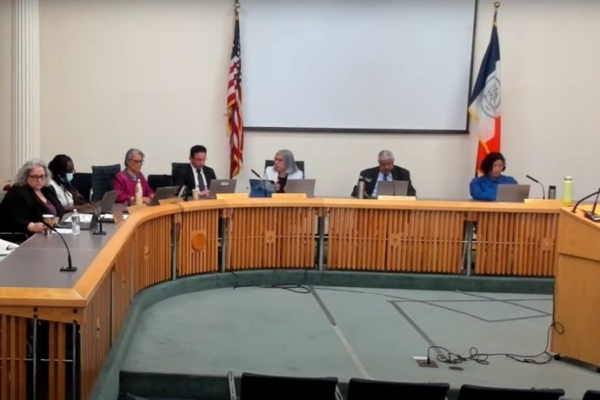
As a result, residents have appealed to the New York City Board of Standards and Appeals (BSA), arguing that if the demolition process of adjacent plots is illegal, the entire land division, demolition project, and even the main construction may face legal invalidation.
The case was accepted by the BSA at the end of 2025 and is currently awaiting a hearing schedule.
Compared to Bensonhurst, the situation at the “Jade Garden” in Flushing is more sensitive. The project, developed jointly by the APA and the Urban Resource Institute (URI), was inaugurated with a ribbon-cutting ceremony in mid-March. However, residents filed a complaint with the BSA at the end of January, alleging that the project was being carried out without obtaining the DEP Stormwater Engineering Permit. The complaint was accepted, and the case number is 2026-02-A.
According to information from the Department of Buildings (DOB) website, the Temporary Certificate of Occupancy (TCO) for Jade Garden was marked as “on hold” on April 24, and the TCO, originally set to expire on June 21, is still under observation for possible extension. Documents obtained by this publication revealed that on April 30, the DOB informed the BSA that a “Notice of Intent to Revoke” (NOI) had been issued due to concerns about potential violations of DEP Stormwater Engineering regulations, warning that construction approvals might be revoked.
The notice stipulated that DEP permits must be obtained before development, and Stormwater Maintenance Permits must be acquired before the issuance of a Certificate of Occupancy (CO); failure to comply with these regulations could lead to the risk of revocation of existing permits.
If such revocation occurs, the entire project may be unable to obtain final occupancy approval. In response to this, Yao Jiu’an, the newly appointed Deputy Executive Director of the APA, stated on the 15th that “all permits for the project have been granted,” and the city government has not requested closure. Currently, about 28 transitional families have moved in, and operations are running smoothly. She mentioned that the APA has submitted explanatory documents to the DOB, but has not received a response yet. Furthermore, any complaints will initiate the BSA’s standard procedural investigation, which does not necessarily imply intrinsic issues with the case itself.
The current concern from the public revolves around the fact that several families with children have already moved into Jade Garden. While the APA asserts that permit issues can eventually be resolved, if any variables arise in the final CO issuance, the government will still need to address the practical arrangements for the families already living there, posing a test for the discretion of the Board of Standards and Appeals (BSA) on subsequent actions.
The property at 91 East Broadway in Manhattan’s Chinatown, originally designated as a “transient hotel,” could be exempt from the CPC’s Hotel Special Permit if utilized as a homeless shelter. However, the developers later converted the first floor and basement into a “medical clinic,” which operates independently as a medical facility, thereby altering the nature of its original transient hotel designation.
Records from the Department of Buildings indicate that the developers had requested an exemption from the Hotel Special Permit, stating that since the building was an existing hotel and only a portion of the floors had been converted to a clinic, they should not be required to apply for the CPC Special Permit. However, the DOB system did not grant the approval request.
Community members believe this is not a matter of administrative discretion but a lack of exemption space in the law. Despite the completion of internal renovations at 91 East Broadway, the DOB has yet to issue relevant occupancy permits or completion confirmations. Community members argue that if developers fail to obtain the CPC Special Permit, the future of this project will face significant legal hurdles.
The situations at Staten Island and 2501 86th Street in Bensonhurst are somewhat similar.
Per zoning regulations, in order to be exempt from the CPC’s Hotel Special Permit, developers must have a “valid contract” signed with the Department of Homeless Services (DHS). However, both projects have only submitted “letters of intent to collaborate,” not formal agreements, failing to meet the exemption conditions required by Section 32-153 of the New York City Zoning Resolution.
DOB records show that six documents related to the Staten Island project have been administratively frozen, and a formal objection was received on April 2. The legal issues surrounding the 86th Street project in Bensonhurst are identical to these circumstances, with residents filing an appeal to the BSA, with the core dispute revolving around whether the developers have a “valid contract.”
In a ruling on zoning challenges for the 86th Street residents at the end of 2025, the DOB acknowledged that the submitted DHS letters were “not formal agreements,” but still allowed the project to proceed, only requiring the submission of formal documents before issuing a TCO or CO. However, residents question the DOB’s approach, arguing that the CPC Hotel Special Permit can only be “exempted” according to the law, not “deferred.”
Overall, compared to the CPC Special Permit, the Stormwater Engineering issue proves to be more challenging. The reason is that the CPC has room for “exemption,” while Stormwater Engineering has none. The law explicitly states that both public and private projects must comply with these regulations.
Currently, most cases have entered the BSA process, with related disputes still under review. Community members point out that the administrative suspensions of these projects reflect the necessity to adhere to existing laws and procedures while advancing the construction of homeless shelters. The subsequent steps of handling these issues will depend on further determinations by the relevant authorities and the BSA.