
Germany’s Federal Council (Bundesrat) recently rejected a tax-free subsidy plan proposed by the Grand Coalition (CDU/CSU and SPD) government to provide a €1000 bonus to employees. The measure, intended to alleviate the pressure of rising energy prices and living costs due to the Iran conflict, suffered a “crushing defeat” amidst financial disputes between federal and state governments. However, the federal government still hopes to push forward with the plan.
Due to the impact of the Iran conflict, energy and fuel prices in Germany have sharply risen. The federal government introduced two comprehensive relief measures: a short-term reduction in fuel tax (by €0.17 per liter for two months) and the issuance of a €1000 tax-free bonus to employees. The goal was to allow employers to quickly and additionally provide employees with a one-time subsidy, assisting low to moderate-income workers in coping with inflationary pressures and giving them “breathing room” amid significant life stress.
According to the plan, this subsidy does not require employee applications; instead, it is directly distributed by employers and indicated on payslips. However, freelancers, self-employed individuals, retirees, the unemployed, students, and Bürgergeld recipients are ineligible to receive this subsidy, which sparked controversy over fairness and criticism for neglecting the self-employed and non-working populations. The government estimates tax losses of approximately €28 billion if the measure is widely implemented and plans to offset them through measures like raising tobacco taxes.
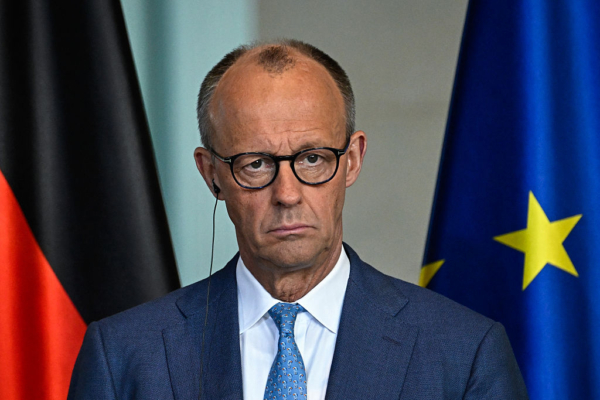
German media reports revealed that the entire subsidy concept was conceived during a late-night governing coalition meeting in mid-April in Berlin. At that time, Chancellor Friedrich Merz and Finance Minister Lars Klingbeil engaged in a heated dispute over tax reduction proposals. Insider sources disclosed that Merz even “lost control emotionally” at one point. Subsequently, Klingbeil proposed the last-minute idea of “allowing companies to issue tax-free subsidies to employees,” which received unanimous approval.
However, the issue surfaced as the subsidy needed to be paid by companies while tax revenue losses were to be borne by federal and local governments, and the compensation scheme offered by the federal government was limited. Local governments quickly realized that this policy would lead to substantial tax revenue losses, completely contravening the principle of “who decides, pays” and consequently strongly protested against it. The government had not consulted with the business sector in advance, nor coordinated with local governments, and even failed to fully discuss it within the ruling party, leading to immediate opposition from businesses, local governments, and conservative factions within the party upon announcement.
As a result of these factors, the bill encountered significant resistance in the Federal Council. Only Hamburg, Lower Saxony, and Saarland cast affirmative votes among the 16 German states, with all three states being predominantly led by the SPD. Per the German system, any legislation affecting state fiscal interests must obtain Bundesrat approval. Hence, this rejection signifies the bill’s inability to take effect.
The most dramatic turn of events occurred in the chaotic 24 hours preceding the bill’s vote. Many states had already explicitly stated their opposition, and the Chancellery was aware that the vote would fall short. Yet, up until the eve of the vote, Chancellor Merz urgently convened a crisis meeting with state leaders, hoping to persuade them to change their stance, but ultimately failed.
Subsequently, a suggestion was made to “simply remove the bill from the Senate’s agenda for postponement.” Merz seemed to think that the matter had been resolved and left the meeting. However, since no one had formally proposed a delay, the bill remained on the voting list, resulting in its direct rejection, and Merz was unaware of these developments. German media described this as an “administrative mistake that makes one want to cry,” with the handling deemed “incredibly clumsy.”
Nevertheless, the federal government is not prepared to abandon the issue. Deputy government spokesperson Steffen Meyer stated that further negotiations between the federal government and states are forthcoming, and there is a high likelihood of initiating the “Federal-State Mediation Committee” procedure to seek a compromise. He emphasized that this subsidy is one of the federal government’s “core projects,” asserting that “both federal and state governments must certainly contribute.”
Opposition parties capitalized on the opportunity to criticize the Merz government. Katharina Dröge, the Green Party’s parliamentary group leader in the Federal Parliament, bluntly stated that the subsidy proposal’s failure in the Federal Council was a “crushing defeat for the federal government, especially for Chancellor Merz personally.”
As the largest economy in Europe, Germany has experienced prolonged economic stagnation in recent years, with high energy prices further exacerbating pressures. According to forecasts released in April by Germany’s five leading economic research institutes, the escalated energy prices due to Middle East conflicts are expected to reduce Germany’s economic growth rate for 2026 to a mere 0.6%, significantly lower than the previous forecast of 1.3%.
The government’s emergency relief measures aimed to pacify citizens while providing a safety net for the sluggish German economy. However, numerous German companies and business associations criticized the government for shifting responsibility onto enterprises. The Federal Association of Small and Medium-Sized Enterprises (BVMW) stated that “many companies are already drowning, yet the government demands an additional €1000 from them.”
According to a German media survey, 92% of small and medium-sized enterprises believe that this policy is misguided, with many companies admitting they lack the capacity to pay. Industrial and trade associations in Germany also criticized the policy, stating that it “appears benevolent, but in reality, it is entirely counterproductive.”
Analysts speculate that the federal government may introduce alternative measures moving forward, including reducing electricity taxes, expanding commuter deductions, income tax reform, or providing targeted subsidies to vulnerable groups. In essence, if the government fails to swiftly recover from the setback of this policy implementation, it may further damage the support for the Merz government and the Grand Coalition, exacerbating the already struggling German economy.