
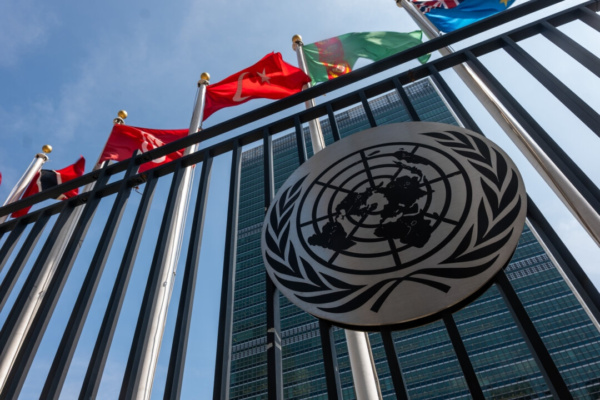
The United Nations General Assembly held a vote at its headquarters in New York on Wednesday, June 3, to elect Austria, Kyrgyzstan, Portugal, Trinidad and Tobago, and Zimbabwe as the non-permanent members of the UN Security Council. Their term will start on January 1, 2027, and last for two years.
In this election, the most attention was on the competition within the Western European and Others Group (WEOG). The economic powerhouse Germany has been actively seeking a seat in recent years, engaging in intensive diplomatic activities. However, it ultimately fell short, ranking third with 104 votes, behind Portugal with 134 votes and Austria with 131 votes. As the group has only two seats, Germany missed out on entering the Security Council.
The competition for the Asia-Pacific Group’s seat was also fierce. Kyrgyzstan and the Philippines competed, going through four rounds of voting before a winner emerged. In the end, Kyrgyzstan received 142 votes, surpassing the two-thirds majority threshold required by the General Assembly and leading the Philippines by 49 votes, thus being elected as a non-permanent member of the UN Security Council for the first time.
According to the UN’s regional allocation mechanism, the five seats in this election come from the African Group, the Latin American and Caribbean Group, the Asia-Pacific Group, and the two seats from the Western European and Others Group. Zimbabwe will replace Somalia, Trinidad and Tobago will replace Panama, Kyrgyzstan will replace Pakistan, while Portugal and Austria will replace Denmark and Greece, respectively.
The UN Security Council is composed of 15 member countries and is the only UN body authorized to pass resolutions with legal binding force. Its responsibilities include approving sanctions, authorizing the use of force, and handling international peace and security issues.
The Security Council has five permanent members: the United States, the United Kingdom, France, Russia, and China, all of whom possess veto power. The remaining 10 non-permanent members are elected by the UN General Assembly, with five seats up for election every year for two-year terms, and no consecutive terms allowed. Currently, Bahrain, Colombia, the Democratic Republic of the Congo, Latvia, and Liberia will serve until the end of 2027.
In addition, the day before the Security Council election, the UN General Assembly elected Bangladeshi Foreign Minister Khalilur Rahman as the President of its 81st session. His term will begin in September this year, during which he will preside over the UN General Assembly consisting of 193 member states.
(This article references relevant reports from Reuters)