
Following tensions over Iran’s navigation restrictions in the Strait of Hormuz, European foreign ministers reached a political agreement on Tuesday (April 21) to expand sanctions against Iran.
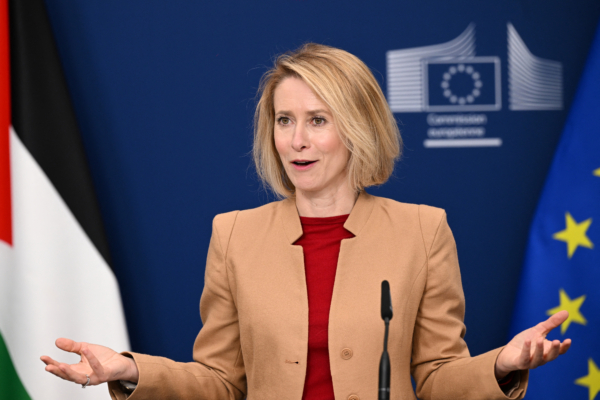
The European Union’s High Representative for Foreign Affairs and Security Policy, Kaja Kallas, announced after the ministerial meeting in Luxembourg that the sanctions list will include individuals responsible for blocking the strait and disrupting freedom of navigation.
Kallas emphasized that freedom of navigation is a “principle that cannot be crossed.” She stated, “The status of the Strait of Hormuz being open or closed fluctuates unpredictably every day. This is reckless behavior. Passage through the strait must remain free.”
She further added that when conditions allow, Europe will work towards restoring the free flow of energy and trade. “The EU’s ‘Aspides’ naval operation is the quickest way to protect shipping in that region,” she said, adding that she has requested ministers from various countries to provide more resources and equipment to strengthen naval missions in the Middle East.
Since the military strikes against Iran by the United States and Israel on February 28, Tehran has effectively blocked the Strait of Hormuz, cutting off about one-fifth of the global supply of oil and liquefied natural gas.
Despite the current turmoil in US-Iran relations during the ceasefire, traffic through the waterway remains almost stagnant. Lloyd’s List Intelligence reported on March 23 that at least two ships had paid substantial fees to pass. Iranian officials subsequently announced that they would continue to charge “safe passage fees” for some oil tankers passing through the strait.
During the Tuesday meeting, some EU member states proposed a complete or partial suspension of the EU Association Agreement with Israel and trade restrictions from settlements, which were met with opposition from other member states.
Kallas explained, “Suspending the Association Agreement requires unanimous approval, which is not currently achieved in the room. Measures that only require a ‘qualified majority’ vote would need the concerned countries to change their position. We have not seen such a shift today, but discussions will continue.”
Additionally, Kallas mentioned that with the conclusion of the election in Hungary, there is new momentum in the EU’s loan plan. “It is expected that within the next 24 hours, positive progress will be made on the decision regarding the €900 billion loan.”