
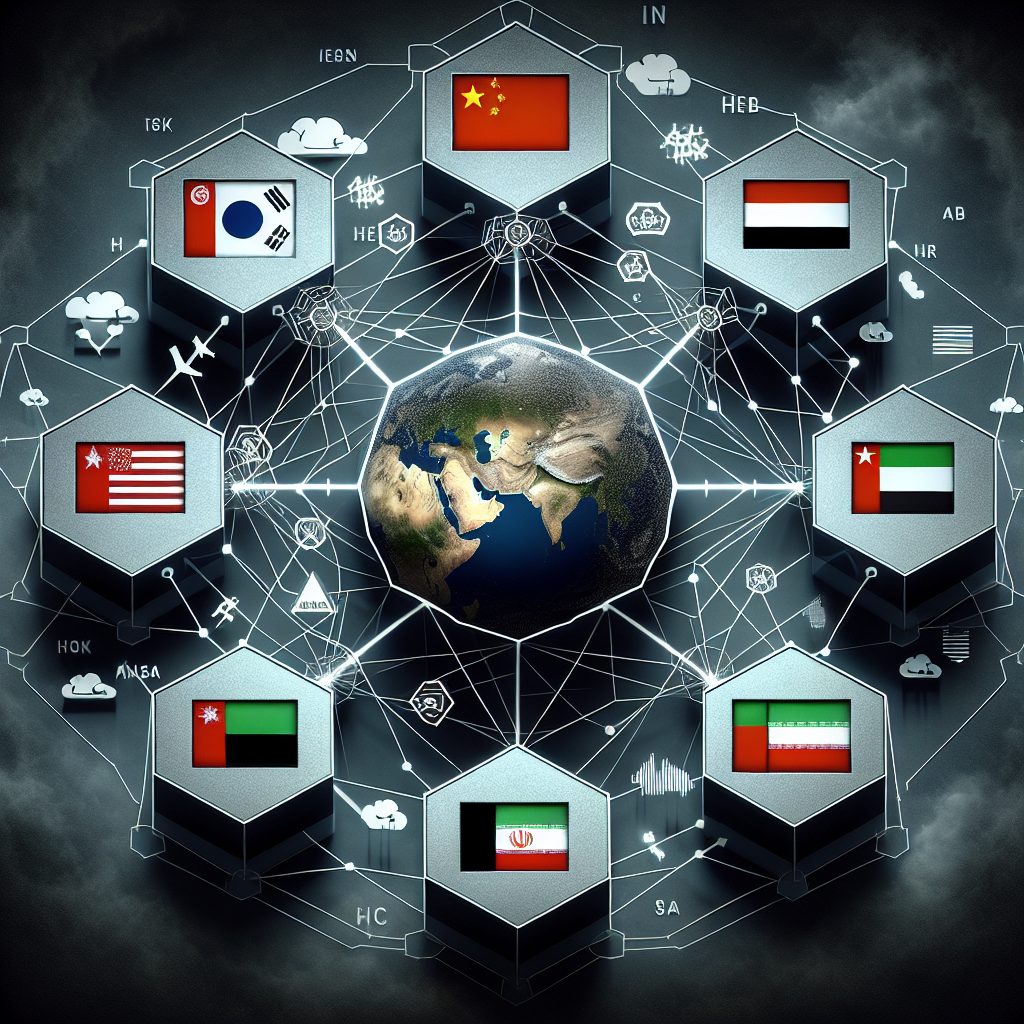
The US Treasury Department issued a warning to financial institutions in China, Hong Kong, the United Arab Emirates, and Oman on Tuesday (April 14), cautioning that conducting business with Iran could pose a risk of secondary sanctions. The department accused these countries of allowing Iran to engage in illegal activities through their financial institutions.
According to a letter reviewed by the media, the Treasury Department pointed out that in 2024, Iran used a series of shadow account companies primarily located in Hong Kong and the UAE to process at least $9 billion in funds through US intermediary accounts.
The Treasury Department’s account on the social platform “Truth Social” announced on Tuesday that the department is taking aggressive action under “Economic Fury” against Iran to maintain maximum pressure. It stated, “Financial institutions should be notified that the department is utilizing all available tools and authorities, and is prepared to deploy secondary sanctions against foreign financial institutions that continue to support Iranian activities.”
The department also mentioned that “the short-term authorization provided for current delayed Iranian oil sales at sea is set to expire in a few days and will not be renewed.”
Two administration officials revealed to Reuters on Tuesday that with the US imposing a blockade on Iranian oil transports to ports, the Trump administration’s 30-day waiver for sanctions on maritime Iranian oil is set to expire later this week.
Treasury Secretary Scott Bessent had previously stated that the waiver issued by the Treasury Department on March 20, allowing around 140 million barrels of oil to enter the global market, was aimed at easing the energy supply pressure during the Iran war. This waiver is scheduled to expire on Sunday (April 19).
Amid Russia’s ongoing war on Ukraine, sources say the US has also not renewed the waiver for Russian oil sales at sea which expired on Saturday (April 11).
One source mentioned that in addition to secondary sanctions, the US has a range of punitive measures that can be used to combat institutions involved in purchasing oil and other illicit activities related to Iran.
“Furthermore, with the ‘snapback’ of UN sanctions against Iran, and Iran’s history of engaging in illegal activities hidden behind seemingly legitimate transactions, any dealings with Tehran could trigger additional sanctions,” the source added.
Secretary Bessent had earlier told reporters that the US blockade in the Strait of Hormuz would ensure that ships from China or any other country cannot gain passage.
“So they will not get their oil. They can get oil, but it cannot be Iranian oil,” Bessent added, noting that China has historically purchased over 90% of Iranian oil, accounting for about 8% of its annual procurement.