
Two Chinese Communist spies have been convicted in the UK for intimidating and monitoring Hong Kong pro-democracy activists, prompting a warning from the British government to China. The UK summoned the Chinese Ambassador to the UK, Zheng Zeguang, following the conviction of 65-year-old Chung Biu Yuen (Bill Yuen) and 40-year-old Chi Leung “Peter” Wai at the Old Bailey Court in London on Thursday, May 7.
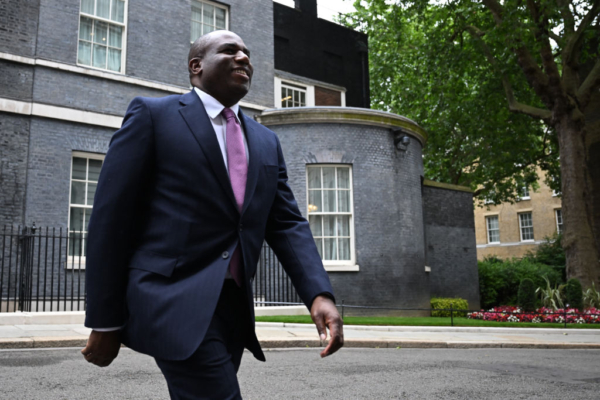
The two men were found guilty of violating the UK’s National Security Law by conducting “shadow policing operations” within the UK. Both individuals hold dual Chinese and British citizenship. The UK Foreign Office spokesperson stated on Saturday, May 9, that Foreign Secretary David Lammy had met with Ambassador Zheng Zeguang following the conclusion of the case. The case resulted in the conviction of both men for assisting Hong Kong authorities in violating the National Security Law.
The UK Foreign Office also released a statement on Saturday, indicating that, as per the Foreign Secretary’s instructions, the UK Foreign, Commonwealth, and Development Office had summoned the Chinese Ambassador. The meeting was a result of the trial in which the two individuals were convicted for assisting Hong Kong authorities in violating the UK’s National Security Law.
“The UK unequivocally states that it will not tolerate any attempts by foreign governments to intimidate, harass, or harm individuals or communities within the UK, as such actions seriously infringe upon UK sovereignty. We will continue to use all available means to safeguard UK security and hold China (the CCP) accountable for actions that undermine UK security and democratic values,” the statement read.
Prosecutor Duncan Atkinson informed the jury in court on Thursday that Yuen and Wai’s mission was to conduct “shadow policing operations” for Hong Kong and even the Chinese Communist Party within the UK. Atkinson stated that the case involved spying on dissenters currently residing in the UK, including activists like Joshua Wong, for whom the Hong Kong government offered a HK$1 million reward for information leading to their whereabouts or arrest.
Democratic figures affected by the espionage activities include the protester Lau Tzu-tik from the 2019 and 2020 anti-extradition movement, as well as Mung Cho-tat, the general secretary of the Hong Kong Labour Rights Watch. Yuen specifically instructed Wai to target government officials, British MPs, and local councillors supporting dissidents, such as Sir Iain Duncan Smith, chairman of the Inter-Parliamentary Alliance on China.
This case, brought forth in 2024, marks the second use of the National Security Law in the UK since its introduction in 2023 to combat hostile state activities, broadening the definition of espionage activities. Yuen, stationed at the Hong Kong Economic and Trade Office in central London, orchestrated the “shadow police” operation, deploying Wai, along with others including former Royal Marine Matthew Trickett, on behalf of the Hong Kong intelligence agency.
Wai, a former employee of the UK Border Force and the City of London Police’s specialist unit, was initially the liaison between Yuen and the Hong Kong authorities. Overseas Hong Kong advocacy groups welcomed the verdict. Mung Cho-tat, general secretary of the Hong Kong Labour Rights Watch and one of the victims of cross-border surveillance in the case, stated that the ruling “upheld justice” and sent a clear message to the Hong Kong government that “cross-border illegal surveillance” would not be tolerated in a free society.
Mung noted that the existence of “overseas police stations” by the CCP in various countries targeting exiled Hong Kong democracy activists was not new and hoped the judgment would serve as a deterrent to those engaged in illegal intelligence gathering and repression for authoritarian regimes, warning that their actions will inevitably backfire.
Revealed during the trial, the Hong Kong Economic and Trade Office was implicated in tracking exiled democracy activists in the UK, resulting in continuous harassment and threats against dissidents. The Hong Kong Labour Rights Watch believes that members of the HKETO abusing their privileges to conduct intelligence work severely contradicts their founding purpose, with their legitimacy widely questioned.
The Hong Kong Labour Rights Watch strongly urged the UK government to promptly reassess the status of HKETO in London and consider revoking or terminating its diplomatic privileges. They emphasized that the Hong Kong government should not exploit trade and commerce as a cover for repression and attempt to extend its “long-arm jurisdiction” to free lands.