
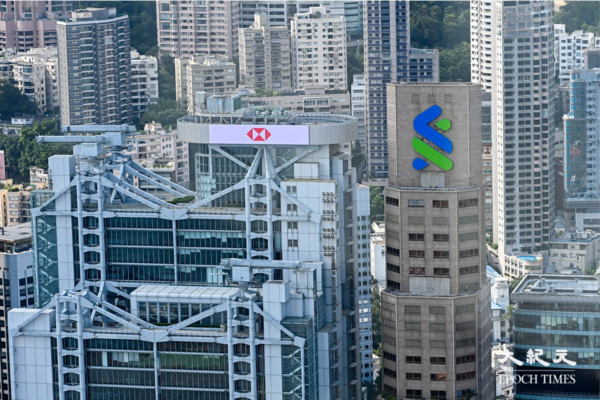
The U.S. Department of the Treasury has recently reiterated its sanctions policy against Iran and warned of possible secondary sanctions on foreign financial institutions. The latest news indicates that international banks like HSBC and Standard Chartered are implicated in a case involving laundering hundreds of millions of dollars for Iran, with Hong Kong also drawing international attention.
According to a report by the UK’s Telegraph, court documents from the Southern District of New York in the United States allege that the Turkish bank Kuveyt Turk used a complex network of layers and shell companies in transactions to conceal connections with Iranian entities, utilizing international banks as intermediary for processing US dollar settlements.
One particular transaction involving about $5.7 million is reported to have involved the National Iranian Oil Company, which is currently subject to sanctions by the U.S., European Union, and the UK. It was mentioned in the documents that there are funds flowing to enterprises associated with the Islamic Revolutionary Guard Corps (IRGC), including construction and petrochemical companies. These transactions purportedly involved the procurement of industrial equipment with dual military and civilian applications.
Revealed information so far indicates that HSBC, Standard Chartered, JPMorgan Chase, Citibank, and The Bank of New York Mellon primarily acted as intermediary banks in these transactions, providing US dollar clearing services in cross-border payments. The court has ordered these banks to submit transaction records, with the documents not demonstrating direct or knowing participation in evasion of sanctions by these banks.
At present, the U.S. maintains a high-intensity financial sanctions policy against Iran. The Treasury Department has stated its intention to continue utilizing tools including secondary sanctions to constrain foreign financial institutions involved in Iran-related activities. Against this backdrop, any cross-border transactions conducted through the U.S. dollar system may face heightened scrutiny.
From a transaction structure perspective, the involvement of intermediary banks in the case is a crucial aspect of the global financial system’s cross-border payment mechanisms. Local banks typically rely on major international banks like HSBC for US dollar clearing, with the latter conducting compliance checks based on the information provided by the former regarding clients and transactions. This division of labor, while enhancing efficiency, has made information asymmetry a key focus of regulatory oversight.
Some past cases indicate that with the enhancement of anti-money laundering and sanctions enforcement standards, regulatory authorities have expanded requirements on financial institutions from “knowledgeable participation” to “having reasonable identification capabilities.” For instance, the French bank BNP Paribas paid a significant $8.97 billion fine to the U.S. government in 2014 for violations related to Iran sanctions, seen as a critical point in strengthening relevant regulatory frameworks.
At a regional level, countries like Turkey have come under scrutiny for their intermediary role in cross-border fund flows. Due to their geographical and financial environment characteristics, some financial institutions have historically been accused of being involved in facilitating Iran-related fund transfers. The role of Kuveyt Turk in this case once again highlights the critical position of intermediary banks within the global sanctions framework.
In Hong Kong, the Chairman of the Financial Services Development Council (FSDC) and the Head of International Business at Standard Chartered expressed during a press conference that the local banking system maintains a relatively high level of compliance with anti-money laundering and sanctions standards, with mechanisms continuously improving since 2001. He emphasized that any shortcomings in individual incidents typically pertain to specific cases, stressing the need for banks to continuously enhance their risk identification capabilities when handling transactions involving sanctioned entities. Dealing with U.S. sanctions against Iran is a global issue that extends beyond Hong Kong, with banks having a responsibility to minimize dealings with sanctioned countries or individuals as much as possible.
From an institutional perspective, this investigation reflects a long-term trend in international financial regulation, where the connection between sanctions policy and the global payment system is deepening. Given the dominant position of the U.S dollar in international settlements and increasing regulatory demands, compliance costs for banks in agent settlement businesses may further rise, including additional investments in customer due diligence, transaction monitoring, and internal control mechanisms.
Overall, the case is currently in the stage of judicial investigation and evidence collection, yet the transaction structures and regulatory logic involved have indicated that amidst a tightening sanctions environment, global banks’ risk management in cross-border fund flows is evolving.
According to a report by Iran International on April 5th, authorities in the UAE have detained dozens of currency exchange traders linked to the Islamic Revolutionary Guard Corps (IRGC) of Iran and closed down their companies. Some Iranian nationals have had their visas revoked and travel through Dubai for transit restricted. This marks one of the most severe blows to Iran’s financial network to date, weakening its ability to maintain fund flows.
Experts estimate that this financial channel through Dubai provides Iran with approximately $8 to $15 billion in annual financial support. If the crackdown extends to deeper layers of shell company networks, Iran’s losses could rise to at least $15 to $20 billion. Iran utilizes these networks for trading oil and petrochemical products through intermediaries in Singapore, Hong Kong, and Chinese buyers.
The U.S. Energy Information Administration (EIA) noted in its 2024 analysis that Iranian oil and related products remain significant sources of revenue. The EIA estimated Iran’s net oil export income to be around $53 billion in 2023.
In the wake of U.S. military actions against Iran, some Chinese banks, insurance institutions, and investors involved in Middle East trade and financing have begun reducing their risk exposure, including limiting loans, transferring syndicated loan shares, divesting from Middle East bonds, and halting some regional securities trading. The Hong Kong Monetary Authority has also reached out to local banks to review their risk exposure to Middle East loans and bonds.
Both China and Hong Kong have been subject to increasing international scrutiny. For instance, during the Russia-Ukraine conflict, Russia relied on third-party networks in Hong Kong and mainland China for financial settlements and trade. Sanctions announcements by the U.S. Treasury in June and October of 2024 explicitly mentioned Russia’s extensive use of Hong Kong-registered companies and cross-border intermediaries to transport dual-use goods to Russia, including integrated circuits, tantalum capacitors, multi-layer ceramic capacitors, solid-state drives, machine tools, and semiconductor equipment. Operational methods included setting up trade companies in Hong Kong for receiving or re-selling goods, operating with addresses in mainland China and Hong Kong but supplying to Russia, falsifying the end-use through third countries, utilizing non-Russian banks and external companies for payments, and disguising transactions through proxy firms in places like the UAE.
Furthermore, the U.S. Treasury has warned that foreign financial institutions assisting these transactions will face higher risks of secondary sanctions. Several think tanks deduce from this that places like Hong Kong have become critical nodes for evading sanctions.