
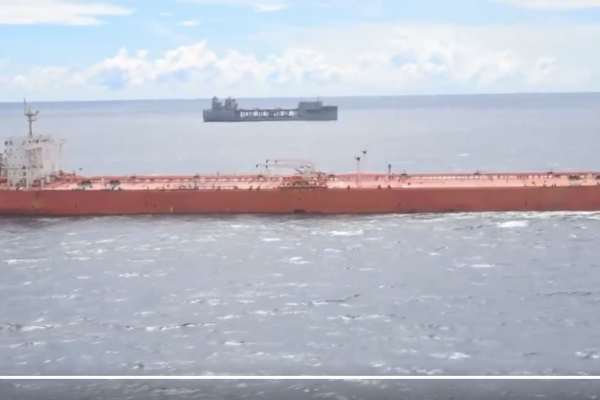
The US Department of Defense announced on Tuesday morning that US military intercepted and boarded a sanctioned vessel in the Indo-Pacific region overnight. The vessel had been sanctioned by the US for smuggling Iranian crude oil in Asia. This action demonstrates the US’s increased efforts in tracking vessels associated with Iran in global waters.
According to a statement released by the Department of Defense on social media platform X on Tuesday morning, the US military conducted a maritime interception and boarding of the sanctioned stateless oil tanker named “Tifani” within the Indo-Pacific Command (INDOPACOM) area, and the entire process went smoothly without any incidents.
“As we have made clear before, we will continue to conduct maritime law enforcement operations globally to combat illicit networks and intercept vessels sanctioned for providing material support to Iran – regardless of their location of operation,” the Department of Defense stated. “International waters are not safe havens for sanctioned vessels. The US Department of Defense will continue to prevent illicit actors and their vessels from freely navigating the seas.”
The Department of Defense also attached relevant videos to the statement.
According to vessel tracking data, the last known location of the vessel on Tuesday was between Sri Lanka and Indonesia. Information from the US Department of the Treasury’s Office of Foreign Assets Control shows that the “Tifani” vessel was sanctioned for transporting Iranian oil. The vessel had been engaged in clandestine ship-to-ship transfers near Singapore. While the vessel claimed to be from China, its past movements indicated it was near the coast of Oman during the Iran-Iraq war.
A US defense official informed the Associated Press that the “Tifani” vessel was intercepted in the Bay of Bengal (located between India and Southeast Asia) while carrying Iranian oil. The official mentioned that the US military will decide within the next four days how to handle the vessel, whether to tow it back to the US or transfer it to another country.
On April 16, the US military announced the expansion of its maritime blockade against Iran, including not only ships anchored in Iranian ports but also vessels currently under US sanctions and those suspected of carrying prohibited items. General Mark Kane, the Chairman of the Joint Chiefs of Staff, stated during a press conference held at the Pentagon that day that the US military would actively pursue vessels assisting Iran’s “shadow fleet,” even if they were not in the Persian Gulf, but sailing in other world seas.
He mentioned that the US military is also conducting similar maritime interception operations in other regions, including the Pacific, targeting vessels suspected of supporting Iran.
Last Sunday, US forces opened fire on the Iranian-flagged cargo ship “Touska” in the Gulf of Oman and boarded it for detention. Before the US firing, the ship attempted to circumvent the US blockade and ignored several warnings. The cargo ship was reported to be heading from the port of Zhuhai in China to Iran. The US had accused the ship’s owning company of purchasing materials for Iran’s ballistic missile program.