
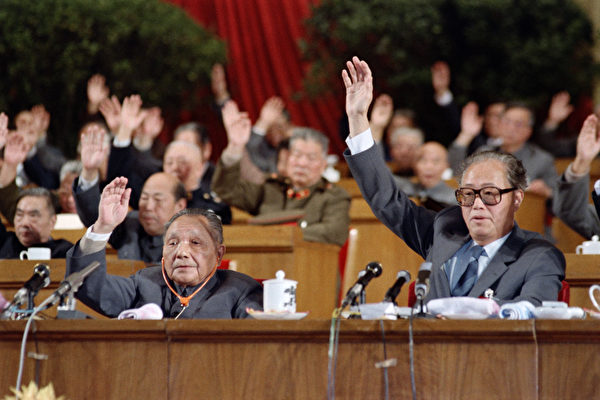
On the night of June 3 to the early morning of June 4, 1989, the Chinese Communist Party mobilized the army to violently suppress the pro-democracy movement, known as the Tiananmen Square protests or the June 4th Incident. The incident marked the 37th anniversary, and senior media personality Li Su was featured on the New Tang Dynasty TV show “News Analysis,” where he delved into the internal decision-making of the Communist Party and quoted observations from Zhao Ziyang’s political secretary Bao Tong.
According to Bao Tong, the root of the June 4th Incident can be traced back to the death of Hu Yaobang, a reform-oriented leader of the Communist Party, in April 1989. Many students believed that Hu Yaobang, known for his progressive views, was unfairly ousted, leading to their street protests mourning Hu and criticizing the Party.
Li Su quoted Bao Tong’s explanation that Hu Yaobang did not die of anger, as rumored, but due to a sudden heart attack following a previous one during a political meeting. Bao Tong recalled the incident where Hu felt unwell and requested to leave the meeting, which eventually led to his passing.
The decision to hold a substantial farewell event for Hu prompted discussions among top party leaders, with different views emerging on how to handle the situation. However, as Li Su recounted, the ultimate decision to cancel the publication of a detailed article mourning Hu was believed to have been orchestrated by Deng Xiaoping after a series of last-minute changes and delays.
As tensions escalated and student protests continued, the Party’s response became increasingly severe, leading to the declaration of martial law in Beijing in mid-May 1989 and ultimately culminating in the violent crackdown on June 3-4. The military intervention resulted in casualties and marked a tragic turning point in the history of modern China.
In the aftermath of the incident, reflections on the student movement and the Party’s response have varied. While some argue that the students were too radical and failed to compromise, others highlight internal power struggles within the Party as a key factor in the brutal crackdown. Bao Tong’s analysis suggests that Deng Xiaoping’s actions were driven by personal interests and a desire to consolidate power, rather than solely a response to the student protests.
The events surrounding the June 4th Incident remain a contentious topic, with differing narratives and interpretations shaping the discourse on this pivotal moment in Chinese history. As discussions continue, the complexity of the incident and its lasting impact serve as a reminder of the need for a nuanced understanding of historical events and their implications for the future.