
This year marks the 60th anniversary of the start of the Cultural Revolution, a movement that changed the course of Chinese history. It has been 50 years since the end of the Cultural Revolution. For many young people today, there is limited understanding of this pivotal movement that reshaped China’s history. There are still many questions, misconceptions, and mysteries surrounding the Cultural Revolution that await clarification.
A prominent Chinese writer once said, “Correctly and unambiguously summarizing all aspects of the Cultural Revolution is China’s contribution to human history. Chinese people should engage in this task.”
Why did Mao Zedong launch the Cultural Revolution? Researchers generally believe there were two main reasons. One was power struggle; Mao felt sidelined and believed Liu Shaoqi was trying to seize his power, so he aimed to overthrow Liu Shaoqi. The other reason was ideological struggle; Mao thought that China had deviated from his ideal of a highly centralized, pure, and absolutely egalitarian socialist society.
Experts argue that one must consider the domestic and international context at the time, the historical development of the Chinese Communist Party, and Mao Zedong’s actions to truly understand the motives and reasons behind Mao’s initiation of the Cultural Revolution.
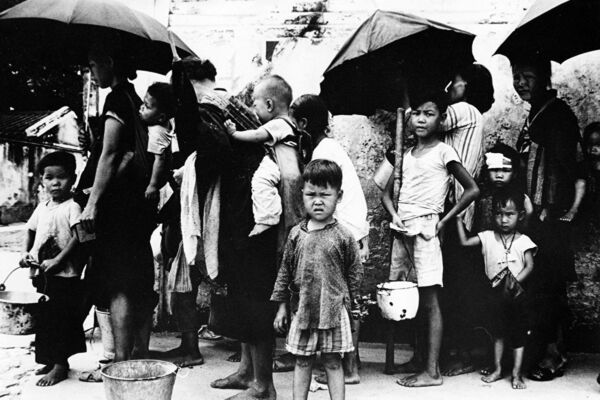
Veteran media personality and Cultural Revolution researcher Li Su stated on NTD News’ “Current Affairs Across the Board” that the Cultural Revolution began in 1966, 17 years after the establishment of the CCP. During these 17 years, China experienced the Great Leap Forward, which resulted in the Three Years of Great Famine and even cannibalism. Mao Zedong was forced to engage in self-criticism for the only time in the CCP’s rule after the party’s establishment.
According to official CCP statistics or officially recognized data, the Three Years of Great Famine resulted in the deaths of approximately one to two million people. However, based on the analysis of official population statistics, it is estimated that the death toll during the Great Leap Forward ranged from 35 to 45 million people, with some estimates exceeding 90 million. The CCP long attributed the Three Years of Great Famine to natural disasters, hence calling it a period of three years of natural disasters or difficulties.
One of the intense internal events during Mao’s era was the criticism of Stalin by the Soviet Union. After Stalin’s death in 1953, Khrushchev criticized Stalin’s cult of personality and purges. Mao became extremely concerned that individuals with a Khrushchev-like agenda might be around him in China, waiting to criticize his policies after his death. This internal struggle within the Soviet leadership, coupled with the posthumous criticism of Stalin, led Mao to suspect Liu Shaoqi and his counterparts as potential “Khrushchevs.”
Regarding Mao Zedong’s personal privileges, Li Su illustrated that Mao’s privileges surpassed those of an emperor. He enjoyed a level of privilege that was unattainable even for emperors. The details of Mao’s personal life, preferences, and extravagances reveal that he wasn’t striving for equality or utopian ideals; rather, his actions were driven by personal privilege and power.
During the Cultural Revolution, Mao targeted those he deemed as capitalist roaders, but he did not abolish the privileges; instead, the distribution of benefits took on a different form. Most high school graduates were sent to rural areas during that time, known as educated youth sent down to the countryside. Children of officials and elite had special pathways for education and advancement, which created discontent among the general population.
In conclusion, the historical details discussed shed light on Mao Zedong’s true motives and actions during the Cultural Revolution: not to pursue ideals or utopian goals, but to maintain and assert his personal privileges.