
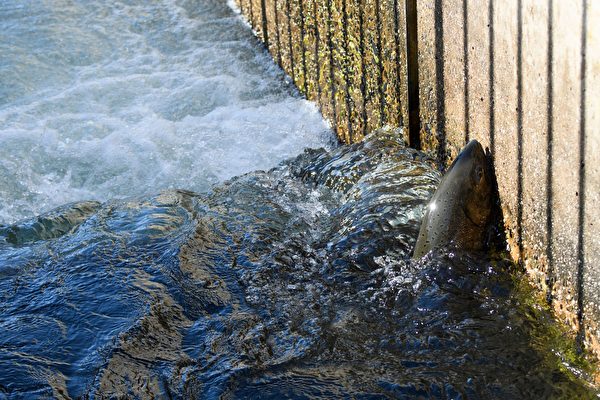
On April 12, the Federal Fisheries Commission determined that the population of some Chinook salmon groups had rebounded, leading to the resumption of commercial salmon fishing activities along the California coast for the first time since 2022.
The California Department of Fish and Wildlife announced that the population of fall-migrating Chinook salmon in the Sacramento and Klamath Rivers had increased, allowing for an increase in opportunities for ocean salmon fishing this year.
The California Salmon Association stated that the reopening was “long-awaited”, but it has not fully recovered to previous fishing levels. “We will remain cautiously optimistic,” said Vance Staplin, the executive director of the association, in a statement on April 12. “Coastal businesses are in urgent need of the economic boost that this fishing season will bring, especially after years of struggling with long periods of closure due to salmon fishing.”
The Pacific Fishery Management Council is responsible for managing offshore fisheries on the U.S. West Coast. For the past three years, the council had banned commercial salmon fishing due to prolonged severe drought, wildfires, and changes in the marine environment leading to historically low numbers of Chinook salmon populations. The council announced on April 12 that relevant data indicated the ability to balance conservation and management goals while opening up fishing in certain coastal waters.
In California, waters from the Oregon-California border to Point Arena will remain closed. However, fishing will be open four times for several days from Point Arena to Pigeon Point near Pescadero in May, with an additional three fishing periods in August.
Between Pigeon Point and the U.S.-Mexico border, there will be multiple phased openings for several days at a time from May to August. All opening periods will depend on the “remaining fishing quota.”
California has set a fishing limit of 83,000 Chinook salmon. The commission mentioned that additional fishing opportunities will be provided in some areas near Pigeon Point, with a separate quota of 20,000 Chinook salmon.
Recreational salmon fishing has been open from Pigeon Point south to the U.S.-Mexico border since April 11, but many boats were unable to go out due to stormy weather. The California Salmon Association noted that the actual number of salmon caught was not significant.
Staplin expressed that coastal communities reliant on annual salmon fishing are excited about the prospect of profitability. The California Salmon Association emphasized that commercial salmon fishing on the West Coast generates over $1 billion in revenue for California and Oregon each year.
However, the association also mentioned some concerns. Due to warm and dry spring weather early in the season, juvenile salmon returning from the Central Valley are still facing harsh conditions. The association pointed out that future fishing will continue to be strictly regulated to protect salmon populations, especially those in the coastal rivers of Northern California.
The California Salmon Association estimated that during a normal fishing season, the salmon industry in California can generate $1.4 billion in economic benefits and create 23,000 jobs annually.