
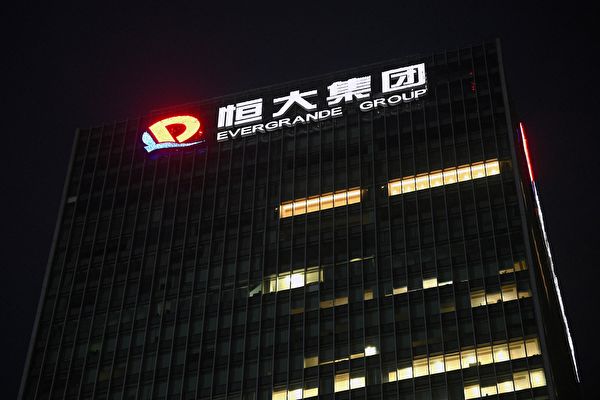
China’s Evergrande Group founder Xu Jiaying’s case was publicly tried in Shenzhen Intermediate People’s Court on April 13th and 14th. Xu Jiaying faced eight charges, confessed and repented in court, and the court will schedule a sentencing. However, the confession is just the legal conclusion of this unprecedented debt crisis. The more pressing question is: how much of the 24 trillion debt hole left by Evergrande can be recovered?
According to the court announcement, this trial involved three defendants: Evergrande Group, Evergrande Real Estate, and Xu Jiaying personally. Among them, Xu Jiaying faced the most charges, totaling eight: illegal absorption of public deposits, fundraising fraud, illegal lending, illegal use of funds, fraudulent issuance of securities, violation of important information disclosure rules, embezzlement, and bribery.
Xu Jiaying confessed and repented in court, and the court will schedule a sentencing.
According to the investigation by the China Securities Regulatory Commission, Evergrande Real Estate inflated its revenue by about 564.1 billion RMB and inflated profits by about 92 billion RMB from 2019 to 2020, based on which it issued about 20.8 billion RMB in corporate bonds. At the same time, Evergrande Wealth Platform was accused of illegally raising about 92.1 billion RMB, of which about 34 billion RMB remains unpaid, involving over 100,000 investors.
Additionally, the prosecutor accused Xu Jiaying of embezzling about 43.8 billion RMB through bonuses and compensation and being involved in bribes exceeding 200 million RMB.
Evergrande Group reported a total debt approaching 24 trillion RMB in 2024, with Xu Jiaying’s frozen family assets currently around 55 billion RMB, which is significantly less than the overall debt scale. Even if all recoverable assets are successfully liquidated, it may still be challenging to cover the entire debt, as reported by Observer Net.
As early as January 2024, Evergrande Group was ordered to liquidate by the Hong Kong High Court. By the end of July 2025, the liquidator had received around 187 claims involving approximately 35 billion HKD. In mainland China, as of March 2026, the Evergrande Real Estate bankruptcy liquidation case handled by Shenzhen Intermediate People’s Court had received claims from 414 creditors totaling about 250 billion RMB.
Currently, the assets within the Evergrande system that still have some profitability are mainly concentrated in Evergrande Property. The company achieved a net profit of about 1 billion RMB in 2025, with a total market value of around 13 billion HKD. Negotiations are ongoing regarding related acquisition offers by the liquidator.
Simultaneously, the pursuit of Xu Jiaying’s family’s overseas assets is progressing. Public records show that Xu Jiaying and his ex-wife Ding Yumei accumulated over 50 billion RMB in dividends through offshore structures after Evergrande went public. In 2019, they established a family trust worth about 2.3 billion USD, designating their son as the beneficiary.
Xu Jiaying and his ex-wife Ding Yumei are accused of attempting to divide assets through a “technical divorce”. Ding Yumei even sued Xu Jiaying’s second son last February in Hong Kong seeking over 1 billion HKD in debt repayment. The move is believed to be a judicial maneuver to “legalize” asset preservation under Ding Yumei’s name.
The Hong Kong High Court ruled in 2025 to place 33 of Xu Jiaying’s overseas companies and multiple bank accounts under the liquidator’s control, including properties, private planes, and luxury vehicles spread across various countries and regions.
In November of the same year, Ding Yumei’s approximately 220 million USD assets in Canada, Gibraltar, Jersey, and Singapore were also frozen.
Meanwhile, Evergrande Group’s former CEO Xia Haijun went missing in May 2024 and was suspected to be hiding in California, USA, with his wife. In January this year, the Hong Kong High Court rejected his appeal against the global asset freeze order, maintaining the restraint order on his assets worth around 60 billion HKD.
It is worth noting that Evergrande’s collapse did not come without warning signs. As early as May 2015, international rating agency S&P Global Ratings downgraded Evergrande’s credit rating, warning of a high default risk.
Just a month later, China’s three major credit rating agencies—CCXI, Dagong, and United Ratings—all gave Evergrande’s bonds the highest AAA rating with a stable outlook.
According to a report by Wild Horse Financial, some domestic opinions at the time endorsed the Chinese rating agencies under the guise of “competing for discourse power”, but this endorsement was eventually thoroughly debunked by reality. It was the top credit endorsement from Chinese rating agencies that paved the way for Evergrande’s subsequent financing and led more ordinary investors into trouble.