
Recent incidents of food containing toxic and harmful substances exceeding safety standards have been circulating on the internet, bringing to light the ongoing issue of food safety in China. The Chinese state media has also stepped in to “expose” these cases, shifting blame towards the companies. Experts familiar with the situation in China believe that there are multiple reasons behind food safety concerns.
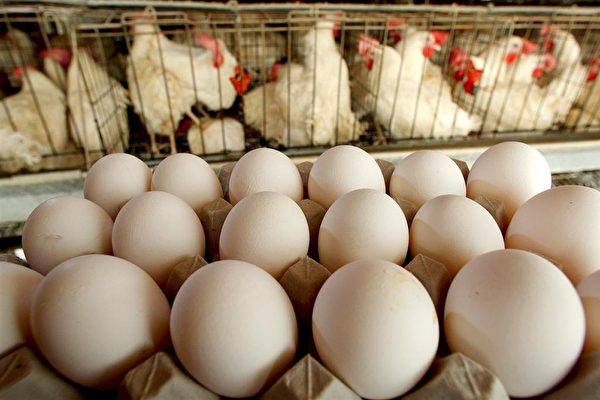
In mid-May, the Market Supervision Administration of Heilongjiang Province announced that a subsidiary of Shuanghui Group had pork products with antibiotic levels exceeding the standard by nearly 38 times. By the end of May, the Market Supervision Administration of Yantai City in Shandong Province reported that eggs from a state-owned enterprise in the city contained sulfonamide residues exceeding the standard by 69 times. Sulfonamides are synthetic broad-spectrum antibacterial drugs. Several official media outlets in mainland China covered these announcements.
People on the internet expressed shock, commenting, “We used to think that products from big brands and state-owned enterprises would be more reliable, but that’s not always the case.”
Earlier in March, a well-known newspaper in China exposed that a batch of freeze-dried strawberries in Zhangzhou, Fujian Province, had exceptionally high levels of cadmium, indicating that the fresh strawberries before freeze-drying might have already exceeded safety limits. The report also revealed that falsifying test results was a common practice in the industry – where paying for a “qualified report” or submitting clean samples for testing could deceive regulators.
People online criticized that Chinese people are now living in an era where they are “feeding poison to each other” and are unsure about what food is safe to eat.
Amid media scrutiny and plummeting stock values, the Shuanghui Group issued an apology, attributing the issue with the pork to problems in the upstream breeding process. The propaganda department in the jurisdiction of the Yantai enterprise stated that the problematic eggs were not produced by the company itself.
Mr. Zhang, who previously worked in organic agriculture and animal husbandry in China, told Dajiyuan that in chicken and pig farms in the country, the density of animals is high. As a result, companies may add a significant amount of additives or antibiotics to chicken and pig feed to prevent mass illnesses among the animals, leading to drug accumulation in their bodies. Eventually, even the eggs laid by such chickens may contain drug residues.
Mr. Zhang pointed out that many agricultural products in China are laden with pesticides and fertilizers, along with so-called “black technologies” that enhance the appearance of the products but compromise their taste and nutritional value, especially in fruits.
He warned that packaged foods in Chinese supermarkets should be consumed minimally due to the presence of additives and preservatives, as they can adversely impact health, unlike fresh produce which is meant for regular consumption.
Chinese human rights lawyer Wu Shaoping, residing in the US, told Dajiyuan that the food safety issues in China stem from three primary reasons at the systemic level: inadequate government supervision, hindrance of private monitoring initiatives, and the Communist Party’s provision of special food supplies.
He explained that regulatory departments responsible for food safety oversight, including the Market Regulation Administration, the Ministry of Agriculture and Rural Affairs, and the Health Commission, fail to effectively regulate due to the Communist Party’s bureaucratic and inactive governance. Despite having multiple regulatory bodies, the lack of concerted efforts results in a situation where everyone believes others are responsible, leading to a lack of accountability.
Regarding public activism or reporting of violations, the Communist Party not only fails to support but also suppresses such activities under charges like “provoking trouble” or “disrupting production order.” Individuals engaging in such activities often face arrests and imprisonment rather than support, creating a chilling effect on whistleblowers.
Moreover, Wu Shaoping noted that the Communist Party’s special food supply system for senior officials at all levels shields them from the consequences of food safety issues, deterring the leadership from addressing the problems at their core.
He emphasized, “Unless this special supply system is eliminated, and officials are required to purchase food like ordinary citizens from the market, they may only realize the significance of food safety issues when it affects them directly. Only then may they genuinely address the problem.”
Wu Shaoping highlighted that collusion between the Communist Party and businesses, rampant corruption, and regional protectionism further exacerbate the food safety situation. Local governments often shield errant companies due to their significant contributions to tax revenue and employment, thereby overlooking violations without imposing substantial penalties that could deter such misconduct.
He stated that the low cost of illegal activities due to inadequate repercussions encourages unscrupulous businesses to flout regulations, with diminishing chances of detection.
Mr. Zhang expressed pessimism about resolving food safety issues in China due to both government inefficiency in supervision and the economic policies of the Communist Party, which incentivize companies to boost production and lower prices through various means.
He noted that while this approach addresses feeding the large domestic population and supporting exports, the pursuit of high production levels and low prices requires compromises in quality and safety standards. The reliance on exports in the Chinese economy necessitates stimulating output first to slash prices, making Chinese products a threat to markets in the Western world due to their competitive pricing strategy.
On May 27, France Info reported that since 2021, Chinese tomatoes and tomato products have flooded the European market with their massive production and low prices, raising concerns about potential labor exploitation behind the cheap pricing. European consumers are often deceived by the inexpensively priced Chinese tomato products.
In a previous investigation in 2024, the BBC revealed that some tomato puree labeled as “Made in Italy” in European supermarkets might actually originate from tomatoes produced in Xinjiang, China, using forced labor.
Regarding the widespread coverage of food safety issues by many official media outlets in mainland China, Mr. Zhang mentioned that the food safety problems domestically have become too prevalent to ignore, prompting the state media to shape public opinion.
He explained, “What does this mean? It means that ‘our party cares about the people, cares about livelihoods, these issues are not related to our party, and we are monitoring it’ – it’s steering the narrative, deliberately diverting attention from internal conflicts.”
Wu Shaoping also acknowledged that Chinese citizens harbor significant dissatisfaction with the current state of affairs, with a deep-rooted understanding that the primary culprit behind severe transgressions is the Communist Party system. However, the lack of avenues to express discontent toward the regime leads the media to redirect social tensions towards private businesses.
He elaborated, “These media outlets recognize the social issues but are hesitant to critique the Communist Party directly. Instead, they ‘pick soft persimmons to pinch,’ redirecting social tensions towards private enterprises, essentially finding scapegoats to alleviate public anger towards the Communist Party system.”