
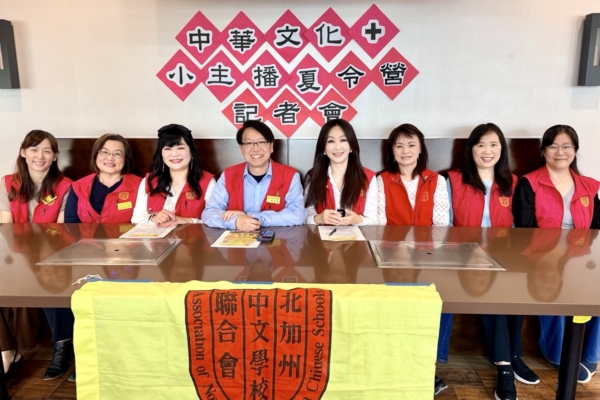
As the summer approaches, the Northern California Chinese Schools Association will be hosting the “Chinese Culture and Junior Hosts, Junior Anchors Summer Camp” from June 22nd to 27th. The camp aims to introduce children to the beauty of traditional culture through cultural activities, language learning, performances, and arts and crafts, while also fostering confidence and expressive abilities.
President of the Northern California Chinese Schools Association, Fu Qijun, emphasized that the summer camp is a significant annual event for the association. This year, the six-day camp offers a rich program with lunch and snacks included in the fee to encourage more Bay Area families to understand and sign up for the camp.
This year’s program highlights include traditional folk sports, dance, arts and crafts, as well as junior hosts and junior anchors training. One of the most anticipated new courses involves teacher Yè Sàinóng leading children in learning the big drum, while another feature is the Taiwan traditional folk art of “Ché Gǔ Zhèn” brought by teacher Zhōng Huìrú.
The organizer, Lǐ Nàyà, stressed that “Ché Gǔ Zhèn” is part of Taiwan’s local culture, unrelated to religion, but rather a traditional form that embodies Taiwanese folk life, emotions, and the integration of diverse cultures. She hopes that through drumming, formations, and performances, children can personally experience the vitality and aesthetic beauty of Taiwanese culture, further understanding the connection between Chinese culture and Taiwanese folk traditions.
Currently, 62 students have enrolled for the camp, with approximately 26 to 27 teaching assistants. The high teacher-student ratio ensures that each assistant looks after two children, and students with weaker Chinese proficiency can receive real-time translation assistance from the assistants for immersive cultural and language learning experience.
In addition to cultural courses, this year’s camp continues to focus on junior hosts and junior anchors training, with children presenting their learning outcomes in an exhibition. Lǐ Nàyà mentioned a collaboration with a radio station this year, where camp-trained junior hosts could potentially become part of the show’s lineup, enhancing their eloquence, stage presence, and confidence through stage and broadcast practices.
The camp also places importance on living care and dietary arrangements, with tuition fees covering lunch and snacks that will include dishes like braised pork rice, fried rice noodles, chicken drumsticks, chicken chow mein, salted crispy chicken, aiming for children to eat nutritiously and happily.
In the realm of cultural arts and crafts, experienced cultural teachers from the Bay Area have been invited to teach traditional children’s games and crafts. Using simple materials like a piece of paper and a thread, children can create interesting toys, appreciating the wisdom of traditional life.
Vice President Liào Xiùjīng also expressed during the press conference that the most anticipated aspect of summer for children is not only fun but also making friends and building confidence. She described the summer camp as a “self-confidence transformation” process, where many shy children gradually become more willing to speak up and express themselves after engaging in camp activities, cultural learning, and stage training, eventually even becoming junior hosts. She encourages parents to seize this opportunity for their children to have a courageous and culturally enriching summer.