
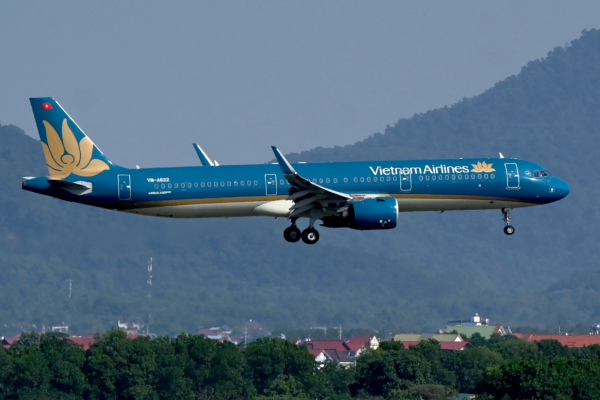
Due to the impact of the Middle East conflict, both China and Thailand have suspended the export of aviation fuel (jet fuel). Consequently, Vietnamese authorities are preparing for possible flight reductions starting in April as the risk of aviation fuel shortage continues to rise.
Vietnam currently relies on imports for about 70% of its aviation fuel, with up to 60% coming from China and Thailand. According to Chinese customs data, Vietnam was the third largest buyer of Chinese aviation kerosene in 2025, behind only Australia and Japan.
Vietnamese domestic fuel suppliers such as Skypec and Petrolimex Aviation under the Vietnam National Petroleum Group have indicated that existing supply can only meet the country’s aviation needs until the end of March 2026, warning that they may struggle to fulfill contracts in April. Skypec has even urged regulatory authorities to restrict air transport to necessary domestic routes if the Middle East conflict persists.
The Civil Aviation Authority of Vietnam (CAAV) submitted a document to the Ministry of Transport on March 9, warning of a potential aviation fuel shortage crisis for Vietnamese airlines starting from early April and in the following months.
In response to the current situation, CAAV has proposed several emergency measures to support the aviation industry, including exempting aviation fuel environmental protection taxes, reducing value-added taxes, and allowing airlines to flexibly levy fuel surcharges on domestic tickets.
CAAV has also called for industry cooperation to maintain fuel production by suppliers and optimize route networks and costs for airlines.
On the London Stock Exchange Group’s quoted data, the near-month paper cargo swap contract for Singapore aviation fuel (including costs and freight) is currently trading around $157 per barrel, surpassing 1.5 times the pre-Iran war levels (around $83 to $89) and even spiked over $230 in early March.
The document further indicates that Vietnamese importers such as Petrolimex and Skypec have also warned that rising aviation fuel prices are depleting their credit lines, calling on banks to provide more flexible financing options until market conditions normalize.
Vietnam Airlines, VietJet, Sun PhuQuoc Airways, and other airlines have reported that if aviation fuel prices remain between $200 and $230 per barrel, their operating costs could increase by 30% to 60% each month.
As a result, airlines are reassessing flight schedules and may adjust route structures or flight frequencies starting from April 2026 to reduce fuel consumption. Sun PhuQuoc Airways submitted documents to Vietnamese regulators in March, planning to “adjust flight schedules in the next 1 to 3 months” in response to oil price volatility.
Earlier this month, China has urged refineries not to agree to new exports and issued a comprehensive ban on the export of finished oil products, including gasoline, diesel, and aviation fuel on March 11, covering goods that were not cleared by that date.
Thailand announced on March 6 a ban on exporting fuel to all countries except Myanmar and Laos. The Vietnamese government has negotiated with China and Thailand to address the fuel crisis.
According to reports from the Vietnamese government news site, Vietnamese Foreign Minister Le Hoai Trung met with Chinese Foreign Minister Wang Yi at a long-planned meeting in Hanoi last Sunday (March 15), expressing hopes for close coordination to “ensure energy security.” However, China’s press release after the meeting did not mention energy security-related issues.
In addition, Vietnamese Prime Minister Pham Minh Chinh requested assistance from the Thai side to alleviate the fuel shortage issue during a meeting with the Thai ambassador to Vietnam on Friday last week (March 13), as reported by Vietnamese state media.
CAAV also admitted that “it is difficult to find new suppliers in the current situation” and added that two domestic refineries in Vietnam are currently under pressure to increase production of other petrochemical products, making it challenging to allocate capacity to boost aviation fuel output.
Authorities further warned that even when supplies stabilize, skyrocketing oil prices are severely impacting the aviation industry, with many routes facing potential losses.
(This article is based on reports from Reuters)