
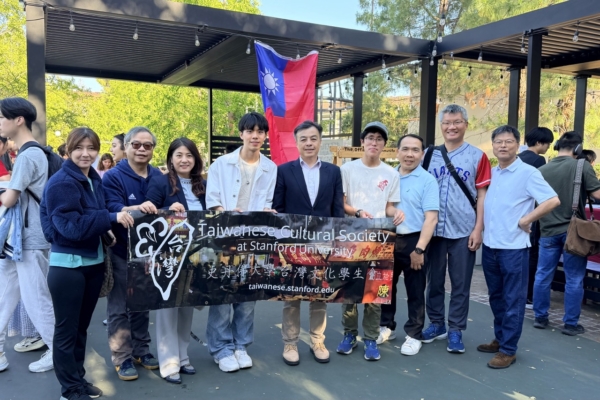
On the evening of May 23rd, Taiwanese student organizations in Taiwan held the 2026 campus night market at Stanford University, attracting many students, faculty, and Bay Area residents. The event, themed “Taiwan Night Market,” combined food stalls, interactive games, cultural displays, and student performances to bring the lively atmosphere of Taiwan’s night markets to American campuses.
The event was co-organized by the Taiwanese Cultural Society (TCS) at Stanford University and the Stanford Taiwanese Student Association (STSA). Since its inaugural year in 2001, the Stanford Night Market has evolved from being held indoors at Tresidder Oak Lounge to becoming a representative multicultural event on campus.
Various free activities were available on-site, including mahjong, carnival games, tea tasting, a Taiwanese-American book exhibition, a workshop on lacquer fans, and cultural booths promoting Taiwanese culture. The food area featured a collaboration between student groups and local businesses offering bento boxes, bubble tea, Asian pastries, Vietnamese-style French bread, Korean fried chicken, popcorn chicken, banana milk, and various Asian snacks. The offerings from Duan Chunzhen and Mei Er Mei, as well as zongzi introduced for the Dragon Boat Festival, were highlights of the night.
On stage, numerous Stanford student groups took turns performing martial arts, lion dances, traditional music, Chinese ethnic dances, Vietnamese dances, and modern dance, showcasing the campus’s diverse cultural vitality.
The president of the Taiwanese Cultural Society at Stanford University, Shi Junyou, mentioned that the Stanford Night Market has been held annually in May for the past two to three decades and is an important Taiwanese cultural event on campus. This year, the event took place from 5 p.m. to 7 p.m., offering Bay Area residents the opportunity to experience the lively atmosphere of a night market through Taiwanese cuisine, market games, and cultural performances.
He explained that event preparations begin after the start of the school year in September, including venue reservations, invitations to restaurants and student organizations, and planning merchandise and on-site management, all of which are carried out by the core team of the Taiwanese Cultural Society and volunteers. The society currently has about a hundred members, with approximately thirty people responsible for core organizing work; in previous years, the night market attracted around two thousand students, faculty, and Bay Area residents annually.
The president of the STSA, Chang Hengrui, who is a chemistry doctoral student, mentioned that this year’s night market was jointly organized by undergraduate students from the Taiwanese Cultural Society and graduate students from the Taiwanese Student Association, with the participation of Asian student organizations from Japan, Korea, Vietnam, and others. He stated that the night market is an essential part of Taiwanese culture, as many foreign visitors to Taiwan often visit night markets. Therefore, the organizers aim to bring this local culture to American campuses.
Chang Hengrui highlighted this year’s special food offerings, including fresh taro tapioca milk tea, and featured a ring toss game commonly seen in Taiwanese night markets, with prizes that incorporate Taiwanese souvenirs. He emphasized that Taiwan itself is a melting pot of diverse cultures, and the night market provides the opportunity for Taiwanese culture to interact and blend with other Asian cultures.
Wu Zhixiang, head of the San Francisco Office, expressed amazement at attending the Taiwan Night Market organized by the Stanford Student Association for the first time. He noted that the event not only showcased night market delicacies but also featured diverse performances, highlighting Taiwan’s cultural distinctiveness. With their enthusiasm, food, and warm hospitality, students brought the essence of Taiwan’s night markets to the Stanford campus, sharing it with local teachers, students, and community members, allowing more people to see that Taiwan shines not only in technology but also possesses a rich and welcoming cultural charm.