
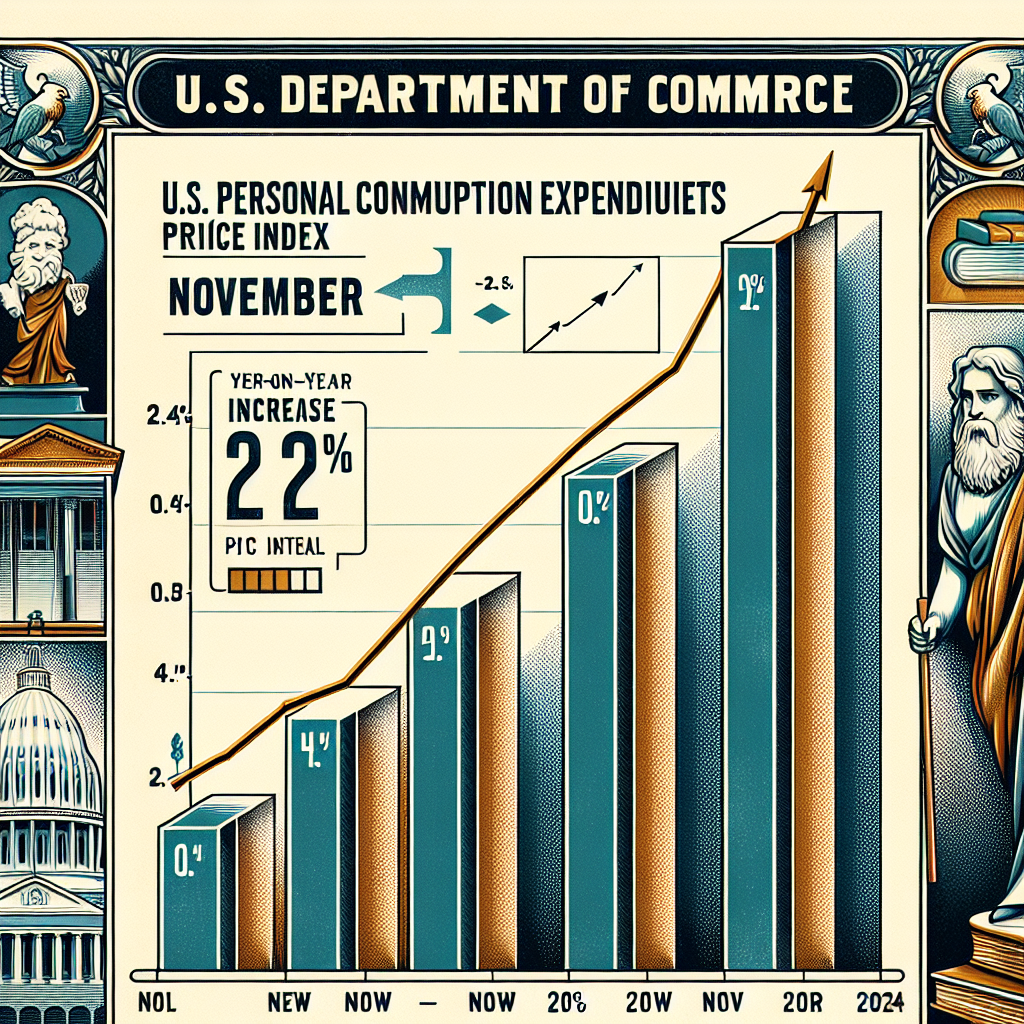
On December 21, 2024, according to a report from the U.S. Department of Commerce on Friday, November’s U.S. Personal Consumption Expenditures (PCE) price index increased by 2.4% year-on-year, up by 0.1% from the previous month. This growth rate was lower than what economists had anticipated but still exceeded the Federal Reserve’s target.
The PCE price index for November provided by the U.S. Department of Commerce, which serves as the Federal Reserve’s preferred inflation gauge, rose by 2.4% compared to the same period last year, slightly higher than October’s 2.3%. This data fell below the economists’ expectation of 2.5% in a survey conducted by Dow Jones & Company but remained above the Federal Reserve’s 2% target. The month-on-month growth data was also 0.1 percentage points lower than expected.
The core PCE price index, excluding food and energy, is a key indicator for the Federal Reserve to measure inflation. This index increased by 0.1% month-on-month and by 2.8% year-on-year, both figures lower by 0.1 percentage points than predicted.
On a monthly basis, overall commodity prices remained almost unchanged, while service prices increased by 0.2%. Both food and energy prices rose by 0.2%.
On an annual basis, overall commodity prices decreased by 0.4%, but service prices rose by 3.8%. Food prices increased by 1.4%, while energy prices fell by 4%.
Personal income increased by 0.3%, with wages growing by 0.6%. After accounting for inflation, disposable household income rose by 0.2%, indicating that some households dipped into savings to make purchases.
The personal savings rate dropped to 4.4%, down from 4.5% in October.
Economists believe that the slowdown in the inflation rate in November will not change the recent signals sent by the Federal Reserve, indicating that the U.S. central bank will slow down the pace of interest rate cuts.