
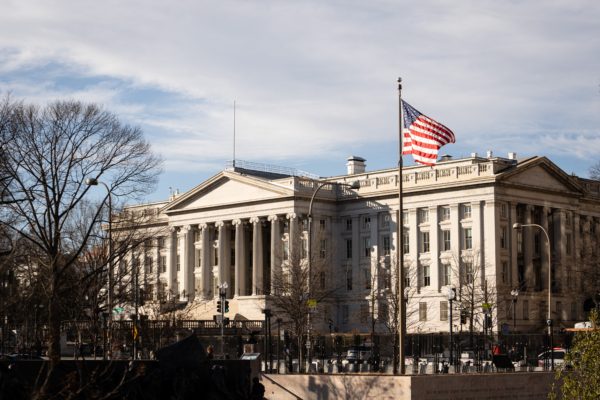
On Tuesday, April 14, the United States government announced sanctions against violent drug trafficking groups in Mexico in an effort to sever the link between drug trafficking and illegal immigration along the US-Mexico border. The US Treasury Department’s Office of Foreign Assets Control (OFAC) revealed that it has imposed sanctions on six entities and individuals involved in money laundering and cash smuggling networks associated with the Northeast Cartel (CDN), considered one of Mexico’s most violent drug trafficking organizations and designated as a Foreign Terrorist Organization (FTO) by the US.
The Northeast Cartel wields significant influence in border regions such as Laredo, Texas, one of the busiest land ports in the southern US.
The three individuals sanctioned by the Treasury Department are considered the “white gloves” of CDN, using their seemingly legitimate and respected professions as a front to facilitate illegal activities such as fentanyl trafficking, human trafficking, money laundering, and extortion in Nuevo Laredo, Tamaulipas, Mexico.
The sanctioned individuals include human trafficker Eduardo Javier Islas Valdez, defense attorney Juan Pablo Penilla Rodriguez, and renowned human rights activist Jesus Reymundo Ramos Vazquez.
Islas was accused of aiding CDN in human trafficking and facilitating illegal immigrant crossings along the Rio Grande into Texas, as well as managing cash hiding spots in Nuevo Laredo to ensure the criminal group’s transnational crime funding remains intact.
Penilla was alleged to have provided illegal services to CDN members beyond his role as a lawyer, assisting high-ranking members of the organization in remotely controlling criminal activities from prison and avoiding US sanctions.
Of particular note is Ramos, chairman of the Nuevo Laredo Human Rights Commission, who was identified as actively employed by CDN while posing as a prominent human rights advocate in the violence-ridden Nuevo Laredo. The Treasury Department revealed that Ramos had been using his activist façade to undermine law enforcement efforts against CDN in Mexico.
In 2023, Ramos publicly accused armed forces of extrajudicial killings and circulated a video purportedly showing military personnel shooting and killing five young people in a pickup truck, with one being executed with a gunshot to the back of the neck. He had also previously accused naval officers of involuntarily disappearing civilians.
These accusations prompted Mexican authorities to detain implicated military personnel for investigation, although it remains unclear if any formal charges or convictions resulted from these investigations.
The Mexican Attorney General’s Office did not respond to requests for comments on Ramos’s allegations or confirm whether an independent investigation was underway.
Additionally, the Treasury Department targeted the Mexico Business and Leasing Company (CAMSA) along with its affiliated Diamante Casino and Casino Centenario, all closely linked to CDN as locations for drug smuggling, money laundering, torture, and intimidation of the organization’s adversaries.
Following the imposition of sanctions, the US government will freeze assets held by Ramos and others in the US and prohibit any transactions with them by US citizens and entities, unless authorized by OFAC. Foreign financial institutions engaging in prohibited transactions with these individuals may face secondary sanctions or lose the ability to open correspondent accounts in the US.
Treasury Secretary Scott Bessent underscored the Department’s commitment to safeguarding the country against violent drug trafficking groups and dismantling their illicit revenue sources such as smuggling fentanyl and trafficking illegal immigrants into the US.
The operation was coordinated by the Homeland Security Task Force (HSTF) in collaboration with the Drug Enforcement Administration (DEA) Laredo Office and the San Antonio District Office, showcasing significant achievements in joint efforts to combat drug trafficking and transnational crime, with future plans for continued cooperation among relevant agencies.