
On April 15th, the Chinese Ministry of State Security disclosed three so-called “spy cases,” one of which involved a foreign-based individual falling into a “honey trap” and betraying a significant amount of national secrets. The three cases, all revealed on the same day, involved individuals who were identified as providing information to foreign intelligence agencies and subsequently being dealt with.
According to a report from the official Chinese media CCTV, a Chinese national named Li, while doing business abroad, was recruited by foreign intelligence agencies during his stay overseas. One day, Li specifically visited a Chinese government employee named Guo stationed in that country. During their interaction, Li noticed that Guo was careless, enjoyed drinking alcohol, and had a weakness for women, and he reported these details to the foreign intelligence agency.
Official disclosure revealed that Guo was later taken to a local “entertainment venue.” Suddenly, local police entered the scene and apprehended him. A person claiming to be able to “resolve the issue” then intervened, communicating with the authorities and helping Guo escape. Shortly after, the individual showed Guo a photo of his arrest and used it as leverage to coerce cooperation. Guo then provided information through copying, summarizing, and orally communicating, leading CCTV to describe him as “betraying a significant amount of national secrets.”
Hebei political commentator Gao An (pseudonym) expressed doubts about the credibility of the information released by the Chinese authorities, noting the lack of specifics such as time, location, and detailed circumstances. Gao stated that the scenario followed a typical story arc where an individual is lured into a seemingly relaxed social environment, only to be suddenly confronted by law enforcement and coerced into collaboration under the threat of exposure.
Gao further explained that intelligence agencies typically do not immediately demand actions but gradually reveal their identities during the contact process to assess willingness to cooperate. He pointed out the similarity between the tactics reported by the Chinese Ministry and a recruitment strategy seen in US intelligence advertisements seeking Chinese informants, depicting a scenario akin to a movie plot involving seduction.
In addition to the aforementioned case, another case involved a foreign-based employee receiving rewards and providing information while interacting with foreign nationals. The third case revolved around a student studying abroad who was recruited, returned to China and entered a military unit, and continued to gather and provide relevant information in the field of military technology.
Chinese scholar Song Ping commented that in recent years, Chinese official media has repeatedly emphasized similar cases, highlighting a logic that personal vulnerabilities can be utilized as control methods. However, the authenticity of these cases remains questionable. Song noted the selection of these three cases targeted specific individuals who had access to internal information and opportunities to interact with the external world, reflecting the Chinese government’s concern about individuals with dual exposures potentially causing uncontrollable information flow.
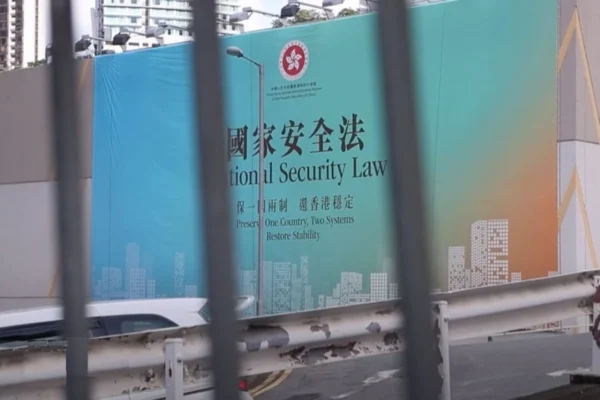
April 15th is designated as National Security Education Day, and the individuals involved in the three disclosed cases reportedly underwent a process of contact abroad, gradual cooperation development, and continuous information provision before being dealt with. Song criticized the propaganda efforts surrounding these cases as promoting an ideology reinforcing patriotic sentiments and instigating anti-Western sentiment, which he deemed abnormal.
In the announcements of the three cases, the Ministry of State Security included so-called “security reminders,” such as “beware of falling into traps” and “foreign countries are not free heavens.” These expressions have been recurrent in recent years with minor variations in content.
Since the implementation of the amended Counter-Espionage Law on July 1, 2023, the Chinese Ministry of State Security has been promoting anti-spy propaganda, including the widely mocked “walking 500,000,” a system offering rewards up to 500,000 Chinese yuan for individuals who report successful espionage activities. Nonetheless, many of the disclosed cases remain unverified by foreign media, and public recipients of the rewards have not been made known, leading to skepticism among scholars and netizens regarding the authenticity of the official content.