
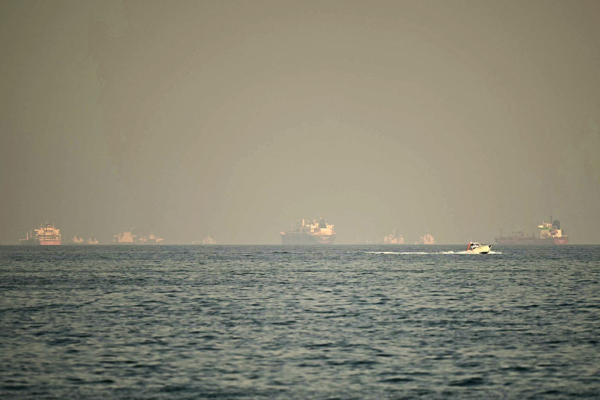
At 10 a.m. Eastern Time on Monday, the U.S. military began a blockade of Iranian ports, prohibiting ships from entering or departing. By Tuesday (April 14th), the U.S. Central Command announced that within the initial 24 hours, no vessels had breached the blockade, with six ships turning back towards Iranian ports in the Gulf of Oman.
The Central Command posted on X platform on Tuesday detailing the deployment of U.S. forces to carry out the mission of blocking Iranian ports. The Command wrote that over 10,000 U.S. Navy, Marine Corps, and Air Force personnel, along with more than 12 ships including aircraft carriers and 100 aircraft, were engaged in enforcing the blockade of Iranian ports.
“Within the initial 24 hours, no ships breached the U.S. blockade, and six merchant vessels followed U.S. instructions, turning back towards Iranian ports in the Gulf of Oman,” stated the Central Command.
The Command reiterated that the blockade applies equally to all ships entering or departing Iranian ports and coastal areas, including all Iranian ports in the Arabian Gulf and Gulf of Oman. “The U.S. supports the freedom of navigation for ships traveling to and from non-Iranian ports through the Strait of Hormuz.”
As stated by the Central Command on Sunday, the blockade only applies to ships entering or departing Iranian ports and coastal areas. The Central Command mentioned that ships traveling to and from other regions are allowed passage.
A U.S. official told CNN that the U.S. Navy did not escort any ships through the Strait of Hormuz, but has been in communication with merchant vessels that have not entered Iranian ports, informing them of safe passage and encouraging them to proceed.
The official also mentioned that the U.S. dispatched a destroyer through the Strait of Hormuz over the weekend to demonstrate the existence of a secure waterway.
According to data reported by Reuters citing shipping data, at least three ships passed through the Strait of Hormuz within the first 24 hours of the blockade’s implementation, including two oil tankers subject to U.S. sanctions. Reuters noted that these three ships were not heading towards Iranian ports.
Additionally, data intelligence and analysis platform Kpler reported that at least nine merchant ships have crossed the Strait of Hormuz since yesterday.
On Tuesday, both the U.S. and Iran expressed willingness to continue talks. Previously, a U.S. delegation led by Vice President Vans engaged in 21 hours of negotiations with an Iranian delegation led by Speaker Galibaf, but no breakthrough was achieved. This meeting marked the highest-level face-to-face contact between the two countries since the Islamic Revolution in 1979.
Key unresolved issues between the two sides include control of the Strait of Hormuz, the future of Iran’s nuclear program, and whether the ceasefire agreement applies to Israel’s ongoing attacks and bombings on Hezbollah in Lebanon.