
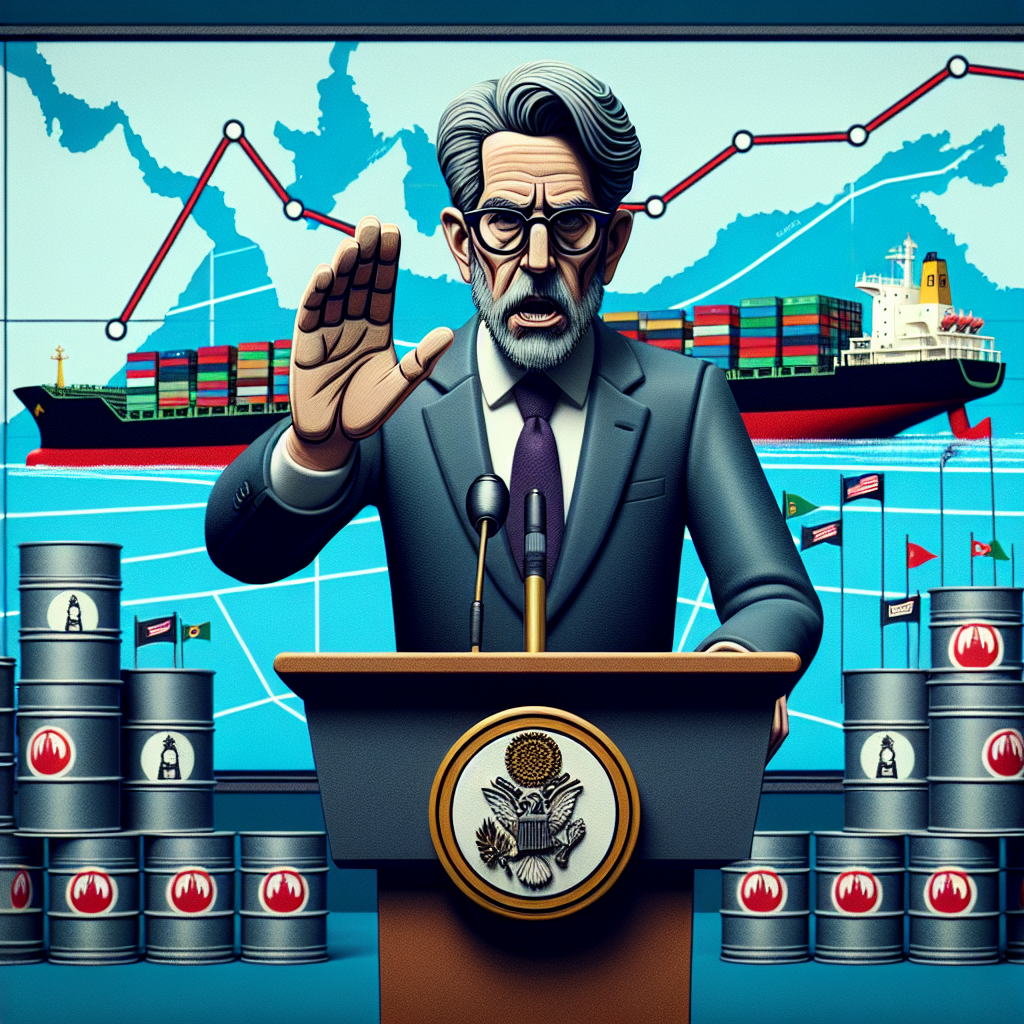
The US Secretary of the Treasury, Scott Bessent, on Tuesday (April 14) condemned China for not only failing to help ease the traffic in the Strait of Hormuz during the Iran war, but also taking advantage of the situation to hoard oil and restrict the export of certain goods, much like its hoarding of medical supplies during the COVID-19 period, thus making it an unreliable international partner. He stated that in the past five years, China has been an unreliable partner on three occasions.
Bessent told the media on Tuesday that he has raised this issue with Chinese officials.
As to whether this dispute will affect the planned visit of US President Trump to China, Bessent did not give a direct answer, but mentioned that Trump has a very good working relationship with the Chinese leader, Xi Jinping.
“I believe the message conveyed by this visit is one of stability. Since last summer, bilateral relations have been maintained at a high level of stability, driven from the top down. I think communication is key,” he said.
However, this has not stopped Bessent from criticizing China’s behavior during the Iran war.
“Over the past five years, China has been an unreliable international partner on three occasions. Once during the COVID epidemic, when they hoarded medical products, and another time on the rare earth issue,” said Bessent, referring to Beijing’s threat last year to restrict rare earth exports.
Bessent went on to say that currently China is not only failing to help alleviate the global oil demand shortage caused by the blockade in the Strait of Hormuz, but is also hoarding even more oil.
China already has strategic oil reserves roughly equivalent to the total reserves of 32 member countries of the International Energy Agency, yet they continue to purchase oil. Bessent said, “They have been buying and hoarding continuously, and have cut off exports of many products.”
The International Monetary Fund, World Bank, and International Energy Agency urged countries on Monday to avoid hoarding energy supplies and implementing export controls to prevent exacerbating the biggest impact on the global energy market in history. However, they did not name specific countries.
Following the breakdown of negotiations on the nuclear issue between the US and Iran in February, President Trump ordered a joint military operation between the US and Israel starting on February 28 to address Iran’s nuclear threat. Iran subsequently blocked the Strait of Hormuz, causing oil prices to soar by 50% and disrupting the supply chain. The Strait of Hormuz is the world’s most important energy chokepoint, transporting approximately one-fifth of global oil and natural gas.
President Trump had urged countries affected by the Iranian blockade to send warships to the Middle East to remove the threat on the Strait of Hormuz, specifically calling out China.
“I think China should also provide assistance because 90% of China’s oil comes from the Strait of Hormuz,” Trump said in an interview with the Financial Times.
(This article references a report from Reuters.)