
Recently, the Four Seasons Center for the Performing Arts in Toronto, Canada canceled multiple performances of the Shen Yun Art Troupe due to a “bomb threat,” even though the police have deemed the threat “not credible.” This incident has sparked strong attention from the Canadian political and social spheres. Several members of Parliament have publicly denounced it as interference by foreign forces, specifically pointing fingers at the Chinese Communist Party.
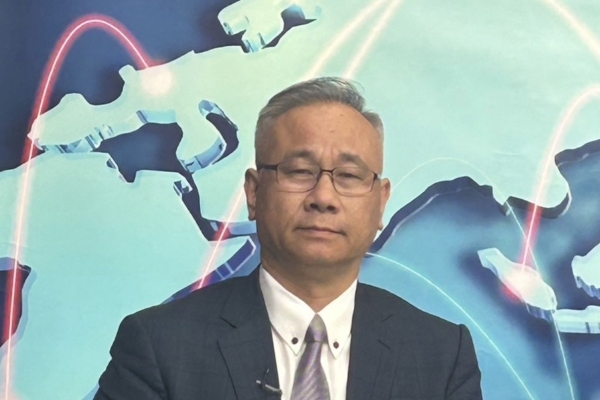
National security strategist and Vice President of Taiwan’s Southern University, Chen Wenjia, expressed his concern by stating, “This incident has transcended mere public safety concerns, reflecting the CCP’s transnational suppression of overseas culture and freedom of speech, which deserves stern condemnation.”
Chen Wenjia offered an exclusive analysis and interpretation of the Toronto Shen Yun incident in six aspects.
The Shen Yun Art Troupe has long focused on promoting traditional Chinese culture but has repeatedly faced interference from the Chinese Communist Party. By forcing the cancellation of performances through false threats, the CCP has demonstrated extending its repressive tactics from within its borders to democratic nations. The characteristic of CCP operations is to lower responsibility anonymously, impose self-censorship citing security concerns, avoid direct confrontation with systems, yet affect their functioning, thus this “transnational oppression” not only infringes on cultural freedom but also challenges national sovereignty and the rule of law.
This case highlights the core logic of CCP cognitive warfare, which magnifies perceived risks through false threats, leading decision-makers to choose conservative actions in uncertain situations. Even if the threat lacks authenticity, it still successfully achieves the goal of canceling performances. This type of strategy does not directly suppress but induces the opposing party to “voluntarily give up,” which will gradually form a “chilling effect,” causing cultural and public institutions to tend towards self-censorship, gradually eroding freedom spaces.
With just a single threat, a large-scale cultural event can be canceled, setting a dangerous precedent allowing the CCP to intervene in public life at a very low cost. Moreover, what is more concerning is that such actions may intertwine with a broader network of influence through economic, political, or social relationships, affecting decision-making. Therefore, this “soft penetration” by the CCP is hard to detect but has a long-term erosion effect on institutional trust and governance capabilities.
The strong response from the Canadian political sphere is due to the event touching on core values, namely freedom of speech, cultural diversity, and the rule of law. Canadian lawmakers have explicitly pointed out that foreign intimidation and interference threatening democratic systems and national sovereignty should not be tolerated. Thus, this event fundamentally involves institutional competition, where one side uses intimidation and control to exert influence while the other must uphold the basic principles of freedom and openness. If democratic societies yield under pressure, it will weaken the legitimacy of their own systems.
This event has direct implications for Taiwan. The CCP’s operating mode in Canada is highly consistent with its cognitive warfare against Taiwan, focusing on creating panic, manipulating information, and influencing decision-making. The difference lies in the fact that Taiwan faces more frequent and systematic pressures. If this “low-cost intervention” proves effective, it could be replicated in elections, policy debates, and social issues, further impacting democratic operations.
In conclusion, the incident at the Four Seasons Theater in Canada demonstrates the CCP’s extension of its suppression actions from within its borders to a global scale, combining cognitive warfare and institutional infiltration to pose a new type of threat to democratic societies. Its essence lies not in a single event but in gradually changing decision-making environments and behavioral patterns through intimidation and uncertainty.
In the face of such challenges, Chen Wenjia believes that democratic countries should take more explicit actions, such as strengthening mechanisms to counter CCP interference, enhancing recognition of cognitive warfare capabilities, and firmly defending freedom of speech and culture. Only by doing so can they avoid gradually losing institutional resilience in the “silent war.” It is not just an issue for Canada but a security and values test faced by the entire global free society.