
The ongoing Iran war has led to a major disruption in oil supply from the Middle East, causing significant impacts on Asia and Europe. The resulting shortage of aviation fuel may disrupt summer travel this year.
Iran’s blockade of the Strait of Hormuz has severed most of the oil exports from the Middle East. Prior to the US and Israeli military strikes on Iran on February 28th, the Persian Gulf region was the largest single source of aviation fuel for the global market, according to data from the International Energy Agency (IEA).
The disruption in aviation fuel supply has directly impacted Europe, as it is the largest region importing aviation fuel raw materials from the Middle East. Data from the IEA shows that around 20% of Europe’s aviation fuel comes from the Gulf region.
Another significant exporter of aviation fuel in the global market is from refineries in China, South Korea, and India. However, these refineries heavily rely on crude oil from the Middle East. Prior to the outbreak of the Iran war, approximately 90% of the crude oil exported by Gulf countries via the Strait of Hormuz flowed to Asia.
According to data from the commodity analytics firm Kpler, global aviation fuel exports plummeted by 30% in April to 1.3 million barrels per day, down from 1.9 million barrels per day during the same period last year. Last week, the volume of aviation fuel loaded onto tankers decreased from 37.8 million barrels in the same week of 2025 to 18.6 million barrels, a reduction of nearly 50%.
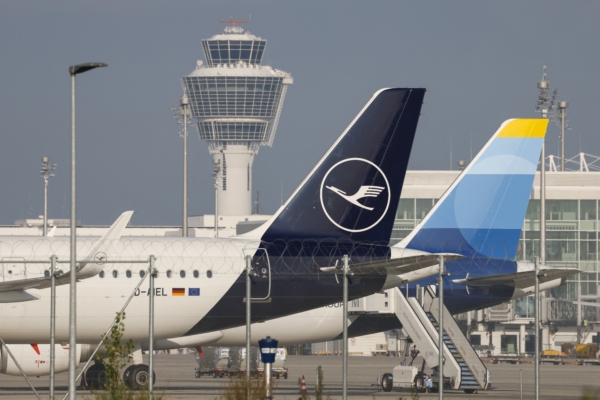
With soaring aviation fuel prices, some major airlines have been forced to reduce flight schedules. One of Europe’s largest airlines, Lufthansa, has cut 20,000 short-haul flights until October, partly due to the surge in fuel costs.
According to data from the International Air Transport Association (IATA), the price of aviation fuel in Europe doubled to $187 per barrel by May 1 in the past year.
The Airports Council International Europe warned its 27 member countries in a letter on April 9 that if oil exports through the Strait of Hormuz are not significantly and stably restored within three weeks, the aviation fuel shortage issue will impact Europe. Experts further suggest that even if the conflict ends, the flow of oil is unlikely to return to normalcy quickly.
Meanwhile, Asia is also facing pressure from the aviation fuel shortage, as refineries in Asia have lost significant oil supply from the Middle East. This could potentially affect aviation fuel exports to the US West Coast, particularly California.
According to the Energy Information Administration (EIA), in 2025, the US West Coast imported 93,000 barrels of aviation fuel per day, with over 80% coming from South Korea.
(Information sourced from CNBC)