
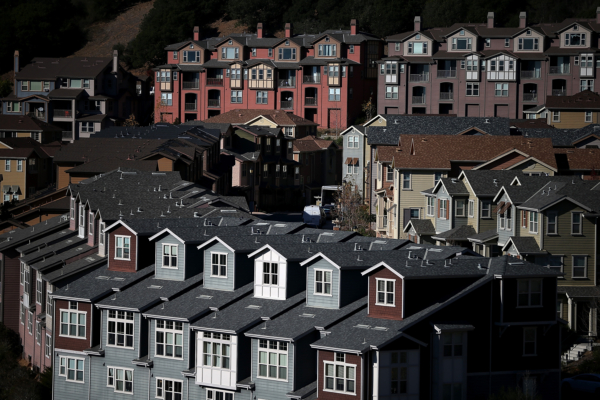
According to a report released by Realtor.com on May 5, multi-generational living is gradually increasing in the United States, with California leading in such housing supply nationwide.
Multi-generational living refers to families with three or more generations living together. The report found that as of 2025, there were nearly 4 million multi-generational households in the United States, accounting for 4.5% of owner-occupied homes, up from 4.3% in 2014 and 2019.
The median listing price for multi-generational homes in the United States is $709,000, approximately 65% higher than the standard home price of $430,000, partly due to the larger size of these properties.
The report points out that key terms often seen in descriptions of these properties include “in-law suite” or “guest house”.
Hannah Jones, a senior economic research analyst at Realtor.com, stated, “Multi-generational living has become a significant force in the housing market. The core of this living arrangement lies in common goals and mutual care, quietly reshaping the lives of American families.”
Jones mentioned that the increasing demand for multi-generational homes is attributed to rising housing and childcare costs, cultural traditions, and the increasing availability of remodeled properties making multi-generational living more feasible.
Strong Demand for Multi-generational Homes in Western Urban Areas
She further stated that the demand for such properties is particularly strong in western urban areas in the United States, with California accounting for 14% of related properties, compared to only 2.9% in the Midwest.
The report revealed that the top five cities with the highest proportion of multi-generational homes are all located in California, with Los Angeles leading at 23.7%, followed by San Diego at 22.7%, San Jose at 18%, San Francisco at 17.4%, and Riverside at 14.9%.
In terms of pricing, San Jose has the highest median listing price for multi-generational homes at $2.05 million, followed by San Diego and Los Angeles at $1.41 million each, and San Francisco at $1.29 million.
The report noted that buyers seeking this type of housing in San Francisco are willing to pay an average of 8.4% above the listing price, while in Los Angeles, they are willing to pay 1.6% above the price.
Another Realtor.com report pointed out that many families choose these properties to offer a “transition” option for elderly parents to move into an accessory dwelling unit while maintaining a certain level of independence.
Furthermore, some California families looking to enter high-quality school districts or upscale communities combine funds with parents or other family members to purchase a home.
Multi-generational homes also attract international buyers and executives from technology companies, who often require long-term accommodations for visiting relatives.
Jiayi Xu, an economist at Realtor.com, stated, “Although the percentage of multi-generational families has remained relatively stable over the past decade, the number of families opting for this living arrangement has increased from 3.2 million in 2014 to 3.9 million in 2024. This indicates that with the driving forces of high housing prices and childcare costs, cohabitation is becoming an increasingly common choice for American families.”