
Under the dual squeeze of the Chinese Communist Party’s financial and fiscal policies, the return on equity (ROE) of 42 listed banks in China’s A-share market has been declining steadily in recent years. By 2025, the ROE of the six major state-owned banks has universally decreased, with only two banks managing to hold onto a 10% level.
According to a report by the Securities Market Weekly on May 5th, based on data from Wind, a Chinese financial data and analysis service provider, the weighted average ROE of the 42 A-share listed banks was 11.26% in 2021, but by 2025, this figure had dropped to 9.61%.
Looking at the number of banks, in 2021, 33 A-share banks had ROE above 10%, but by 2025, only 18 remained in that category.
One of the key reasons affecting ROE is the slowdown in growth of net profits attributable to shareholders. From 2021 to 2025, the year-on-year growth rates of net profits of the 42 A-share listed banks were 14.76%, 10.94%, 5.13%, 5.16%, and 2.13% respectively.
Against the backdrop of the CCP continuing to depress loan interest rates and compress the profitability space of the banking industry, the deceleration in bank profit growth is closely aligned with the continuous decline in net interest margins. Data from the China Banking and Insurance Regulatory Commission shows that by the end of each quarter from 2021 to 2025, commercial bank net interest margins were 2.08%, 1.91%, 1.69%, 1.52%, and 1.42% respectively.
The net interest margin is an important indicator of the profitability of banks’ deposit and lending businesses. According to data from the China Banking and Insurance Regulatory Commission, as of the end of 2025, non-interest income accounted for 22.53% of commercial banks’ total income, indicating that interest income still constitutes a significant portion of banks’ operating income.
During a performance meeting in 2025, a high-ranking executive of a commercial bank pointed out the close relationship between the level of ROE and net interest margin, which is directly correlated to liability management.
In recent years, as the loan market quoted rate (LPR) continued to decline, the interest rates on bank deposits gradually decreased, but the trend of residents’ deposits becoming fixed-term remained. In this context, banks kept lowering deposit rates while adjusting deposit structures to minimize the cost of liabilities.
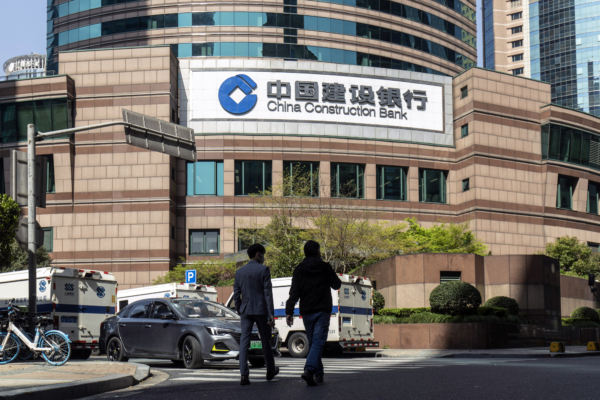
In 2021 and 2022, all six major state-owned banks maintained an ROE above 10%. However, starting from 2023, banks began to see their ROE fall below the 10% mark. By 2025, only Agricultural Bank of China and China Construction Bank remained above 10%.
Data from Wind indicates that in recent years, the growth rates of net profits attributable to shareholders of the six major state-owned banks have been continuously decreasing, with figures for 2021 to 2025 standing at 12.73%, 6.69%, 1.90%, 1.64%, and 1.72%, respectively.
Among them, Agricultural Bank of China has shown relatively better performance. Since 2023, the year-on-year growth rate of net profits attributable to shareholders of Agricultural Bank of China has remained leading among the six major state-owned banks.
Apart from the slowdown in profit growth, the CCP’s capital injection into state-owned major banks through special treasury bonds has further diluted their ROE performance.
In 2025, the Ministry of Finance of the CCP issued 500 billion yuan of special treasury bonds to inject capital into China Bank, Construction Bank, Bank of Communications, and Postal Savings Bank of China. This significantly increased the share capital of the four state-owned major banks.
The financial report of China Construction Bank shows that the shareholder’s equity at the end of 2025 was 3.69 trillion yuan, an increase of 342.12 billion yuan or 10.23% compared to the previous year. Among that, the issuance of A-shares to specific entities to enhance core Tier 1 capital contributed to the increase in share capital and capital reserves by 104.966 billion yuan.
China Bank’s shareholder’s equity increased from 2.95 trillion yuan at the beginning of 2025 to 3.21 trillion yuan by the end of the year, representing an 8.81% year-on-year increase.
In terms of the number of shares, the total common shares of Bank of Communications increased from 742.63 billion shares at the end of 2024 to 883.64 billion shares at the end of 2025, a growth of 18.99%; while the total common shares of Postal Savings Bank increased from 991.61 billion shares to 1,200.95 billion shares, representing a growth of 21.11%.
In 2026, the Ministry of Finance of the CCP will issue another 300 billion yuan of special treasury bonds to continue injecting capital into two other state-owned major banks.
Among the nine listed joint-stock banks on the A-share market, only China Merchants Bank had a weighted ROE above 10% in 2025. However, the ROE of China Merchants Bank had dropped from 16.96% in 2021 to 13.44% in 2025.
During a performance meeting, the President of China Merchants Bank, Wang Liang, mentioned that the decrease in ROE is related to the continuous accumulation of net assets after annual dividends and an expansion of the denominator, as well as the slowdown in profit growth.
Among joint-stock banks, China CITIC Bank followed China Merchants Bank with the second-highest ROE in 2025. China CITIC Bank exhibited relatively stable ROE performance over the past five years, with its year-on-year growth rate of net profits attributable to shareholders remaining positive. In 2025, China CITIC Bank saw a 2.98% year-on-year growth in net profits attributable to shareholders, ranking at the forefront among joint-stock banks.
Regional banks predominantly have high ROE. Among the 42 A-share banks, the highest number of banks with ROE above 10% belong to regional banks, totaling 15 banks.