
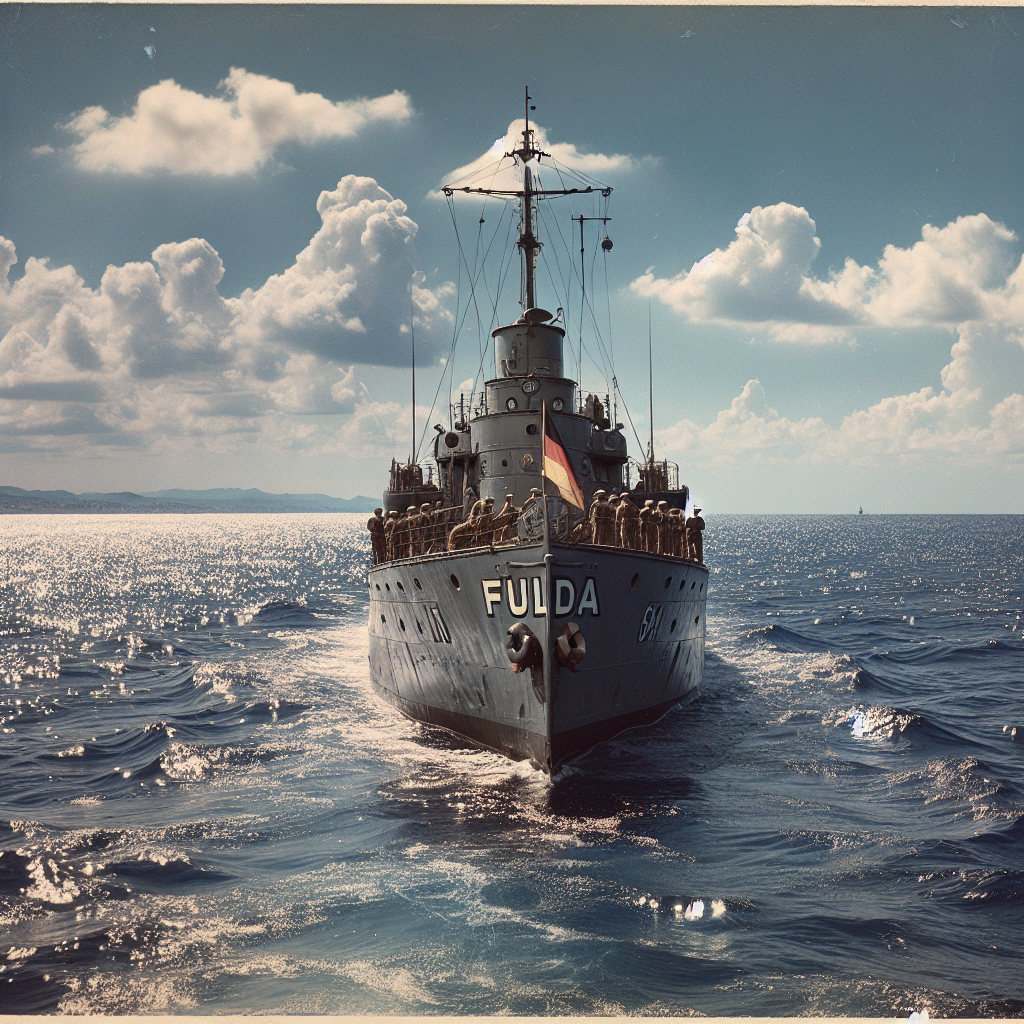
German public broadcaster Deutsche Welle reported on Tuesday (May 5th) that the minesweeper “Fulda” has set sail for the Mediterranean Sea. The report stated that the German armed forces may assist in clearing mines in the Hormuz Strait, but specific conditions must be met.
The minesweeper “Fulda” has departed from the Kiel-Wik naval base in the Baltic Sea, heading towards the Mediterranean. Its specialized equipment for tracking and destroying mines will provide crucial support for NATO’s anti-mine operations.
If the conditions are met and Germany begins to participate in international operations in the Hormuz Strait, the ship will play a significant role, as per the report.
Since the outbreak of the Iran war on February 28th, the Iranian regime has been blocking merchant ships from passing through the Hormuz Strait, claiming to have laid mines in the area. The strait is one of the world’s most important trade routes. The blockade has led to a surge in global oil and liquefied natural gas prices.
German Chancellor Merkel has repeatedly stated that Germany is willing to help facilitate a peaceful agreement with Iran, on the condition that the war in Iran must end.
On Sunday evening, Merkel reiterated this point in an interview on German television station ARD’s “Caren Miosga” program, stating that she had personally assured US President Trump during her last visit and phone call that they want to see an end to the war and are willing to provide assistance.
According to Deutsche Welle, the German Navy has been continuously carrying out mine clearance operations since the end of World War II, particularly in the Baltic Sea. Germany has ten minesweepers equipped with modern drones and well-trained clearance divers, placing them in a leading position internationally. Within NATO, mine clearance technology is considered a scarce and valuable skill.
The final decision on whether the minesweeper will participate in the operation will be made by the German Federal Parliament.
Like any overseas deployment of the German armed forces, naval missions in the Hormuz Strait must comply with the German Basic Law and decisions of the Federal Constitutional Court (Germany’s highest court). Firstly, the mission must be part of a “collective security system,” such as the United Nations, NATO, or the European Union.
Secondly, the German Federal Parliament must be informed of the overseas deployment and hold discussions on it before approving the authorization. The authorization document specifies the specific tasks of the German Federal Armed Forces, including the military assets to be deployed, the operational area, the total force, and the duration of the mission.
Approval of a mission by the German Parliament may take several days or even weeks. The German Navy is already making preparations.
Commander Inka von Puttkamer, head of the 3rd Minesweeper Squadron, stated at a press conference in the Kiel Naval Base, “All our resources have been deployed. The situation for the minesweeper squadron is particularly so.”
Commander von Puttkamer emphasized that dangerous mine-clearing operations can only be conducted in minefields under adequate protection.
He said, “Only after threats from land and air have been eliminated, can mine-clearing forces be deployed. Just as escort vessels cannot detect mines, minesweepers cannot engage in aerial combat. Therefore, you will always see us working in coordination with escort vessels and light frigates.”
The new P-8 “Poseidon” maritime patrol aircraft may also play a role in these operations.
German Defense Minister Boris Pistorius stressed that cooperation with partners, especially with the United States, is essential for the success of this mission.
The extent of Iran’s mining in the Hormuz Strait is currently unclear. Given the recent escalation of tensions around the Hormuz Strait, the likelihood of war ending seems slim.