
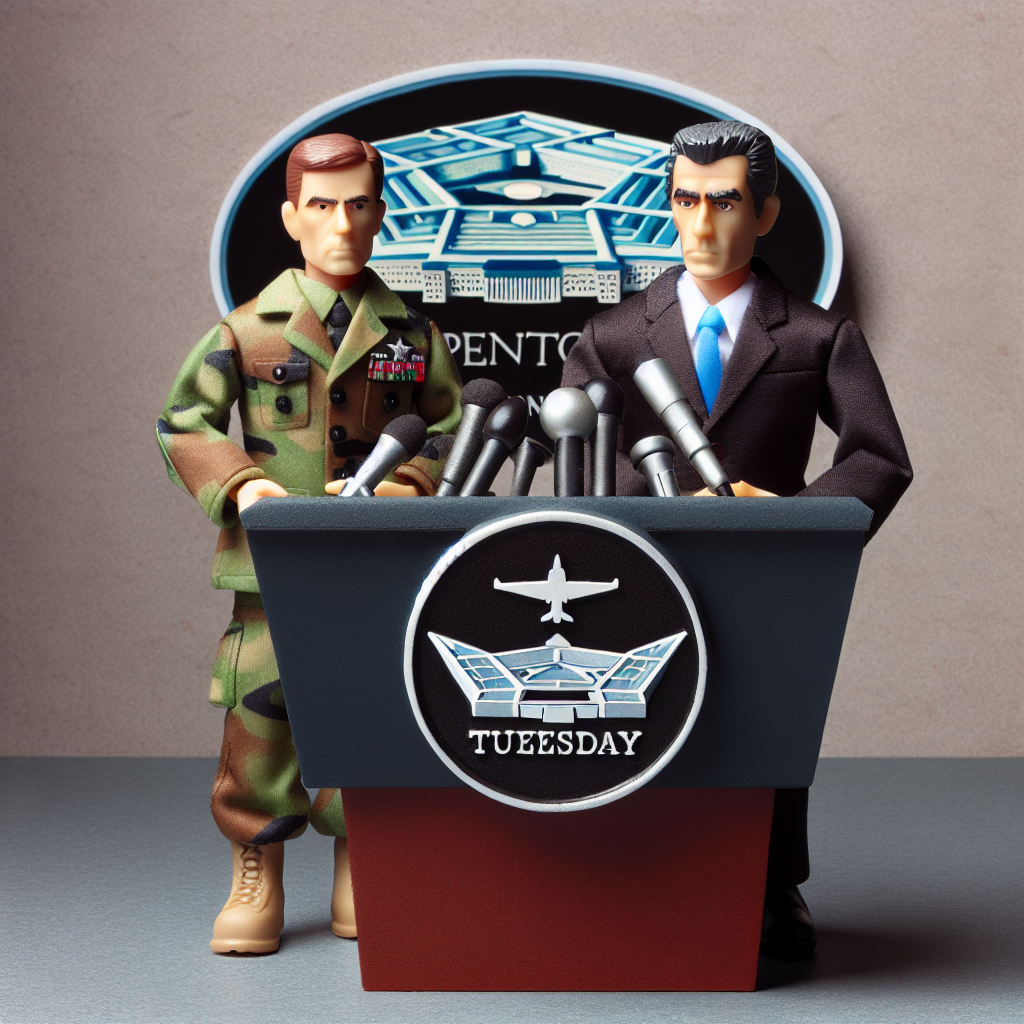
On Tuesday, May 5th, United States Secretary of Defense Hagse and Chairman of the Joint Chiefs of Staff General Kane held a press conference at the Pentagon, confirming the ongoing effectiveness of the ceasefire between the United States and Iran. General Kane described Iran’s attacks on US military as a desperate move, with Iran resorting to such actions due to feeling cornered. Analysts of maritime security also noted that Iran’s attacks on the UAE were borne out of desperation.
Since President Trump’s initial announcement of the ceasefire on April 8th, General Kane stated that Iran has launched attacks on US military “over a dozen times.” However, he emphasized that these attacks have not reached the level to reignite large-scale combat operations. He further added, “It feels like Iran is grasping at straws.”
“Since the ceasefire announcement, Iran has fired upon commercial ships nine times and seized two container ships. These actions are among Iran’s attempts to disrupt global trade,” Kane said.
He also mentioned that due to the disruptions in trade, approximately 22,500 seafarers and over 1,550 commercial ships are stranded in the Persian Gulf.
Despite skirmishes between US and Iranian forces in the Strait of Hormuz, Hagse reiterated during the press conference that “the ceasefire is still in place.” He acknowledged that there were some “confusion” in the early stages of the US escort missions leaving the Strait of Hormuz on Monday.
Hagse also asserted that the ongoing action is distinctly different from the military operations underway in the region and is essentially defensive, limited in scope and duration, referring to President Trump’s “Freedom Project” initiative proposed on Sunday.
Emphasizing that the Trump administration deems the US-Iran ceasefire still valid, Hagse asserted that the President does not require approval from Congress to continue the conflict.
General Kane added that Iran’s actions are impacting a crucial maritime route responsible for carrying approximately one-fifth of global oil consumption, and the US military is striving to ensure shipping safety and uphold freedom of navigation, specifically in the Hormuz Strait.
With US escort operations in the Strait of Hormuz, Iran’s negotiation leverage is diminishing. Maritime security analyst Alexandru Hudisteanu highlighted that Iran is gradually losing control over the Strait of Hormuz.
Hudisteanu told Peninsula TV, “Every time the US allows a passage through the strait, Iran’s negotiation leverage decreases.”
“The US has made it clear: ‘Look, we’ve done it. We may stop doing this at some point, but you (other countries) should seize this opportunity because we’ve proven there is a pathway that we can share with you,'” he said.
Hudisteanu further mentioned that the US’s differentiation between opening the strait for passage and its “Freedom Project” and “Operation Epic Fury” has resulted in a strategic victory over the authorities in Tehran.
“This is a major strategic loss for Iran, and in desperation, they have attacked the UAE and other countries,” he stated.
On Monday, the UAE reported intercepting 15 missiles and 4 drones launched by Iran, marking the first attack on the UAE since the US-Iran ceasefire on April 8th. One of the drones struck the Fujairah Petroleum Industries Zone, causing a significant fire and injuring three Indian citizens.
The UAE Ministry of Defense stated on Tuesday that their defense system is actively countering the missile and drone threats from Iran.
Hudisteanu predicted that the US could continue new military operations in the Strait of Hormuz for at least a few weeks, with the potential for an extension in operation time if other countries are willing to participate.