
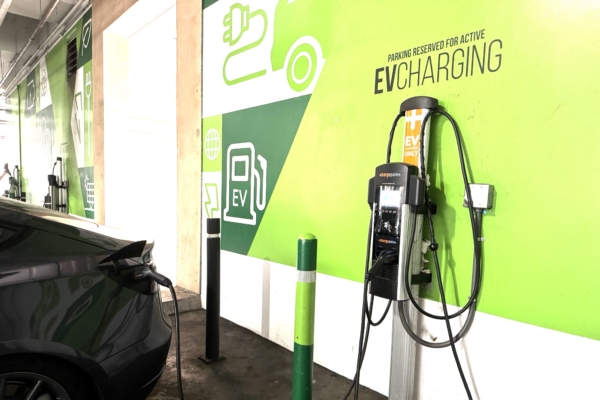
More than 80% of charging pile operators in China are facing losses, with top enterprises netting only 4 cents per kilowatt-hour (RMB, below). The entire charging pile industry is facing a serious profitability crisis due to cut-throat competition to attract customers with low prices.
According to a report by “Quick Technology” under Zhengzhou Hengkuai Information Technology Co., Ltd. on May 4th, the number of charging piles in mainland China is rapidly increasing. By the end of February 2026, the total number of charging facilities in China reached 21.01 million, a 47.8% year-on-year increase. The ratio of charging piles to vehicles is close to 1:1, with some areas even experiencing more piles than vehicles, and the utilization rate of some low-power piles is less than 10%.
The surge in the number of charging piles has put significant pressure on companies operating them. A operator in Qingdao, Shandong Province saw its revenue drop from 500,000 yuan in 2020 to only 80,000 yuan in 2023, with an annual profit of around 60,000 yuan. After deducting rigid expenses such as equipment depreciation, site rent, and human operation and maintenance, the net profit per kilowatt-hour for top enterprise charging stations is only 4 cents.
The proliferation of charging piles is primarily due to car manufacturers and battery companies entering the market and squeezing the space for third-party operators to survive. Companies like BYD, NIO, CATL, and others offer charging as part of vehicle sales services, without aiming for charging profits, diverting core customer traffic.
Furthermore, rapid technological advancements have rendered early low-power charging piles unprofitable, leading to the pressure of losses on operators who have to update or upgrade them.
Additionally, intensified competition has made service providers hesitant to raise prices and resort to competing on low prices, causing a continuous price war that squeezes providers’ profit margins.
The report concludes that overall, the industry’s long-term operation at low prices is unsustainable, with most operators deeply entrenched in the quagmire of losses.