
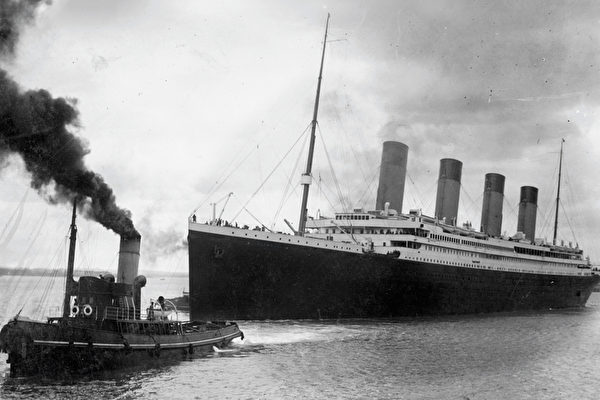
Recently, the Prague Titanic exhibition displayed a hundred artifacts salvaged from the wreckage of the Titanic, including personal items of passengers, tableware, iron windows, and chandeliers. These artifacts have been carefully restored and preserved by a professional team, telling the legendary and tragic story of the Titanic.
According to the exhibition description, the Titanic was the largest and most luxurious ship of the early 20th century, capturing the world’s attention upon its launch. However, on the night of April 15, 1912, the Titanic struck an iceberg and sank 400 nautical miles from New York, resulting in the loss of 1496 lives out of 2208 on board. The ship broke into two pieces, and items from the cabins, kitchens, engine rooms, and boiler rooms scattered into the vast ocean.
The RMS Titanic company has conducted 9 expeditions to explore the wreckage of the Titanic, recovering over 5500 artifacts from the vast debris and meticulously restoring them. The exhibition in Prague showcases around 100 original artifacts, including ship components, passengers’ combs, postcards, perfume bottles, as well as tableware, windows, chandeliers, and coal used to power the engines.
These artifacts endured cold temperatures, asphalt, and immense pressure on the seabed, but have now been brought to light after decades of soaking. The exhibition also recreates the bow shape of the ship, cabins, dining rooms, luxurious salons, the deadly iceberg, a proportional outline of a lifeboat, and a memorial area dedicated to the victims.
According to Czech media Novinky.cz, curator of the Titanic exhibition Květa Havelková stated, “All items were salvaged from a depth of about 4 kilometers and professionally restored. The exhibition accurately replicates the Titanic’s cabins and features an immersive experience area, allowing visitors not only to see the luxurious interiors but also to feel the atmosphere of the sinking ship at that time.”
Titanic collection expert Jeff Taylor told Novinky.cz, “These artifacts were submerged on the seabed from 1912 until at least 1987. We only salvaged items outside the ship. With the ship split in two, many items fell to the seabed. We did not enter the interior of the ship.”
After each artifact is salvaged, it undergoes initial processing to prevent damage from sudden environmental changes. Preservation personnel photograph, measure, evaluate the condition, input information into a database, assign an identification number to each item, then place it in a box lined with damp padding for safe transportation to a land-based conservation laboratory.
Due to the diverse types and materials of Titanic artifacts, upon arrival on land, a team of specialists in paper, textiles, wood, metal, ceramics, and leather preservation is needed to carry out the restoration process. These precious artifacts are currently stored in a warehouse in Atlanta, USA, equipped with temperature and humidity control systems, providing different storage environments based on the materials.
Taylor mentioned that the most recent salvage of the Titanic was in 2004 and they hope to go back in the future. However, complications have arisen recently, with some legal restrictions and certain countries not wanting people to approach the Titanic again. Negotiations are ongoing, but the outcome remains uncertain.
Unfortunately, the Titanic is slowly being corroded by iron-eating microbes, and there is currently no effective protection technology to preserve the ship’s hull itself. Scientists predict that this will lead to the collapse and implosion of the Titanic within 40 to 90 years.
Taylor expressed, “The story of the Titanic continues to fascinate because it is a universally resonant story for everyone, regardless of where they come from. It is about human trust in things. We never know when a disaster will strike, and we are always curious about why and how this tragedy happened.”
The exhibition also presents many personal and poignant stories of passengers, documenting their life details and reasons for boarding. First-class, second-class, and third-class passengers had different expectations, with some traveling to the USA to visit relatives, others for business negotiations, and some seeking a better life.
For example, 27-year-old Franz Pulbaum, a German mechanic, planned to study engineering in the USA and acquire American citizenship. He carried a signed “intent to naturalize” document, expressing his desire to permanently reside in the USA. However, he tragically perished in this disaster.
(Central News Agency Translation)