
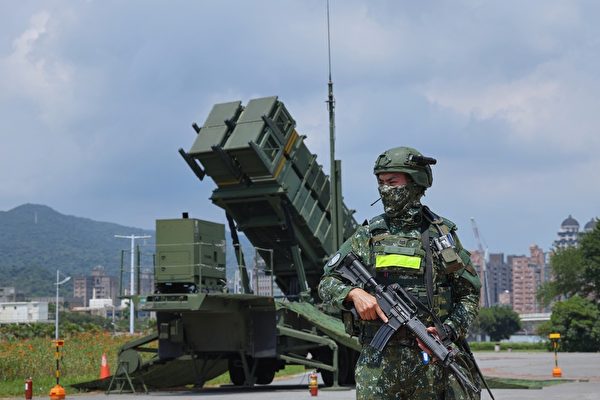
In recent days, a bipartisan group of US senators sent a letter to the Taiwanese Legislative Yuan urging the swift passage of a special defense budget to enhance Taiwan’s overall defense capabilities. Emphasizing the importance of Taiwan concurrently purchasing key US military equipment, the senators also called for expediting the research and production of indigenous drones and missile defense systems.
The bipartisan delegation composed of members of the US Senate Foreign Relations Committee, including Jeanne Shaheen (Democrat – New Hampshire), John Curtis (Republican – Utah), Thom Tillis (Republican – North Carolina), and Jacky Rosen (Democrat – Nevada), had recently concluded a visit to Taiwan at the end of March. During their visit, they discussed important issues related to US-Taiwan relations, Indo-Pacific security, trade investment, and other mutual interests.
The joint letter from the four bipartisan senators was addressed to various figures in the Taiwanese legislature, including Legislative Yuan President Han Kuo-yu, Vice President of the Executive Yuan Chang Ching-Chen, DPP legislator Chen Guan-ting, KMT legislator Niu Hsu-ting, and MPP legislator Wang An-hsiang. The senators expressed their hopes that Taiwan’s political spectrum would swiftly pass the military procurement special law to establish a more flexible and deterrent defense system.
Referring to the $11 billion US arms sale to Taiwan announced last December, the senators urged Taiwan to take further action based on this foundation. They believed that allocating additional budget would not only expedite military procurement but also promote the independent production of asymmetric warfare capabilities.
After visiting Taipei and meeting with President Tsai Ing-wen and the National Security Team, the senators were more convinced of Taiwan’s need to increase investment in key defense capabilities to counter the growing military pressure from the Chinese Communist regime. They also looked forward to Taiwan’s political factions quickly coming to a consensus to ensure national security and the continuation of the democratic system.
“Ending the Taipei visit and heading to Tokyo and Seoul, we are even more convinced that Taiwan must invest in key defense capabilities to effectively deter potential aggression,” the letter stated. “We believe that leaders of all political parties in Taipei will quickly reach a consensus to pave a path for Taiwan that can safeguard freedom, avoid conflict, and meet the expectations of the vast majority of the people.”
The letter also mentioned that the US is pushing for multiple arms sales to Taiwan, including anti-drone systems, integrated combat command systems, and medium-range air defense weapons. The Congress pledged to accelerate the related delivery process and expected a new wave of arms sales to be announced in the coming weeks.
The senators further pointed out that conflicts in Ukraine and the Middle East have shown that modern battlefields rely on low-cost and highly mobile weapon systems, an area where Taiwan is actively developing technology, possessing a strategic advantage.
“The conflicts in Ukraine and Iran demonstrate that modern battlefields rely on low-cost and highly maneuverable systems, which is the direction the National Applied Research Laboratories (Academia Sinica) in Taiwan is actively investing in,” the letter stated. “At this critical moment, if Taiwan can increase its long-term investment in domestically produced defense industries, it will best demonstrate a firm deterrence resolve.”
The senators emphasized in the letter that the partnership between the United States and the people of Taiwan remains strong, built on shared democratic values, deep economic ties, and a common commitment to maintaining peace and stability in the Indo-Pacific region. The US Congress will continue to play an active role in safeguarding this partnership and supporting Taiwan in the face of ongoing pressure and intimidation from Beijing.
In response to the letter, KMT legislator Niu Hsu-ting stated that the military procurement law is being negotiated, and next week Taiwan’s Ministry of National Defense will strengthen communication and present another special project report. The commitment and goodwill shown by the US will positively assist in advancing the military procurement law.