
The escalating conflict in Iran has driven oil prices to nearly $100 per barrel, with the market generally expecting an increase in demand for renewable energy, thereby boosting China’s export of photovoltaic solar products. However, Chinese industry players are cautious, stating that the growth in demand is limited.
Stocks in China’s green energy sector surged over 10% following the US military actions against Iran on February 28, reaching a five-year high. However, the subsequent stabilization in prices indicates that market sentiment is gradually cooling off.
Industry insiders point out that while the Iran conflict may boost global demand for renewable energy, it is unlikely to significantly address the industry’s long-standing issue of overcapacity, leading to increased concerns among industry players about their future survival.
According to Chinese photovoltaic solar industry manufacturers, even a slight increase in demand and a slight price rise will not effectively solve the overall structural problem of oversupply, offering limited assistance to the industry.
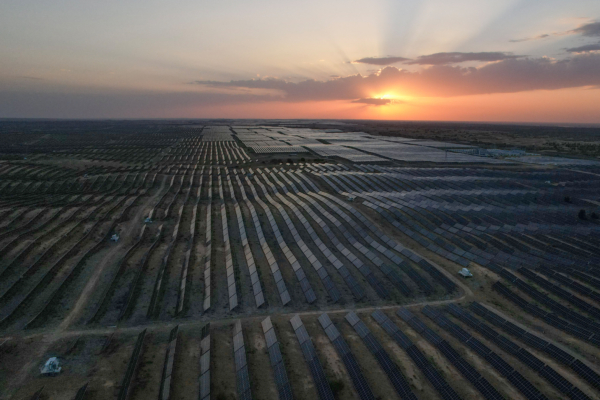
The photovoltaic solar industry in China has long been trapped in the issue of overcapacity, becoming one of the structural concerns of the Chinese economy. While it has driven exports to record highs, it has squeezed business profits, exacerbating international trade frictions.
Some industry players state that the market capacity has not truly exited, neither closing down nor effectively clearing, with supply still persisting, leaving some companies able to survive while others may face elimination.
International credit rating agency Morningstar estimates that by 2025, China’s photovoltaic solar capacity has nearly doubled global demand. Even with the demand growth from the Iran conflict factored in, the oversupply situation remains unresolved.
Despite official attempts to reduce capacity and industry efforts, part of the supply chain continued to expand last year. The capacity of polycrystalline silicon, silicon wafers, and batteries increased by 9%, 11%, and 7% respectively.
Although module capacity saw a slight decline of 5%, overall supply still appears oversupplied. Industry insiders admit that it will be difficult to digest the excess capacity in the short term, putting immense pressure on the industry as a whole.
Many Chinese photovoltaic solar industry players have reported that actual orders did not significantly increase following the outbreak of the Iran conflict. Part of the reason is that buyers had stocked up in advance to cope with China’s April cancellation of export tax rebate policies.
The industry notes that many companies had already shipped their second-quarter products to overseas warehouses in advance, leading to a seasonal slowdown in current market shipments for April.
Furthermore, ongoing US tariffs and trade restrictions continue to dampen sales, with Beijing even considering restrictions on exporting advanced photovoltaic solar equipment to the US, potentially escalating tensions between China and the US.
The sources of demand growth remain uncertain. In the global addition of new photovoltaic solar installations last year, the US, the EU, and China accounted for about 70%, but multiple factors are hindering future momentum.
China’s introduction of a market bidding mechanism through electricity price reforms has canceled guaranteed returns, potentially weakening domestic demand. In Europe, while natural gas prices have risen, they are far from the skyrocketing levels seen during the Russia-Ukraine conflict in 2022.
Analysts point out that this energy impact is relatively mild, making it difficult to replicate the solar installation boom of previous years, providing limited demand support.
Overall, the Iran conflict is expected to bring marginal benefits to global photovoltaic solar demand, but is unlikely to reverse the overcapacity dilemma, leading industry insiders to maintain a cautious outlook for the future.