
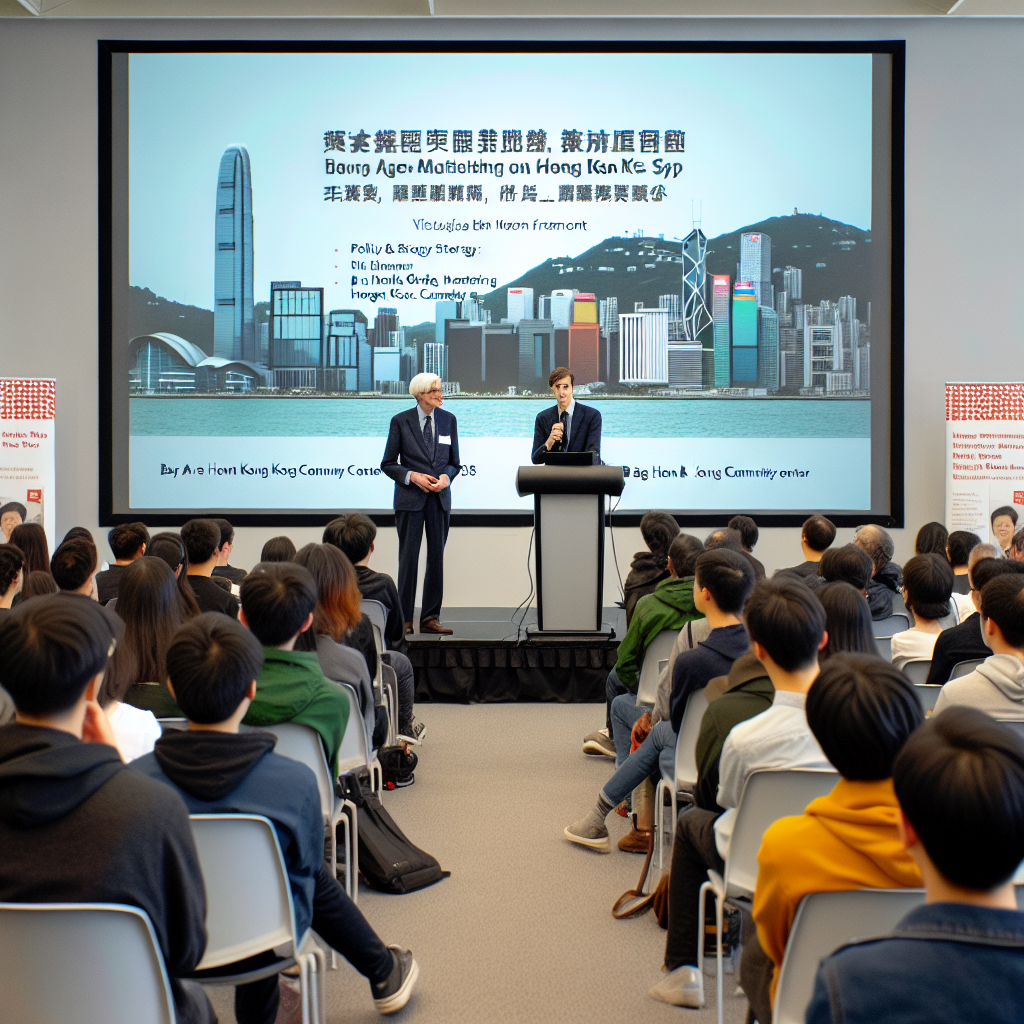
Bay Area Hong Kong Community Center (Bay Area HKCC) held a symposium in Fremont on April 11th last Saturday, inviting Ray Wong, a policy and strategy consultant on Hong Kong from Germany, and Aileen Calverley, the chairperson of Hong Kong Watch in Canada, to share their observations and experiences on recent overseas infiltration and cross-border repression by the Chinese Communist Party (CCP) as well as youth advocacy work. They called on Hong Kong youth to get involved in public affairs and establish more direct channels for the Hong Kong community to voice their concerns.
Ray Wong mentioned during the meeting that in recent years, the CCP has been gradually infiltrating local societies in Europe through “secondary sovereign diplomacy” and united front networks, expanding its influence in the political and business sectors and engaging in activities such as cross-border repression and intelligence gathering. He emphasized that the loss of freedom in Hong Kong was not sudden but the result of the CCP’s long-term infiltration and erosion of the foundation of a free society. Overseas Hong Kong people can use their experiences to alert other countries to the harm brought about by CCP’s united front and infiltration activities.
Wong believed that in the face of the CCP’s expanding influence overseas, oppressed communities should first understand its modus operandi, then voice their concerns to local officials and lawmakers, and continue monitoring whether their actions have negative impacts on democratic societies. He cited the example of Birmingham in the UK, where sister city relations with a local CCP government were terminated due to advocacy efforts by Hong Kong people. Similar initiatives in Germany have also raised local government awareness of the risks of CCP infiltration. He stressed that such work may not yield immediate results but requires long-term and consistent advocacy and action to bring about change.
Aileen Calverley mentioned that Hong Kong Watch had been to Washington D.C. and the White House multiple times in the past year, meeting officials and engaging with 8 congress members and over 30 congressional offices to advocate for issues such as human rights in Hong Kong, CCP’s cross-border repression, release of political prisoners, and efforts to rescue Jimmy Lai. The organization mainly focuses on community engagement in the Bay Area, bringing Hong Kong community concerns to Congress and bridging the gap by feeding back congressional information to the community.
Regarding the response to CCP’s cross-border repression, Calverley stated that Hong Kong Watch assists victims in collecting cases, reaching out to district council members, and reporting incidents to law enforcement agencies. She mentioned successful advocacy efforts in Canada that led to the Royal Canadian Mounted Police (RCMP) establishing a hotline for victims to report CCP harassment or oppression. In the Bay Area of the USA, relevant incidents have also been reported to the FBI. Besides reporting, she advocated for legislation to hold cross-border repression accountable and encouraged more Hong Kong people to engage in politics to establish direct channels of communication with the government.
Calverley also introduced that Hong Kong Watch has been promoting youth political participation and leadership training programs in Canada and the UK in recent years and launched it for the first time in the USA this year. The organization aims to help Hong Kong immigrants and second-generation understand how the government operates, encourage future involvement in public affairs and even running for elections to enhance the representation of Hong Kong people in American society.
She mentioned to the media that there are generational differences in political opinions within the Hong Kong immigrant community, with some older individuals more susceptible to CCP influence. On the other hand, younger generations and recent Hong Kong immigrants overseas are generally more focused on democratic values and political repression due to their experiences in Hong Kong. She believed that promoting youth participation in politics helps cultivate a new generation of public participants with democratic ideals and community awareness.
Jennifer Tong from Oceanside in San Diego County shared her experiences at the symposium. Tong has been actively engaged in the local Hong Kong community and cultural exchange work, maintaining connections with other Asian-Pacific and immigrant organizations. She plans to run for city council election in the future.
Currently, Tong is building a local foundation through active participation in community meetings, reaching out to residents, assisting in community affairs, and increasing her visibility to bring Hong Kong culture to the local community, raising awareness among the mainstream society about Hong Kong people and the Asian community.
Alex Woo, the head of the Bay Area Hong Kong Community Center, expressed that HKCC has been committed to promoting Hong Kong people’s engagement in public affairs and civic services, aiming to increase mainstream society’s understanding of the Bay Area Hong Kong community and facilitate the integration of Hong Kong people into the local mainstream society.
Woo emphasized that the community currently provides platforms, training opportunities, and networking to assist young people aspiring to engage in public affairs or politics in planning their development direction and career paths, cultivating a new generation of Hong Kong community members with a sense of public participation.