
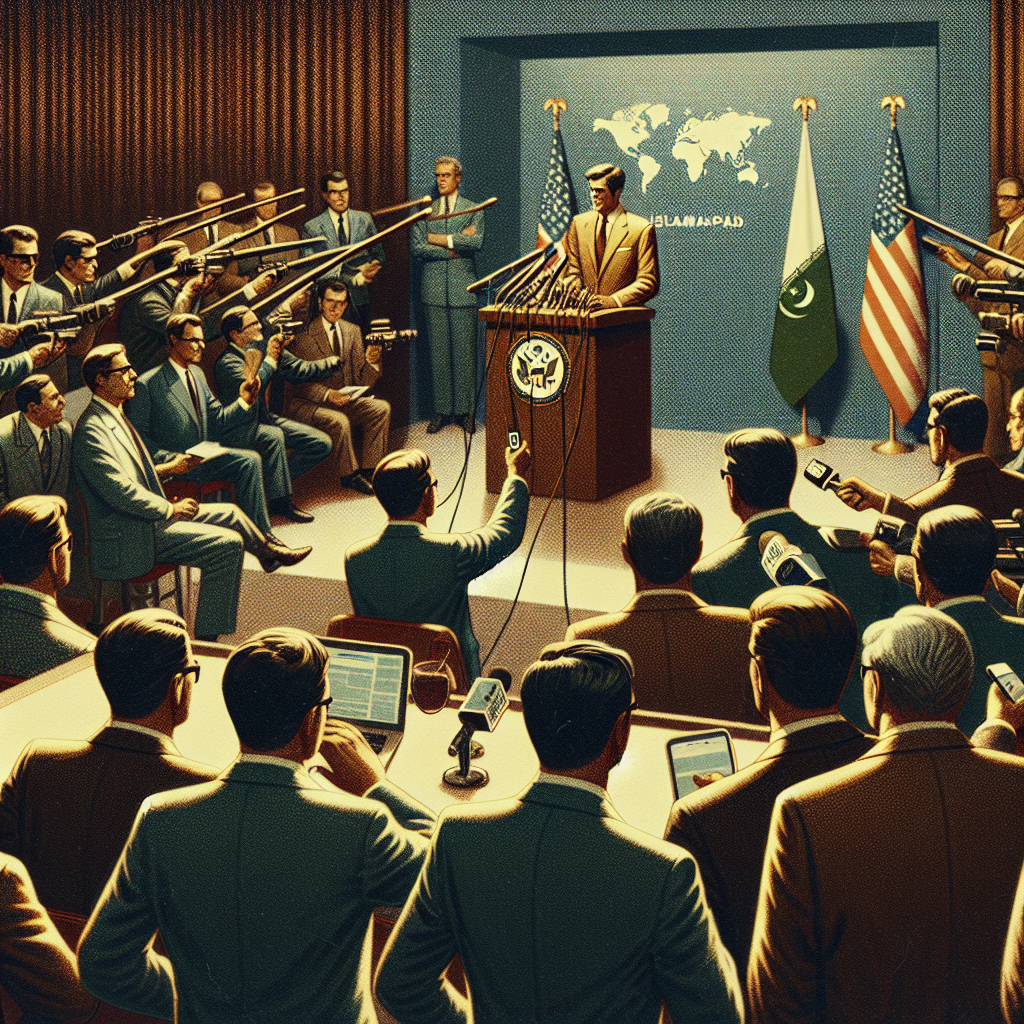
On Friday, April 10, Vice President Pence led a delegation to Islamabad for talks with an Iranian delegation. He expressed optimism about the prospects of US-Iran negotiations but also warned Iran against playing tricks.
Prior to boarding the plane, Pence told reporters, “We look forward to these talks. I believe the negotiations will be positive. Of course, as the US President said, if the Iranian side is willing to negotiate sincerely, we are also willing to extend an olive branch.”
However, he also warned that if Iran tries to play tricks, the US will not accept it. “So, we are working to facilitate a positive negotiation. The President has given us very clear guidelines, and we are looking forward to it,” the Vice President said.
On Tuesday evening, before 8 p.m. Eastern Time, the US and Iran reached a last-minute two-week ceasefire agreement. The US and Israel agreed to a two-week ceasefire with Iran, while Iran is required to open the Hormuz Strait comprehensively, immediately, and safely.
Following the ceasefire agreement, Pakistan is actively pushing for the US and Iran to hold negotiations this weekend aimed at permanently ending the war. After nearly 40 days of intense fighting, the whole world is watching closely the outcome of the US-Iran negotiations.
On Thursday, US President Trump also issued a warning to Iran, urging Iran to “better not” charge oil tankers attempting to pass through the Hormuz Strait. Trump also criticized Iran for obstructing the passage of oil tankers in the strait.
White House spokesperson Karoline Leavitt confirmed on Wednesday that the US delegation attending the negotiations will be led by Vice President Pence. Trump’s Middle East envoy Steve Witkoff and Trump’s son-in-law Jared Kushner will also be present at the talks.
According to Pakistani sources, the Iranian negotiating team is expected to include Iranian Parliament Speaker Mohammad Bagher Ghalibaf and Foreign Minister Abbas Araghchi.
On Friday, in the “Red Zone” of Islamabad, where government buildings and foreign embassies are concentrated, barbed wire has been erected. The number of checkpoints in the city has increased, and there are fewer vehicles on the streets. Police, military, and paramilitary forces have been deployed to maintain order, and international journalists have started to arrive in the city.