
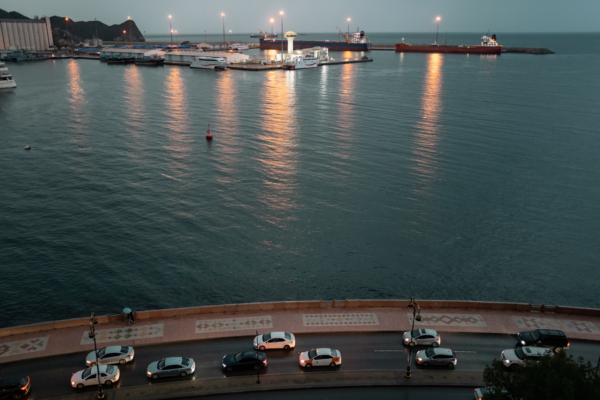
On Thursday, April 9, the first non-Iranian oil tanker to pass through the Strait of Hormuz after the ceasefire was reported by MarineTraffic data.
According to Agence France-Presse, the tanker named MSG flying the flag of Gabon, carrying about 7,000 tons of fuel from the United Arab Emirates, transited through this strategic waterway. The destination of the tanker, as reported by maritime monitoring agencies, is the Pipavav port owned by the Indian company Aegis.
Since the two-week US-Iran ceasefire agreement took effect on Wednesday, the Strait of Hormuz has not completely resumed navigation. Data from the company Kpler, the owner of MarineTraffic, shows that since Wednesday, two other oil tankers (both flying the Iranian flag) and six bulk carriers have also passed through the strait.
On Thursday, it appeared that several ships, including another fully loaded oil tanker, were in transit, indicating that the daily traffic volume has not significantly changed compared to the week before the ceasefire.
According to data from the shipping industry intelligence website Lloyd’s List, the average daily traffic in the strait during peacetime is about 120 vessels.
Analyst Ana Subasic from Kpler stated that if the ceasefire continues, the expected transit capacity will be “maintained at a maximum of 10-15 vessels per day”.
Since the US-Israel attack on Iran on February 28, Iran has imposed strict restrictions on passage through the strait. Between March 1 and April 8, a total of 315 vessels passed through the strait, of which 202 were oil and gas tankers, with most heading towards the eastern part of the Gulf of Oman. All vessels passing through the strait either come from Iran, are heading to Iran, or have connections with non-hostile countries.
The Strait of Hormuz is a crucial passage for the export of Persian Gulf oil, natural gas, and other bulk commodities.
Marine insurance companies have reported that at least 1,000 vessels are still stranded in the Persian Gulf. Even if these vessels can sail, the companies anticipate that shipping volume will not quickly return to pre-war levels.
Most shipowners are unwilling to risk the lives, cargo, and vessel losses. “You can’t restore global shipping within 24 hours,” said Jennifer Parker, an associate professor at the University of Western Australia’s Defence and Security Research Institute, to Bloomberg. “Tanker owners, insurance companies, and crew need to believe that the risks have indeed decreased, rather than just temporarily halted.”
“Trade in the Gulf region is unlikely to recover soon,” said Neil Roberts, head of maritime and aviation operations at the London P&I Club, representing ship insurance underwriters, to The Wall Street Journal. “The region remains highly volatile, with all potential tensions unresolved.”