
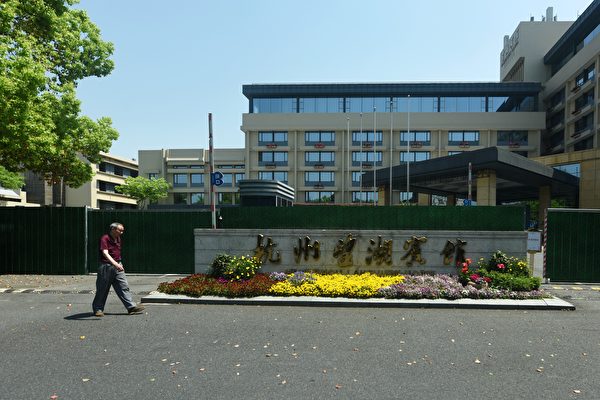
In recent two months, star hotels across China, including many five-star hotels and foreign-funded hotels, have set up roadside stalls selling boxed meals and cooked snacks. It has become a tacit new habit among star hotels nationwide.
The decline in official receptions, reduction in foreign business activities, and cost-cutting measures in major companies have forced star hotels to resort to selling on the streets to make ends meet.
According to a report by Zhejiang TV’s “Blue News,” both the five-star Xianheng Hotel and Shaohua Hotel in Shaoxing have started selling takeout. Lin Qiong, the general manager of Xianheng Hotel in Shaoxing, mentioned that they began setting up stalls in April this year, initially selling snacks and gradually moving on to selling cooked food starting from June 19.
Song Xiaoping, the general manager of the four-star Shaoxing Yintai Grand Hotel, explained that they started selling takeout from May 6 this year. The variety of dishes has increased from 10 to 20, with prices ranging from 10 to 40 yuan. Popular items like drunken chicken, crispy fish, and fish balls sell out quickly, with daily sales averaging around 10,000 yuan.
Under the blue canopies at the south gate of the Hangzhou Nad Hotel, more than 40 dishes are on display. Chefs wearing gloves slice cooked snacks as white-collar workers watch the clock to grab their favourites. Dishes like Dongpo pork at 29 yuan per serving and 2-pound pig trotters at 40 yuan have been selling well, with the outdoor area consuming over 200 kg of ingredients daily.
Bloggers on social platforms have reported that five-star hotels setting up stalls are not only seen in Zhejiang but across the country.
One blogger, known as “Wonton Beauty,” mentioned that the five-star Asia-Pacific Hotel in Shijiazhuang is also selling on the street, offering large meat buns at only 3 yuan each.
Another blogger from Putian, Fujian, shared that lychee meat costs 10 yuan per portion at a wedding banquet in Vanke, while a plate of sausages and pickled sausages costs 20 yuan and a serving of fried bamboo shoots costs 10 yuan.
During a live session on social media, the Rebecca Hotel in Xuchang, Henan, emphasized that they offer fresh food on the spot at affordable prices, with various delicacies available from 5:00 pm, including handmade flower rolls, cooked snacks, crayfish, trotters, garlic stir-fried fish, and lemon tea.
The manager of the five-star Haining Haizhou Grand Hotel in Zhejiang stated during a live broadcast that after six days of street vending, they aim to provide convenience and generate profits amid difficult circumstances.
A report by the WeChat public account “Travel World” revealed a new scene in Sanmenxia City, Henan, in June. Five-star hotels, including the Kaiyuan Hotel, Tianzi Hotel in Macau, and Golden Sickle Hotel, set up stalls outside their entrances, selling items like yellow croaker, braised pork ribs, and beef salad in plastic containers.
Not only domestic star hotels but foreign-funded hotels have also resorted to street vending to earn income. The article highlighted that this trend of street vending in star hotels has become a new silent norm nationwide.
The nationwide phenomenon of star hotels setting up stalls began spreading rapidly in May, coinciding with the announcement of the “liquor ban” by the Chinese Communist Party.
Commentator Xiao Yi pointed out that high-end banquets have always been dominated by official consumption. Following the liquor ban, revenues of high-end restaurants plummeted, with a sharp decrease in average customer flow by 43%, leading to a surge in cancellation rates for reserved banquets. To cope, star hotels have resorted to street vending and selling boxed meals as a means of survival.
In May, the State Council of China issued what was touted as the strictest “liquor ban” policy, prohibiting the serving of high-grade dishes, tobacco, and alcohol at official work meals, expanding the restrictions to include state-owned enterprises and public institutions.
Blogger “Xuejie Helps You Start a Company” pointed out that even luxury hotels with average per capita expenditures of several hundred or even thousands of yuan are now relying on street stalls for revenue. With public officials abstaining and entertainment budgets cut, the clientele frequenting luxury hotels has shifted.
Businesses are adopting cost-cutting measures due to uncertainties, with a focus on reducing expenses. Bloated travel budgets have become a common target for trimming costs.
The impact of consumer downgrade is evident as people are now valuing cost-effectiveness over luxury. A hotel owner in Shaoxing, Zhejiang, remarked that people no longer seek extravagant consumption, focusing more on value for money.
According to data from Hotel Home, the average revenue per available room in China decreased by 9.7% to 118 yuan in 2024, with an occupancy rate of 58.8%, down by 2.5 percentage points compared to the previous year.