
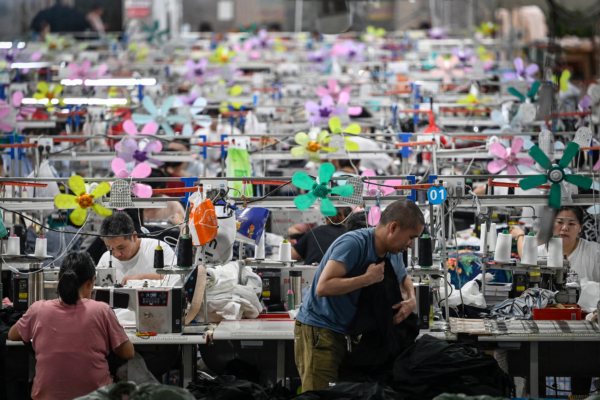
On Tuesday, January 7, the British Parliamentary Committee held a hearing to inquire whether the online fashion retailer Shein uses cotton from China. This is a key issue regarding its supply chain that potential investors are very concerned about, but Shein’s representatives refused to directly answer.
This was the first opportunity for British lawmakers to publicly question the company, which is preparing for its initial public offering (IPO) debut in London. The hearing focused on labor rights in the global supply chain. Online retailer Temu also participated in the hearing.
Shein, headquartered in Singapore, was established in China in 2012 and is currently awaiting regulatory approval for its IPO from the UK Financial Conduct Authority and Chinese securities regulators.
Yinan Zhu, General Counsel for Shein in Europe, the Middle East, and Africa (EMEA), stated that “our suppliers are located in China, Turkey, and Brazil, with many of them obviously based in China.”
When further questioned about whether the company sources cotton from China, she requested permission to write a letter to the committee to provide additional information.
Asked about the IPO, Zhu said she could not comment.
Chairman of the British Parliamentary Committee, Liam Byrne, appeared increasingly frustrated, sarcastically remarking, “You can’t tell us anything about the listing, you can’t tell us anything about the cotton in Shein’s products, in fact, you can’t tell us much at all.”
For a long time, the United States and non-governmental organizations have accused China of human rights violations in the Xinjiang Uyghur Autonomous Region, stating that Uyghurs are forced to grow cotton and produce other goods.
Shein has previously stated that it requires contract manufacturers to commit to sourcing cotton only from approved regions and has a zero-tolerance policy towards forced labor.
However, publicly distancing oneself from Xinjiang cotton carries risks, as past actions by clothing retailers who have done so have led to criticism and boycotts from Chinese consumers, as well as pressure from Chinese authorities.
Recently, Uniqlo, a Japanese retailer, faced backlash on Chinese social media after its CEO, Tadashi Yanai, stated in a November interview with the BBC that the company does not use cotton from the region.
In contrast to Zhu’s silence, Stephen Heary, Senior Legal Counsel for Temu, a subsidiary of Chinese e-commerce giant PDD Holdings, stated that the online retailer does not allow sellers from Xinjiang to sell goods on its platform.
(This article references a report from Reuters)