
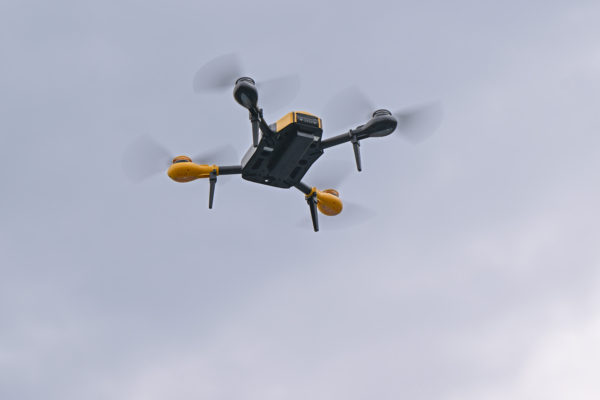
In the past four years, the Russo-Ukrainian war has changed the modern warfare economic landscape, with both sides increasingly relying on drones to monitor the battlefield, penetrate enemy defenses, and conduct strikes deep into enemy territory, evolving into a competition between drones.
So far, under the Ukrainian drone defense and offensive actions, Russia has found itself nearly paralyzed on the front lines, allowing Ukraine to reshape its national industrial base. It is worth noting that due to dissatisfaction with China’s military support for Russia, Ukraine is striving to increase its military production capacity while progressively reducing its reliance on Chinese drone components and turning to Taiwan.
A recent analysis by The Guardian pointed out that China’s ambition to dominate the global industrial supply chain and the potential security risks it poses are increasingly worrisome. Ukraine, Europe, the United States, and other countries are increasingly shifting their focus to Taiwan, viewing Taiwan as an alternative supplier.
The article noted that the “Serpent Island Institute” in Ukraine, specializing in research and analysis, stated that Taiwan has cutting-edge expertise in technology, especially in areas such as microelectronics, navigation systems, and batteries, which are lacking among Western suppliers and increasingly sought after by Ukrainian drone manufacturers.
The analysis also highlighted Taiwan’s active pursuit of opportunities. Taiwanese President Lai Ching-te has pushed for a $40 billion supplementary defense budget, including funding for drone and artificial intelligence integration. The “Institute of Democracy, Society and Emerging Technologies” forecasted that Taiwan’s drone exports to Europe increased by over forty times last year, with Poland and the Czech Republic being among the largest markets, and this trend is still on the rise, with first-quarter exports in 2026 surpassing the total for last year.
A top Ukrainian drone manufacturer, Vyriy, which has been actively promoting local production and reducing reliance on Chinese components, revealed that some of the company’s components are now sourced from Taiwan, a trend that is increasingly common in the drone industry. The search for alternative solutions is primarily due to concerns that China may further tighten its export controls.
Vyriy praised Taiwan’s world-class strength in semiconductors and electronic integration, highlighting Taiwan as a valuable partner. Analyst Arthur Savchii from SII stated that localization is a top priority for Ukraine, with each year of war pushing production further towards domestic assembly, from primarily imported finished drones from China to now almost entirely domestic assembly.
The article highlighted Ukrainian Ministry of Defense statistics showing more than a hundred component manufacturers within Ukraine last year. Savchii pointed out that Ukrainian businesses tailor systems specifically for the front lines, something Chinese mass production suppliers cannot achieve.
The main challenge currently is that Chinese-manufactured components are cheaper and more readily available, and other components such as lithium batteries and rare earth magnets produced elsewhere also often rely on materials from China. Therefore, while Ukraine aims to expand its drone production scale, it is unlikely to completely break free from reliance on Chinese components in the short term, a problem also faced by Taiwan.
Although customs statistics include civilian and commercial models, not just military systems, China remains the largest source of drone imports. The Taiwanese government has committed to fully “de-Chinese-ifying” the drone industry by 2027 and aims to produce one-third of the necessary rare earth magnets by 2030, but these are still in the transition process.
Another major challenge is Taiwan’s current industry scale limitations, while wartime demand in Ukraine is significant, requiring millions of drones annually. Customs data shows Taiwan’s current annual production is only tens of thousands, insufficient to meet the demand.
Another obstacle is geopolitical factors. Ukraine has yet to formally recognize the Republic of China (Taiwan), maintaining a cautious relationship with China. Communist China remains Ukraine’s largest trading partner, so most cooperation between the two seems to go through intermediaries like Poland, the Czech Republic, and the United States, with little evidence of formal government-level coordination, mostly conducted between businesses.
However, Taiwanese companies maintain high flexibility. Some drone companies have established local facilities in Lithuania and Poland to better serve the Ukrainian battlefield. Moreover, the Taiwanese drone industry has facilitated the signing of memorandums of understanding between government agencies and five European countries.
With the growing demand for AI drones on the Ukrainian front line, experts and suppliers are realizing the significant potential for deepening cooperation between Taiwan and Ukraine. Taiwan’s Ministry of Economic Affairs has pledged approximately $10 million to seven high-tech companies for developing specialized drone chips.
For Ukrainian manufacturers like Vyriy, where they source components ultimately depends on what is most beneficial for the military. For them, the strategic considerations of the supplier countries and efficiency factors must be weighed, as Ukrainian manufacturers producing weapons are not driven by market or energy pressures but by issues of national life and death.