
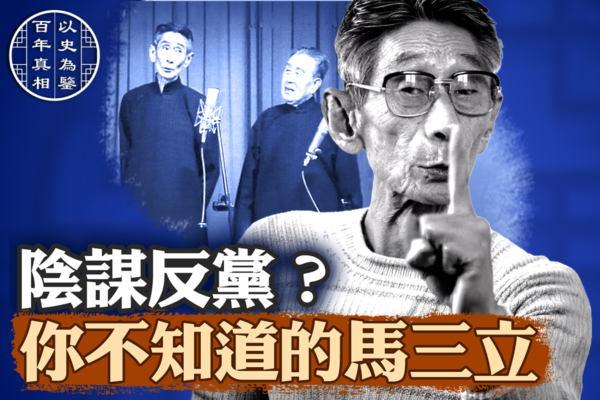
Greetings to the audience, welcome to “Century of Truth”.
In the world of Tianjin Crosstalk, there is an old saying, “No one does not worship Ma”. It means that as long as you perform crosstalk, you cannot avoid the influence of someone surnamed Ma.
This person has a split head, protruding ears, slightly squinted eyes, and looks thin. Walking on the street, you may not even recognize him. But when he speaks, people all over China have been laughing for half a century. He is the crosstalk master Ma Sanli.
Many people remember his crosstalk pieces “Telling Lies,” “Praising Real Estate,” “Eating Yuanxiao,” each line delivered with perfect timing and humor.
But few people know that this old man who makes the whole nation laugh was once labeled as “rightist” and “counter-revolutionary,” was sent to labor camps, was relocated to the countryside, almost jumped off a building, and for a whole nineteen years, he hardly had the qualification to perform crosstalk.
In today’s episode, let’s talk about the life of the crosstalk master, Ma Sanli.
Ma Sanli, originally from Yongchang County, Gansu Province, was of Hui ethnicity. He was born in 1914 into a traditional artist family in Beijing. His father, Ma Delu, was one of the famous “Eight Virtues” in the crosstalk world. The “Eight Virtues of Crosstalk” refers to eight crosstalk masters active in Beijing and Tianjin in the early 1930s.
Ma Delu not only excelled in crosstalk but was also a kind person. At that time, Chun Changlong and En Pei were his masters. En Pei especially valued Ma Delu and even betrothed his daughter, En Cuiqing, to him. En Cuiqing was also an artist who once learned to sing traditional Beijing opera drum rhymes. After marriage, they had two sons, Ma Guiyuan and Ma Guifu, with the latter becoming Ma Sanli later on.
The reason he changed his name to “Sanli” was because Ma Delu had high hopes for him. There is a saying in the “Zuo Zhuan”: “A gentleman has three stands, stand by virtue, stand by merit, stand by word.” Ma Delu took the characters “Sanli” from there and renamed his son Gui Fu to Ma Sanli, hoping that he would uphold these three principles when he grew up.
Ma Sanli had a difficult life; his mother passed away when he was three, and his father had to sell the few pieces of furniture they had to handle the aftermath. Later, his father sent the three-year-old Ma Sanli to live with his uncle’s family, while he and his elder son struggled to make a living backstage at bookstores.
Ma Delu was busy performing crosstalk every day, making it difficult to see Ma Sanli regularly. At that time, whenever young Ma Sanli saw his father, he didn’t even recognize him.
Years later, as Ma Delu’s reputation grew, and his income increased, but when Ma Sanli turned fifteen, Ma Delu’s income decreased, making it impossible to continue funding his education. Ma Sanli had to give up schooling for the arts and apprenticed under Zhou Deshan, one of the “Eight Virtues of Crosstalk.”
Meanwhile, his brother Ma Guiyuan graduated from Tianjin East Malu Commercial School and entered the crosstalk circle.
Researcher Li Yuxiao revealed in the article “The Rocky Life of Crosstalk Master Ma Sanli” that Ma Sanli’s apprenticeship was tough. While Zhou Deshan was his master officially, the ones who truly taught him were his father and brother. Ma Sanli had to learn the Ma family’s unique style, which was renowned for its precise wording, tonality, volume handling, and punchlines. Unfortunately, his elder brother Ma Guiyuan had a hot temper and strict rules; any mistake from Ma Sanli was met with either scolding or physical discipline.
Once, after being beaten beyond endurance, Ma Sanli went to apply to become a policeman. Eventually, the desire to succeed in life pushed him back to the path of crosstalk.
He set rules for himself: must learn, must master, must be good, and must excel. These became his lifelong standards for performing.
In 1934, at the age of 20, Ma Sanli married Zhen Huimin, who came from a poor background. However, misfortunes followed right after their marriage.
His brother Ma Guiyuan fell into a heroin addiction and quickly deteriorated physically, forcing him to retire from the crosstalk stage. Following that, Ma Guiyuan and his wife divorced.
Soon, their father passed away, and their stepmother left home. Under a series of setbacks, the 21-year-old Ma Sanli fell critically ill for three months. After recovering, he started traveling to various places to perform and earn money to support his family and aid his elder brother.
In a memoir in his later years, Ma Sanli vividly recorded the days of his journey southward. He traveled by following train routes, performing in small counties, rural towns, markets, temples, teahouses, bookstores, and roadsides.
Where business was good, he stayed longer; where it was not, he avoided lodging at inns, spending nights in train station waiting rooms, only leaving when the day broke. Regardless of the earnings, he always sent money back home. Sometimes, when he managed to save two yuan, he hurriedly sent it back, fearing his family might run out of food. As for himself, he cut down on expenses, living frugally to the point that even he later thought back and pitied himself.
In 1940, at the age of 26, Ma Sanli began to shine in the Tianjin crosstalk scene. He was invited to perform at crosstalk venues in Beijing and Tianjin. With his reputation rising, life at home gradually improved.
As his experience grew, he began modifying traditional crosstalk sketches that had been circulating for years, maintaining the foundation while adding his own touch.
He often used the first-person perspective, narrating personal anecdotes. This made the audience feel like they were hearing stories from a close friend, creating a sense of familiarity. It was during this period that Ma Sanli gradually developed his own crosstalk style.
In the early days of the Communist Party’s rule, the impact on artists was not significant. During the Korean War period in 1952, Ma Sanli signed up to join the cultural troupe sent to North Korea and served as the deputy leader of the Quyi Troupe, performing over a hundred crosstalk shows on the frontline.
Upon returning home, he joined the Tianjin Quyi Troupe as the deputy leader. To better utilize him, the Communist authorities assigned him various political titles: People’s Representative, Labor Union Chairman, and even a member of the Tianjin Municipal Political Consultative Conference for four terms.
At that time, Ma Sanli had a favorable view of the Communist Party and actively participated in the so-called “promote new, sing new” movement, engaging in adapting, creating, and performing new crosstalk.
However, good times didn’t last. During the “anti-rightist” movement, Ma Sanli was labeled as a “rightist.” Overnight, a renowned actor became a “famous rightist,” his positions stripped, and his salary reduced.
Ma Sanli’s daughter, Ma Jingwen, later recalled in a memoir article that in the summer and autumn of 1957, the crosstalk piece “Buying Monkeys” published in the “Literature and Art Daily” sparked debates. Some praised the artistic realism and comedic effect of the piece, but others criticized it for “disparaging commercial workers in the new society.” Some even accused the scene in the crosstalk where a group of monkeys creates chaos in a dry goods store as an allegory of a group of writers causing disturbances in socialist society.
The author of “Buying Monkeys,” He Xi, was among the first to be labeled as a “rightist.” As an actor, Ma Sanli was also implicated.
Shortly after, Ma Sanli was interrogated. The authorities asked if he knew that “Buying Monkeys” was “a great weed,” pressuring him to admit being “anti-Party, anti-socialist, a rightist lackey.” He defended by stating the performance piece was approved by leadership, yet he was accused of “using an offensive-defense stance” to shift blame.
Faced with such unjust treatment, Ma Sanli struggled, resisted, and even considered jumping off a building.
During a criticism session, Ma Sanli lost his temper, shouting, “You are driving people to their deaths!” A former friend coldly pushed open a window in mockery, saying, “Oh, you’re threatening death? Fine, if you have the courage, jump out from here.”
Ma Sanli immediately stood up and leaped out the window. As he hung halfway out, a string puppeteer grabbed his foot, pulling him back, saving his life.
Ma Jingwen described that when her father was brought back by his colleagues, the family found injuries with bleeding on his arms, wrists, chest, and lower body. Many years later, Ma Sanli recalled the incident, remarking that if he had died at that moment, he might have been unfairly branded with the crime of “fearing punishment by suicide,” which would have been a grave injustice.
After being labeled as a “rightist,” there was yet another incident. Ma Sanli couldn’t find suitable old clothes to wear, so he had to go on stage in a long padded jacket with a muskrat fur collar — a cheap find from a second-hand market during the 1949 mass exodus. This act caused the outrage of the “revolutionary masses” in charge of clothing management. They viewed it as a protest against the proletariat. Consequently, hot irons were pressed directly onto the padded jacket, causing smoke to rise within moments.
In February 1959, Ma Sanli was sent to a remote village in the Dongjiao District of Tianjin for “reform of thought.”
On March 16, 1961, after laboring for over a year, the Tianjin Cultural Bureau announced Ma Sanli as “taking off the rightist label,” allowing him to return to his original unit and resume work.
But as soon as he returned, the leaders set numerous rules for him: treating him as a handyman, reporting in advance for his comings and goings, restricting his humor on stage, not allowing him to entertain the audience, prohibiting showcasing his name on posters, preventing him from conversing with other actors, and withholding recognition and rewards for exceptional work.
Despite the unfair treatment, Ma Sanli had to accept silently.
In early 1965, during the “Four Cleanup Movement,” Ma Sanli and his son, Ma Zhiming, both crosstalk performers, were labeled as “active counter-revolutionaries.” Ma Sanli was accused of a series of charges, including “conspiracy against the Party,” “anti-Party, anti-socialist big weed,” among others. The situation had escalated to the extent where merely enjoying Ma Sanli’s crosstalk performances could deem one as “social scum,” “police spies,” and “stubborn and false ones,” designated for purge. The Communist Party even claimed that only those discontent with socialism, seeking to subvert socialism, would enjoy his crosstalk.
In an interview with Southern Weekend, Ma Zhiming recalled being abruptly awakened in the middle of the night in May 1965 by the work team. They demanded he confess his father’s unspeakable deeds, inquire about whether they had guns or hand grenades, and if they had written reactionary slogans.
Ma Zhiming explained, “’Buying Monkeys’ was written by cadre He Xi, given to him by the leader. How could they accuse him of plotting against the Party with this piece? There was no such ambition on his part.”
What perplexed him more was that his father had only acquired three small houses in a walled yard in 1953, each no more than 9 square meters, yet had to accommodate 16 family members. How did such a household become labeled as a “weed infiltrating the literary and art circles, drilling into the Quyi troupe, an anti-Party, anti-socialist big weed”?
There were no answers to these questions; the “Cultural Revolution” erupted once again. In the winter of 1968, Ma Sanli was sent to labor reform in the Xihewu village of Baodi County, Tianjin.
In May 1970, Ma Sanli’s entire family was relocated to the Nanjiao Beizhakou village. Despite the seven years spent in rural exile, Ma Sanli persisted in reciting crosstalk scripts daily. He loved crosstalk so much; it was a part of his life.
In October 1977, following the end of the “Cultural Revolution,” Ma Sanli was permitted to return to the Tianjin Quyi Troupe.
From being labeled a “rightist” in the autumn of 1958 to his return to the Municipal Quyi Troupe in the autumn of 1977, during the whole 19 years, Ma Sanli performed crosstalk for only three years. The remaining time comprised four stints of relocation and five years of doing various menial tasks, including coal ball smashing and sanitation duties, and even imprisonment in the “cowshed.”
However, in that era, such ordeals were not uncommon. Many veteran artists like Hou Baolin, Chang Xiangyu, and Zhou Xinfang also suffered impacts during political movements, enduring situations no better than his.
In 1979, the Communist authorities resorted to gestures of goodwill to placate the persecuted veteran artists. Ma Sanli was “rehabilitated” once again.
It was only then that he discovered that there was no evidence of him being branded as a “rightist” or “anti-Party” or “anti-socialist” in his records. He had been labeled as a “rightist” simply because the original four “rightists” had to be increased to eleven, so he was added to the list.
Ma Sanli managed to endure the nineteen years of torment due to his traditional outlook on life. Unperturbed by the vicissitudes of the world, uncomplaining in the face of honor or disgrace.
In the 1980s, in his old age, Ma Sanli and Wang Fengshan reunited. Pieces like “Xijiang Moon,” “Article Club,” “Opening a Congee Shop,” “Selling Scalper Tickets,” became highlights of their performances once again.
Even without a regular partner, Ma Sanli created and performed a series of solo pieces like “Teasing You,” “Family Secret Recipe,” “Inspecting Hygiene,” “Eighty-One Floors,” “Chase,” showcasing his talent on stage.
Known as the “crosstalk master” and “comedy genius,” Ma Sanli finally bid farewell to the stage in 2001. According to his children, Ma Sanli rejected such titles. He preferred to sit alone in his room, lighting a cigarette, spending half a day in silence.
In the summer of 1993, the usually reserved Ma Sanli uncharacteristically summarized his life, saying, “I am a destined man, a pitiable creature in life.”
On February 11, 2003, at 6:45 in the morning, Ma Sanli passed away in Tianjin at the age of 88. He bore the sorrows of his life unto himself, leaving laughter for the world.
That concludes today’s program. Thank you for watching. If you enjoyed our show, don’t forget to like, subscribe, and share. Until next time.
Production Team of “Century of Truth”