
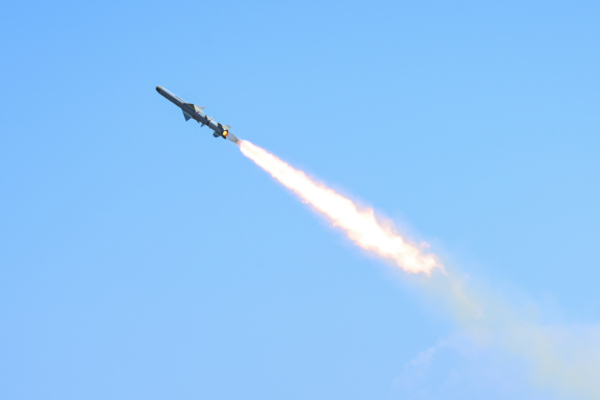
Japan’s Self-Defense Forces launched Type 88 anti-ship missiles during a joint naval exercise with the United States, Australia, and the Philippines on Wednesday, May 6th. The missiles accurately hit their targets, marking the first time Japan has deployed its land-based anti-ship missile system on Philippine soil.
The exercise was a key component of the 41st “Balikatan” joint military exercise, with a focus on showcasing Japan’s Type 88 surface-to-ship missile system at the Paoay Sand Dunes in Ilocos Norte, Philippines. This equipment is specifically designed to defend coastal areas and deter maritime threats.
The main target of the exercise was the retired Philippine Navy ship BRP Quezon, PS-20. The joint forces deployed various missile systems and aviation assets, successfully sinking the vessel in the northwest waters of Paoay.
The Philippine military reported that two rounds of Type 88 missiles were launched during the exercise. The target, located approximately 75 kilometers (46.6 miles) off the coast of Paoay, was hit six minutes after launch in an area facing the highly-contested South China Sea.
Against the backdrop of negotiations between the Philippines and Japan on potential defense equipment transfers, facilitated by Japan’s decision to abolish military export restrictions in recent years, Defense Minister Shinjiro Koizumi revealed discussions about transferring the Abukuma-class destroyer and TC-90 aircraft to the Armed Forces of the Philippines (AFP).
The smooth execution of the exercise was made possible by the formal implementation of the Reciprocal Access Agreement (RAA) between the two countries in September last year, streamlining the process for troops to enter each other’s territories. Koizumi noted that the RAA significantly enhanced the quality and scale of the exercise, with Japan’s participation increasing from 140 personnel last year to around 1,400 this year.
Koizumi emphasized, “By applying the Reciprocal Access Agreement, we can bring heavy equipment into the Philippines and engage in high-level training that was previously unattainable.”
Philippine Defense Minister Gilberto Teodoro and Shinjiro Koizumi witnessed the live firing of the missiles on-site, while Philippine President Ferdinand Marcos Jr. monitored the exercise via live video feed from the military headquarters in Manila.
A statement from the Philippine Presidential Palace highlighted the demonstration of allied maritime strike capabilities, underscoring the determination of the Philippines and its international partners to promote regional security and freedom of navigation.
With ongoing regional expansion by China and continued harassment towards Taiwan, Teodoro stressed the critical timing of the exercise. On May 2nd, US and Philippine forces also deployed the NMESIS anti-ship missiles near Batanes, close to Taiwan.
This year’s Balikatan exercise saw record participation with over 17,000 personnel. In addition to the US, Japan, Philippines, and Australia, Canada, France, and New Zealand participated as formal attendees for the first time, signaling a significant expansion of the Philippines’ security cooperation network.
The Chinese authorities are reportedly displeased with these developments. Chinese Foreign Ministry spokesperson Lin Jian criticized Japan for deploying offensive missiles overseas under the guise of security cooperation.
Teodoro celebrated the “successful completion of this mission” and indicated that future exercises would only grow in scale with more partners joining in.