
The military strikes launched by the United States and Israel against Iran have been ongoing for over two months, with the current two-week ceasefire being extremely fragile. The war has resulted in the blockade of the Hormuz Strait and the destruction of energy infrastructure on both sides of the Persian Gulf, causing economic losses that have reverberated globally. In the process, the silence of the BRICS countries has indicated the group’s divided state.
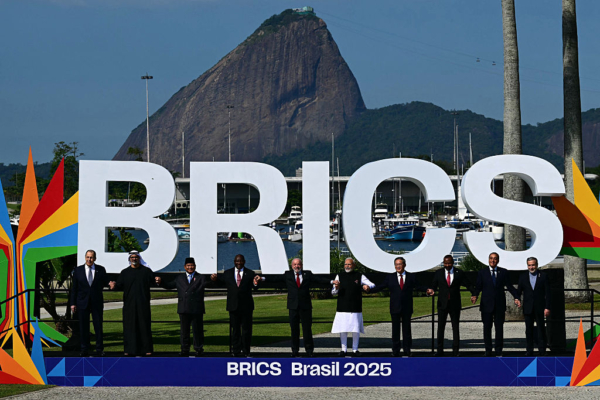
The BRICS group consists of Brazil, Russia, India, China, and South Africa, with India currently holding the rotating chairmanship. Iran joined BRICS+ in 2024. The United Arab Emirates and Saudi Arabia later joined BRICS+ after Iranian attacks on American military bases.
According to a recent analysis by “Diplomat,” since the conflict erupted, fuel prices in the Philippines have more than doubled, affecting countless families. The black market price of liquefied petroleum gas cylinders in India has risen, forcing Indian migrant workers to flee cities. Gulf countries, which rely on imports for 70% to 80% of their food, have seen significant price increases. The closure of the Hormuz Strait has disrupted the transportation of fertilizers, posing a risk to global food supplies.
The article states that the President and Foreign Minister of Iran have called on India to fulfill its role as the rotating chairman of the BRICS countries, but it was ultimately Pakistan who stepped in to mediate. To outsiders, the BRICS nations appear indecisive, divided, and aloof. This was also the case during the 12-day Iran-US war last year.
The BRICS countries, though maintaining silence, have shown no hesitation when it comes to their own interests. For example, India engaged in direct dialogue with Iran to ensure the safe passage of some of its ships through the Hormuz Strait. China and Russia exercised their veto power at the United Nations Security Council, jointly vetoing the Bahrain resolution authorizing the Gulf countries and the US to use defensive force in the Hormuz Strait.
The collective silence of the BRICS countries is not a new phenomenon. When Russia annexed Crimea in 2014, the response from the BRICS nations was notably tepid. However, when it came to issues like criticizing international financial institutions and the “Arab Spring,” the BRICS countries were actively leading the charge. In 2022, following Russia’s invasion of Ukraine, the BRICS countries largely remained silent, with China and Brazil merely going through the motions. In 2025, the BRICS countries held a climate summit in Brazil in preparation for the upcoming COP30 UN climate change conference.
Analysis indicates that the contradictory attitude of the BRICS countries may stem from a broader global political demand for a new institutional framework that allows greater participation from Southern countries. As the world becomes increasingly fragmented in the era of globalization, the post-1945 liberal international order is perceived as inefficient and biased in favor of the West.
The article notes that amidst crises like the war on terror, the 2008 financial crisis, and the COVID-19 pandemic, the United Nations has experienced prolonged decline and corruption. Member states of the BRICS countries prioritize their own interests, operating in a manner that is less structured than regional organizations like the UN, ASEAN, the African Union, or the EU.
The article asserts that while the BRICS countries provide a platform for different forces and have significantly expanded in recent years, their leader-centric model has led to a loose structure that limits collective action, with each member state primarily focused on its own interests.
In conclusion, the next BRICS leaders’ meeting is set to take place in India in September or October, where the focus may shift from the current energy crisis in West Asia to global economic stagnation issues. The global spotlight will once again turn to the Global South, albeit with a more cautious outlook.