
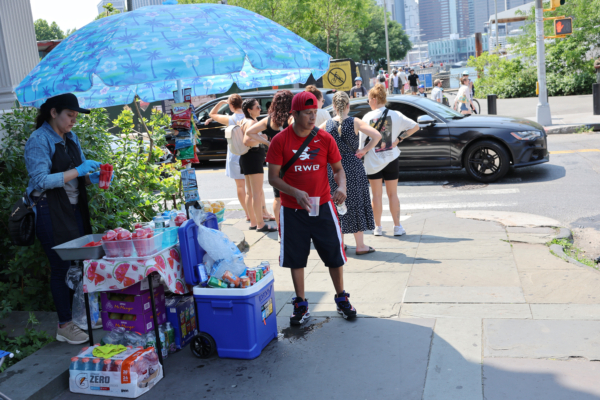
New York City’s street vendors have long been an integral part of the urban landscape, contributing significantly to the city’s diverse economy. However, this group also faces complex regulatory restrictions and uneven enforcement, drawing continuous attention to their circumstances.
To improve the livelihood of street vendors, Mayor Mamdani recently announced the establishment of the first “Office of Street Vendor Services” under the New York City Small Business Services (SBS). The office aims to assist vendors in understanding and complying with regulations while promoting their gradual formalization.
Carina Kaufman-Gutierrez, the inaugural Executive Director of the office and former co-chair of the Street Vendor Project, emphasized in an NPR interview that street vendors are indispensable to New York’s small business ecosystem. Nevertheless, they have long encountered multiple challenges, including intricate regulations across city and state agencies, inconsistent enforcement standards, and outdated policies. Many vendors, she pointed out, struggle to receive adequate support within the system despite their contribution to the community’s economy.
She stressed that one of the core missions of the office is to help unlicensed or unauthorized vendors legalize their operations. The City Council has passed a series of measures this year to increase the number of permits and licenses available to street vendors, providing more opportunities for operators to enter the formal economy. The new office will offer specialized teams to assist vendors in understanding rules, applying for licenses, and accessing relevant resources.
Kaufman-Gutierrez highlighted that street vendors have long been excluded from the formal economy, making them more vulnerable to crime or law enforcement crackdowns. By implementing systematic management and support, the overall stability of the industry can be enhanced, contributing to improved urban governance.
Presently, New York City is home to approximately 23,000 street vendors selling food, goods, and even street performers in Times Square, showcasing a high degree of diversity and vitality. She hopes that the establishment of the new office will not only ensure the survival of these vendors but also foster their continued growth and development in New York.
Lastly, she noted that street vendors represent one of New York’s most vibrant commercial groups, practically found in every corner of the city. She encouraged residents to gain a deeper understanding of the challenges they face and to respect the vitality and economic contributions this group brings to the city.