
The Japanese Ministry of Agriculture, Forestry and Fisheries announced on Tuesday (February 3) that the total exports of Japanese agricultural, forestry, and food products reached 1.7 trillion yen in 2025, marking a 12.8% year-on-year increase and setting a new record high for the 13th consecutive year.
Breaking down the numbers by category, agricultural product exports reached 1.1 trillion yen in 2025, up by 12.1% compared to the previous year. Forestry product exports reached 73.5 billion yen, showing a growth of 10.1%. Meanwhile, seafood exports amounted to 423.1 billion yen, with a significant year-on-year increase of 17.2%, playing a crucial role in driving overall export growth.
Among specific products, green tea used for matcha production saw the most significant growth in exports in 2025. Official data indicated a nearly doubling of green tea exports, with a year-on-year increase of 98.2%. The Ministry of Agriculture, Forestry and Fisheries pointed out that the demand for powdered teas like matcha for beverages and desserts is rapidly expanding, driven by heightened health-conscious consumer trends in European, American, and ASEAN markets.
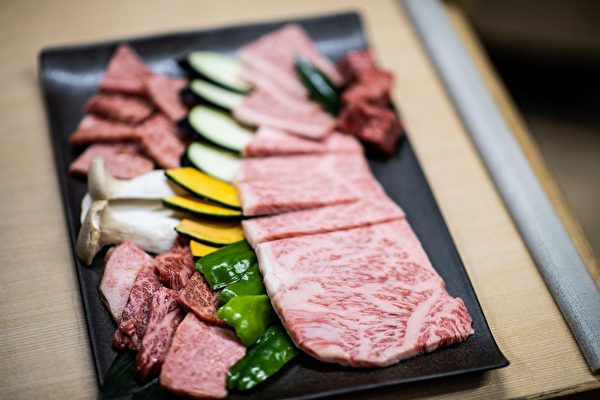
Beef exports also showed steady growth, with a 12.8% increase in total exports for the year. Supported by the expansion of existing sales channels in European, American, and Asian markets and the continuous exploration of new business flows, Japanese wagyu beef maintained a robust upward trend. Officials mentioned that the increasing brand recognition of Japanese wagyu in high-end dining and retail channels is one of the key factors supporting exports.
In terms of seafood products, yellowtail and scallops performed remarkably in 2025. Yellowtail exports increased by 27.4% year-on-year, scallop exports by 30.4%, and koi fish exports by 37.9%. These growth figures were attributed to the completion of certification updates for exports to China and enhanced promotion in the American market.
Official data revealed that major export destinations for Japanese agricultural, forestry, and food products all experienced positive year-on-year growth in 2025, reflecting the continuous expansion of global demand for Japanese products and a more stable market structure.
In terms of export destinations, the United States maintained its position as the largest market for Japanese agricultural, forestry, and food products for the second consecutive year. Exports to the United States in 2025 reached 276.2 billion yen, up by 13.7% year-on-year.
Despite the implementation of tariff measures by the United States on some products starting from April, the strong demand for Japanese green tea, beef, and other products driven by health-conscious trends remained robust, serving as key factors in driving export growth to the United States.
Hong Kong and Taiwan ranked second and third respectively in export volumes, with 222.8 billion yen and 181.2 billion yen. In the Chinese market, despite ongoing restrictions on some Japanese seafood imports, exports to China grew by 7.0% year-on-year, reaching 179.9 billion yen.
Looking at the overall market performance, several countries and regions including the United States, Taiwan, and South Korea set new records for imported Japanese agricultural, forestry, and seafood products in 2025.
The Ministry of Agriculture, Forestry and Fisheries analysis attributes the simultaneous growth in exports of multiple key items to increased global interest in Japanese cuisine, expanded brand recognition resulting from resuming international tourism, and the trend towards health-oriented consumerism.
However, despite reaching a new high in export volume, the actual results in 2025 did not meet the government’s established targets. In 2020, the Japanese government set a medium to long-term plan aiming to increase relevant export figures to 2 trillion yen by 2025 and further expand to 5 trillion yen by 2030 to support agricultural internationalization and regional economic revitalization.
In response, the Deputy Minister of the Export Policy Planning Department of the Ministry of Agriculture, Forestry and Fisheries, Kazuyoshi Nakasugi, stated during the press conference on that day that they will focus on diversifying export markets, reducing reliance on a single market, accelerating the expansion of mainstream retail and dining channels overseas, ensuring a stable supply of high-demand products like matcha, and promoting continuous export scale expansion through improving production and logistics systems.
(The Reuters report contributed to this article)