
Chinese human rights advocate Zhou Lubao was prosecuted for reposting about 25 posts on Sina Weibo regarding wage disputes of migrant workers, and charged with “provocation and troublemaking.” The case recently went to trial in a court in Lanzhou, where the prosecution suggested a sentence of 7 years and 6 months, sparking outcry from various sectors.
Zhou Lubao, a resident of Lanzhou, posted and reposted about 25 posts on Sina Weibo, some of which touched on the topic of wage disputes of migrant workers. The case was recently heard in the City Gate District Court in Lanzhou. The prosecution argued that the defendant’s actions constituted the crime of “provocation and troublemaking” and recommended a sentence of 7 years and 6 months of imprisonment, along with a fine of 50,000 yuan (RMB).
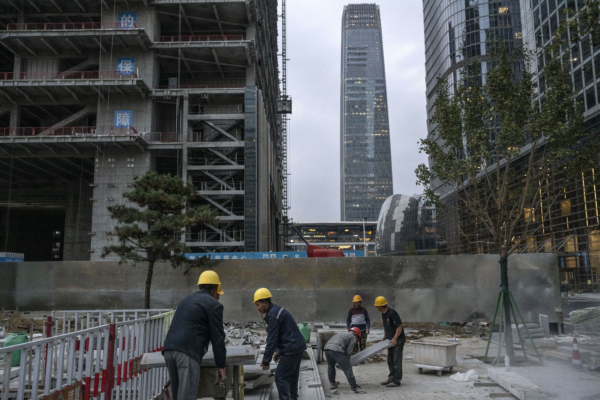
During the trial, Zhou Lubao’s defense lawyer pointed out that a fine of 50,000 yuan is not insignificant for a migrant worker who earns about 3,500 yuan per month and needs to send back 3,200 yuan to his family. The lawyer also mentioned that the defendant has been away from home for 6 years in order to maintain his job of guarding a construction site gate throughout the year.
Regarding the authorities’ accusations, human rights lawyer Mr. Liu from Guangxi told reporters, “The charge of provocation and troublemaking has long been a ‘pocket crime’ used against human rights activists and internet users. Zhou Lubao’s experience reflects how the law tends to deal strictly with grassroots rights defenders, no matter how severe the punishment is. Zhou Lubao earns 3,500 yuan per month but has to send back 3,200 yuan, a situation that is not uncommon and is heartbreaking to hear, representing a microcosm of lower-class families in China.”
Media personality Ge Hong (pseudonym) from Lanzhou, in an interview, stated that Zhou Lubao did nothing illegal by reposting messages advocating for wage rights for migrant workers online, yet the prosecution suggested a sentence of 7 years and 6 months. Ge Hong criticized the lack of reason in this decision, comparing it to corrupt officials who might only receive a seven to eight-year sentence after embezzling millions of yuan.
Ge Hong commented that within the Chinese Communist Party system, the freedom of speech and rights defense efforts of ordinary people at the grassroots level pose a greater threat to society than the corruption involving millions. This case with Zhou Lubao is not just about him but also about whether ordinary netizens will still dare to speak out for marginalized groups in the future.
On April 10th, the Supreme People’s Court and Supreme People’s Procuratorate of the Chinese Communist Party issued a new interpretation, raising the threshold for the crime of unidentified property sources of public officials from 300,000 yuan to 3 million yuan and outlining sentencing ranges. Individuals with discrepancies between 3 million and 10 million yuan may face imprisonment for up to 5 years or detention, while those with over 10 million yuan could be sentenced to between 5 and 10 years.
Legal scholar Zhang Yi (pseudonym) from Hubei, in an interview, expressed that this is not merely a matter of judicial standards but a clear case of a mismatch between “power immunity” and “severe punishment for speech.” She stated, “From a legal perspective, this presents a very distorted orientation. Even if a public official possesses nearly 3 million yuan of suspicious assets, under the new regulations, they may not even meet the threshold for criminal accountability. Even if the difference reaches 5 million or 8 million, the initial sentence is no more than 5 years.”
In contrast, Zhou Lubao, for simply reposting posts advocating for wage rights for workers, faces prosecution for “provocation and troublemaking” and a sentence of up to 7 years and 6 months.
Zhang Yi highlighted that this sentencing bias of “leniency towards officials and severity towards citizens” raises questions about how the social harm is judged within the current judicial system of the Chinese Communist Party. Cases involving property sources worth millions often receive lighter treatment, while online speech cases may lead to longer sentences. If this situation continues, the public’s perception of the law will be negatively impacted.
In recent years, the charge of “provocation and troublemaking” has been repeatedly used in cases involving speech and rights protection activities. For example, citizen journalist Zhang Zhan was sentenced to 4 years for reporting on the Wuhan pandemic. Rights defenders Xu Lin and activist Ji Xiaolong, among others, received sentences ranging from 3 to 4 years for online speech or public criticism. Hubei citizen Yu Qian was sentenced to 3 years for making comments related to the pandemic. Media person Wu Huaiyun was sentenced to 3 years and 10 months for speaking out on overseas platforms, and couples Yu Yunfeng and Li Baihua were sentenced to 5 years for participating in rights defense activities.
These cases involve journalists, rights activists, self-media practitioners, and ordinary citizens.