
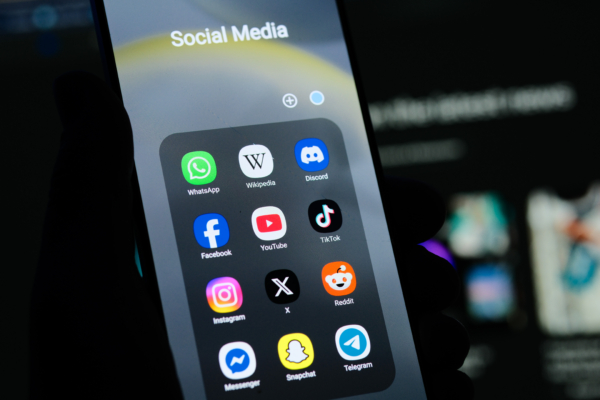
People are paying more and more attention to protecting children from harmful content on social media platforms, and governments around the world are stepping up their regulatory efforts. On Thursday, May 21, the UK media regulator Ofcom stated that platforms like TikTok and YouTube have not implemented meaningful measures to protect children from harmful online content, and the agency is consulting on stricter restrictions.
According to Ofcom, their investigation found that harmful content is still widely spread on these platforms, with evidence suggesting that recommended content is the main way children access harmful information. Specifically naming TikTok and YouTube, Ofcom pointed out that they have not made any significant commitments to enhance the safety of recommended content.
The UK is consulting on stricter restrictions, including the possibility of banning the use of social media by children under 16; this concept mirrors Australia’s landmark policy to address the platforms’ “addictive design features.”
The UK is strengthening its online safety regulations, with the Online Safety Act enacted in 2023 setting stricter standards for online platforms, focusing on protecting children and requiring the removal of illegal content. Tech companies are required to take measures from March 16 of this year to protect users from child sexual abuse images and other illegal content.
Ofcom had requested in March that companies like Meta’s Facebook, TikTok, owned by ByteDance, Alphabet’s YouTube, and others must implement better content moderation, easier reporting mechanisms, and built-in safety tests to combat criminal activity and make platforms safer.
Research by Ofcom found that 73% of 11-17 year olds have encountered harmful content within a four-week period, with personalized recommendations being the main avenue. TikTok was mentioned the most, followed by YouTube, Meta (including Instagram), and Snapchat.
Ofcom stated that TikTok and YouTube claim their existing systems are sufficient to filter out harmful content, but the reality is that their information flow is “still not safe enough.”
A YouTube spokesperson responded by stating that YouTube provides a “age-appropriate and high-quality experience” for young viewers, and collaborates with child safety experts to provide protection measures to millions of families in the UK. The spokesperson also welcomed the news that similar features will soon be adopted by other industry companies.
A TikTok spokesperson claimed that “Ofcom failed to recognize the safety features we have introduced and enhanced in recent years, which is very disappointing.” The spokesperson added, “We will continue to invest resources to enhance safety measures for users.”
Additionally, Snap, Meta, and Roblox have all agreed to introduce stronger measures to prevent online scams as requested by Ofcom in April.
Snap will default to block adults from contacting children through anonymous accounts and will expand age verification in the UK; Meta plans to use AI to detect suspicious chats and enhance controls related to teenagers.
Roblox will allow parents to disable messaging for children under 16; X has also agreed to strengthen the review of illegal hate speech and terrorist content, including reviewing such materials within 24 hours and sharing data with regulators on a quarterly basis.
Meta has pledged to strengthen oversight, however, the company was found guilty by a New Mexico jury in March 2026 of misleading users about the safety of its platforms including Facebook and Instagram for children, failing to effectively protect young users from child predators, and was fined $375 million.
Moreover, its social platforms have faced numerous lawsuits over teenage addiction, sexual extortion, and suicide issues. Meta denied the accusations from New Mexico and hinted at possibly discontinuing social media services to the state.
In addition, Ofcom in the UK is still reviewing X platform and the Grok chatbot on X. A Reuters report earlier this year found that despite new restrictions, the Grok system still occasionally generates images with sexual implications even when users have explicitly warned the system that the people in the photos (including females and some children) did not consent.
Australia’s Online Safety Amendment (Social Media Minimum Age) Act of 2024, which went into effect on December 11, 2024, strictly prohibits individuals under 16 from using social media platforms including Facebook (Meta-owned), Instagram, TikTok, X, YouTube, Reddit, and any violation of this law will face hefty fines.
The UK is considering stricter restrictions, including possibly banning teenagers under 16 from using social media, following the Australian model to tackle the “addictive design” of social platforms.
Ofcom believes that nearly a year after the new child safety duties mandated by the Online Safety Act took effect, there has been “little improvement” in children’s exposure to harmful content.
Data presented by Ofcom shows that 67% of children use YouTube, 60% use TikTok, and 95% use at least one social media or video sharing service. Additionally, the enforcement of the minimum age requirement of 13 is lacking, with 84% of 8-12 year olds using social networking platforms.
Ofcom suggests that existing laws do not explicitly require companies to prevent underage users from using their platforms, therefore urging the UK government to strengthen relevant legislation.
In fact, not only the UK is considering following the Australian model, but also Denmark, Italy, Spain, Greece, Germany, and some states in the US are discussing or considering similar measures. They plan to prohibit teenagers aged 15 or 16 and under from using social media platforms in order to protect them from harmful content and the health risks of excessive screen time.
Malaysia announced that from July 2026, it will mandatory prohibit teenagers under 16 from using social media platforms. The government aims to enforce digital identity verification on platforms to prevent users under 16 from registering or using accounts, ensuring effective age restrictions.
South Korea passed a law in August 2025, to ban the use of smartphones, digital devices, and social media platform apps in all primary and secondary school classrooms starting from the new school year in March 2026. The aim is to combat smartphone addiction, reduce bullying, and mitigate negative effects such as student distraction.
In India, it was officially announced in November 2025 that minors under 18 must obtain parental consent (verification required) to use social media platforms. Children requiring to create or use accounts involving data collection such as names, locations, posts, etc., must have explicit authorization from parents.
(This article is referenced from reports by Reuters)