
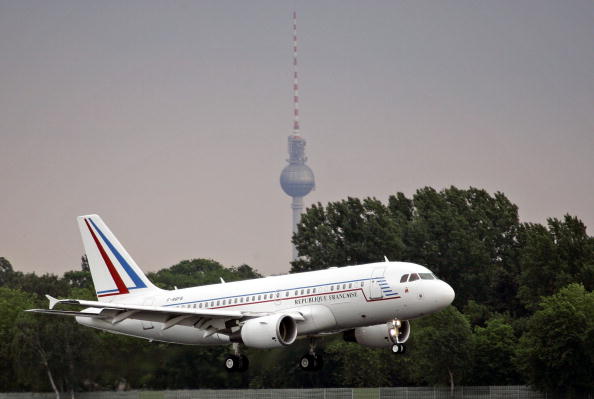
US officials said on Wednesday (May 20) that a French airline flight bound for Detroit was forced to divert to Canada mid-flight because authorities discovered a passenger from an Ebola-affected area in Africa had “mistakenly” boarded.
A spokesperson for US Customs and Border Protection (CBP) confirmed in a statement to Fox News that the flight, which took off from France, had a passenger from the Democratic Republic of Congo on board and ultimately landed in Montreal on Wednesday.
“To reduce the risk of Ebola virus importation, the United States has implemented strict entry restrictions. This passenger should not have been on this flight,” the spokesperson said. CBP took swift action to prohibit the plane from landing at the Detroit Metropolitan Wayne County Airport.
Local media reports indicated that the passenger was taken off the flight upon landing in Montreal, with their Ebola infection status remaining unconfirmed as of Wednesday evening.
Due to the worsening Ebola outbreak in Central and East Africa, the US has imposed a 30-day travel ban on non-US passport holders who have visited the Democratic Republic of Congo, South Sudan, and Uganda within the past 21 days starting from Monday (May 18).
The Department of Homeland Security explicitly stated in the upcoming directive that all compliant travelers who have been in the mentioned three countries within the past 21 days will be redirected to Washington-Dulles International Airport for entry, in order for the government to concentrate public health resources for enhanced screening.
The World Health Organization (WHO) has declared this outbreak as an “international public health emergency of concern.” The outbreak involves a rare Ebola virus strain called the Bundibugyo virus. Officials noted that following the detection of the first death case, the virus had been silently spreading for weeks unnoticed, making tracking and containment efforts extremely challenging.
WHO Director-General Tedros Adhanom Ghebreyesus reported on Wednesday that Africa has seen 139 suspected death cases and nearly 600 suspected and confirmed cases. WHO special advisor Dr. Vasee Moorthy warned that vaccines and specific therapies for the Bundibugyo strain are currently lacking and expected to take at least 6 to 9 months before being available.
Health officials are currently actively searching for the “patient zero” to identify the source of the virus.
The Ebola virus is highly contagious and primarily spreads among the population through contact with a patient’s blood, vomit, or semen, among other bodily fluids. Early symptoms include fever, muscle pain, vomiting, and diarrhea, with later stages possibly involving internal and external bleeding. WHO data shows that the average fatality rate of Ebola is as high as 50%.