
On Wednesday, April 22, senior officials from the Pentagon made it clear during a hearing in the House of Representatives that the United States is actively working to establish a robust “denial defense” system along the First Island Chain to address the increasingly serious challenges in the Indo-Pacific region.
The U.S. also proposed new “Military Cost Sharing Standards” to its allies, requiring defense spending to reach 3.5% of the Gross Domestic Product (GDP), and specifically urged political parties in Taiwan to cooperate and pass a crucial special defense budget.
John Noh, Assistant Secretary of Defense for Indo-Pacific Security Affairs, emphasized in the House Armed Services Committee hearing that the U.S. should not single-handedly maintain regional power balance.
“The U.S. cannot and should not solely maintain a favorable power balance in the Indo-Pacific region by itself,” he said, noting that the U.S. has called on wealthy and capable allies to shoulder responsibility by increasing core defense spending to the new global standard of 3.5% of GDP.
Regarding Taiwan, John Noh pointed out that President Tsai Ing-wen has pledged to increase defense budget to 5% of GDP by 2030, including a historic special defense budget aimed at addressing critical defense gaps.
Facing internal controversy over the NT$1.25 trillion (approximately $40 billion) special budget in Taiwan, John Noh publicly urged, “The Pentagon is encouraging all political parties in Taiwan to work together to fund these needs.”
He added that Taiwan must do more and act faster to ensure self-defense capabilities that are sufficient to counter current threats.
For decades, the Chinese Communist Party has never given up the use of force to annex Taiwan. In recent years, the military pressure on Taiwan has increased, including frequent military aircraft entering Taiwan’s Air Defense Identification Zone and daily dispatch of warships in the waters surrounding Taiwan. The escalating military threats from China have drawn Washington’s attention.
Chairman of the House Armed Services Committee, Mike Rogers, said in his opening remarks, “If a conflict erupts in the Taiwan Strait, it will disrupt the global economy and allow China to dominate the Pacific and its vital sea lanes to the United States, thereby damaging U.S. interests.”
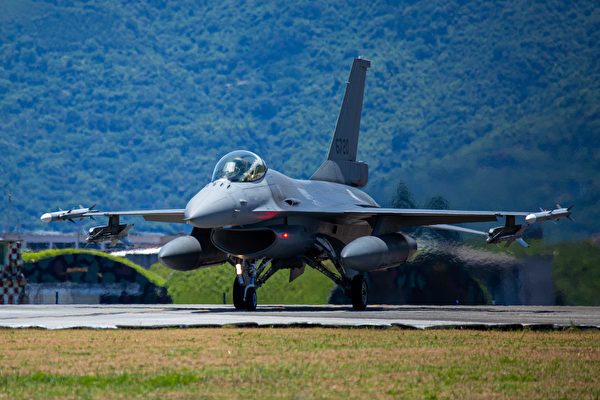
Addressing the delayed delivery of F-16 fighter jets procured by Taiwan, Admiral Samuel Paparo, Commander of the U.S. Indo-Pacific Command, acknowledged that the State Department is working to resolve the issue and emphasized that arms sales deliveries should be “not just on time, but early.”
U.S. officials also stated that Washington is very concerned about China’s united front actions, information warfare, and legal warfare against Taiwan, and has detailed contingency plans for scenarios such as a blockade of Taiwan or seizure of outlying islands by China.
Military leaders indicated that in terms of strategic deployment, the U.S. is accelerating the implementation of the “denial defense” framework, focusing on enhancing defense resiliency and firepower along the First Island Chain, and deploying long-range precision firepower systems to strategic points such as Japan and the Philippines, including the Typhon missile system, HIMARS multiple rocket launchers, and the NMESIS (Naval/Marine Expeditionary Ship Interdiction System) land-based anti-ship missile launchers.
Admiral Paparo of the U.S. Indo-Pacific Command stated that the current strategic core is to make any military invasion by China “unworkable.”
He pointed out that future conflicts will be defined by artificial intelligence (AI), automated systems, and decision-making advantages, and the U.S. military is ensuring continuous combat capability and deterring provocations through decentralized deployment and strengthened logistics networks even under attack.
John Noh also mentioned that the U.S. military is promoting industrial cooperation with allies, such as the first-time maintenance of U.S. military ships in South Korea and cooperation with Japan to produce Standard Missile-3 (SM-3) missiles, aiming to integrate allies’ capabilities into the U.S. military’s logistic support chain.