
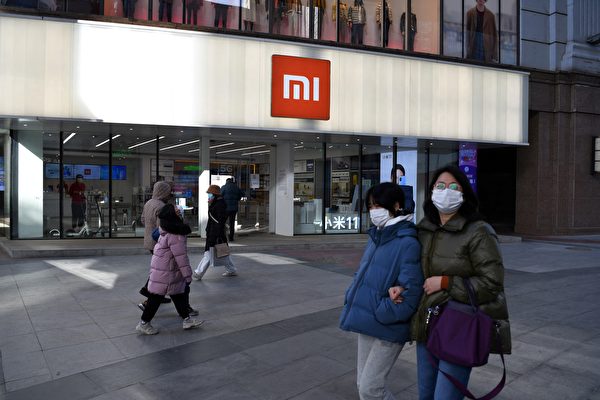
In recent years, the Chinese authorities have repeatedly restricted government officials and employees of state-owned enterprises from using Apple iPhones and other foreign brand devices. However, new data shows that in the first quarter of this year, iPhone sales in the Chinese market surged by 42% year-on-year, with a market share as high as 19%. At the same time, Xiaomi saw a significant decrease of 35%, with a market share dropping to 12%.
On April 14th, data released by Omdia, a global technology market research consultancy, showed that in the first quarter of 2026, the domestic shipment of smartphones in China was 69.8 million units, a decrease of approximately 1.1 million units compared to the first quarter of 2025 when it was 70.9 million units.
Among them, Huawei ranked first with 13.9 million units shipped, a 7% year-on-year growth and a market share of 20%; Apple ranked second with 13.1 million units shipped, an increase of about 3.9 million units from the same period last year, representing a 42% surge, and a market share rising from 13% to 19% from the same period last year; OPPO (including realme) ranked third with 11 million units shipped, a 3% year-on-year decrease, and a market share of 16%; Vivo ranked fourth with 10.5 million units shipped, staying flat from the same period last year, and a market share of 15%; Xiaomi ranked fifth with 8.7 million units shipped, a 35% year-on-year decrease, and a market share of only 12%.
The shipment volume for other brands was 12.7 million units, a 7% year-on-year decrease.
Tech self-media outlet “Tech Squirrel” analyzed that Apple achieved a significant increase in shipment volume to 13.1 million units in the first quarter, with a remarkable 42% growth, and a market share that surged from 13% to 19%, securing the second position with the success of the iPhone 17 series. The standard version of the Apple iPhone 17 series was enhanced with high refresh rate screens and 256GB storage while maintaining the same price, boosting its overall competitiveness and significantly increasing sales, positioning Apple as the biggest winner in the high-end market.
The article pointed out that Xiaomi emerged as the biggest loser with a shipment volume of only 8.7 million units, falling short of reaching 10 million units. This represented a sharp drop of 4.6 million units from the first quarter of 2025, marking a substantial 35% year-on-year decline. Due to this substantial decrease in shipment volume, Xiaomi’s market share plummeted from 19% to 12%.
In the first quarter, Xiaomi experienced a drastic decline in shipment volume, with its major mid-to-high-end models failing to perform well, relying primarily on lower-end models for support. In the high-end market segment, the Xiaomi 17 series saw a rapid decline in sales after the initial hot sale, with total sales still below 5 million units after being on the market for over six months, and their weekly sales hovering around 100,000 units. In the mid-range market segment, the Redmi K90 series notably underperformed compared to the K80 series, with sales of just over 2 million units after being on the market for nearly six months.