
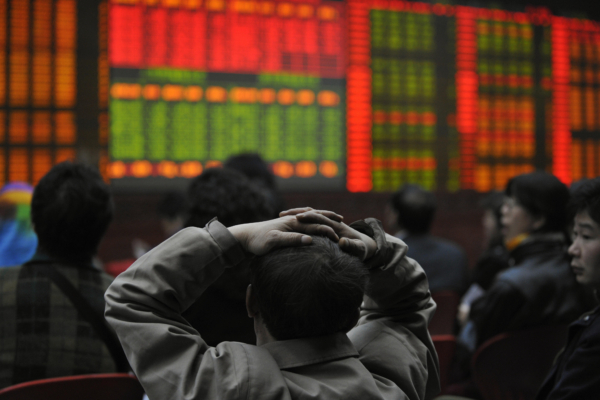
On May 21st, the stock markets in Japan, South Korea, and Taiwan all saw gains, while the A-share market surged and then fell back, experiencing a substantial volume decline, with nearly 4800 individual stocks trading in the green. The three major indices all dropped by over 2%, with the Shanghai Composite Index seeing its largest decline in nearly two months, falling below 4100 points; the ChiNext Index dropped by over 3%, briefly surging by over 3% intra-day. At the same time, the Hong Kong stock market opened higher but trended lower, with the Hang Seng Index falling by over 1% and the Hang Seng Tech Index dropping by over 2%, drawing market attention.
In the A-share market on May 21st, the market surged and then retreated throughout the day, with a broad decline in the afternoon and a further widening of losses nearing the closing bell.
By the closing bell, the Shanghai Composite Index fell by 2.04% to 4077.28 points, the Shenzhen Component Index dropped by 2.07% to 15247.27 points, and the ChiNext Index fell by 2.35% to 3829.78 points; the SME board index dropped by 1.89%, and the ChiNext 50 Index fell by 3.7%.
The turnover of the Shanghai and Shenzhen markets reached approximately 3.4816 trillion yuan, an increase of about 527.89 billion yuan from the previous trading day. Among all listed stocks, 695 rose and 4773 fell, with 36 stocks hitting the daily maximum limit up and 65 hitting the limit down.
According to data from “Dazhihui VIP,” there were a total of 54 stocks in the two markets and the Beijing Stock Exchange with an increase of more than 9%, while 140 stocks saw a decline of more than 9%.
Sector-wise, semiconductor, communication equipment, oil and gas exploration and services, electronic chemicals, fiber optic concepts, and CPO sectors led the decline; technology sectors like chip semiconductors and computing hardware were among the top losers. Specific stocks with notable declines included Shanghai Huahong, Montech Semiconductor, and Advantage Chip.
In trading, the semiconductor sector rallied in the morning on external market gains but quickly reversed in the afternoon, with stocks like Shanghai Huahong, Montech Semiconductor, and Advantage Chip plunging by more than 10%; sectors like humanoid robotics, unmanned driving, and securities also surged in the morning but then declined to varying degrees in the afternoon due to overall market sentiment. Banking sectors, however, were relatively active, with stocks like Chongqing Bank and Construction Bank seeing gains. Overall, stocks showed a pattern of surging and then falling back as the closing bell approached.
On May 21st, several topics related to A-share market trends surged on Weibo.
Netizens commented, “The US and neighboring countries like Japan and South Korea are all soaring, but we are plummeting, why is that?” “Korean stocks surged to the trading halt, Japanese and Taiwanese stocks all surged, while A-share and Hong Kong stocks experienced a sharp downturn in the afternoon, making it difficult to understand!” “From the news, our economic indicators are positive, and external stock markets are rising, so why does A-share continue to fluctuate and fall? What went wrong?”
“Three days ago I cleared my position, just checked now, was shocked, or else I would have had a great loss.” “Saving money little by little, scrimping and saving to accumulate 1600, but A-share wiped out 160,000 in a single day.” “In daily life fixing every loophole, but in the stock market, money is spent like water.”
“Everyone heard the story of the incompetent ruler, the people all say you can’t help it, but upon closer inspection, we see that our A-share is the truly incapable one, performing an index defense battle every day.”
Additionally, in the Hong Kong stock market, the decline accelerated in the afternoon, with the Hang Seng Index and the Hang Seng Tech Index extending their losses, with the Hang Seng Tech Index falling by over 2% and technology-related stocks struggling. In the bond market, government bond futures all trended lower. By the closing bell, the Hang Seng Index fell by 1.03%, and the Hang Seng Tech Index dropped by 2.15%.
In trading, the optical communication sector led the decline, with Cambridge Technology plunging by over 8%, Changfei Fiber Optic Cable falling by over 6%, and Convergence Technology dropping by over 4%. Technology stocks faced a downturn, with Bilibili down by over 7%, Kuaishou and Baidu Group falling by over 5%, Alibaba dropping by over 4%, and Tencent Holdings down by over 3%. On the flip side, Sunway Optical Technology rose by over 9%, and Xiaopeng Group gained over 4%.