
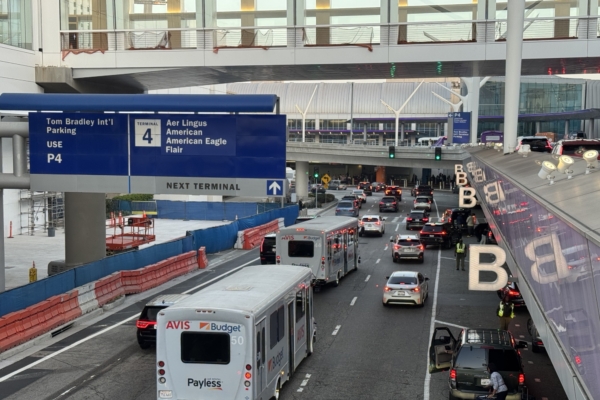
On May 23-25, Memorial Day of the United States, also known as the day to honor fallen soldiers, falls on a long weekend holiday this year. It is expected that the number of Americans traveling for leisure during this period will reach a historic high. Therefore, being aware of road conditions in advance can help reduce congestion.
The surge in oil prices does not seem to deter people from their travel plans, as the number of travelers has once again increased compared to last year.
The American Automobile Association (AAA) predicts that from the 21st to the 25th, about 45 million Americans will travel 50 miles or more away from home, with approximately 39.1 million choosing to drive themselves, including around 2.9 million in Southern California alone. Another 3.66 million people are expected to travel by plane.
The rise in oil prices will increase the cost of travel for the public. According to AAA’s data on Thursday (21st), the average price of regular gasoline in the United States is $4.564 per gallon: states like Oklahoma, Texas, Kansas, and Georgia have an average gas price of about $4.1, while California still has the highest overall price at $6.143.
Popular tourist destinations such as San Diego, Las Vegas, and surrounding national parks are expected to experience heavy traffic. If you plan to drive during the long weekend holiday, consider setting off at the best times to avoid severe traffic congestion.
Analysis from traffic data firm INRIX identifies the worst and best times for driving during the Memorial Day weekend as follows:
– On the 22nd, the most congested travel times are between 11 a.m. and 8 p.m., with the best time to travel being before 11 a.m.
– On the 23rd, the peak congestion period is from noon to 5 p.m., with the best travel time before 11 a.m.
– The 24th is expected to have the least traffic volume, with generally better road conditions.
– On the 25th, the most congested period is from noon to 5 p.m., and the best travel time is before 10 a.m.
Boston, New York, Los Angeles, San Francisco, and Washington D.C. are expected to have the most congested traffic, with different congested routes and times. For example, one of the busiest routes in Southern California is expected to be Interstate 10 heading east towards Palm Springs and Phoenix, Arizona, with peak congestion around 5:30 p.m. on the 22nd.
The Automobile Club of Southern California states that on the 22nd, the estimated drive from Los Angeles to Palm Springs is 4.4 hours, while driving to Phoenix is expected to take 8.6 hours. Taking Interstate 15 from Los Angeles to Las Vegas is predicted to take 5.7 hours. Overall travel time during this period is expected to increase by 88% compared to regular travel times.
Despite the increase in oil prices this year, the average price for domestic round-trip flights within the United States is 6% cheaper than last year, at approximately $800. Of course, flights departing over the weekend typically have higher prices.
During the long weekend, an estimated 3.66 million people will travel by plane, leading to overcrowded airports. Airport officials advise passengers to allow extra time: arrive at the airport at least two hours before scheduled departure for domestic flights and at least three hours in advance for international flights.