
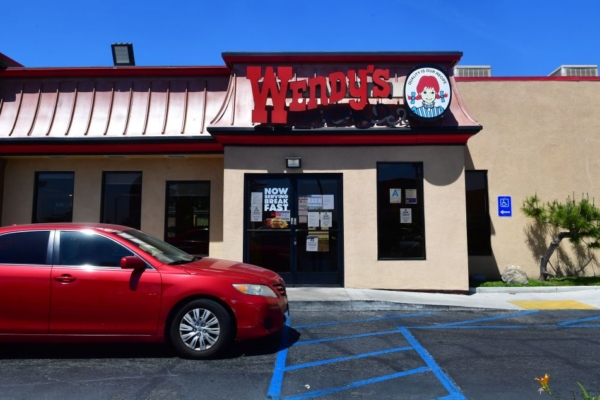
In recent years, the fast-food chain industry in the United States has faced numerous challenges such as labor costs and inflation, leading to a trend of contraction and restructuring. Even fast-food giant Wendy’s is not immune to this trend. On Wednesday, the company announced a change in leadership. Meanwhile, Carl’s Jr., a fast-food chain originating from Los Angeles, saw one of its distributors, operating dozens of stores, filing for bankruptcy protection last month.
Wendy’s, after closing 240 stores in 2024 and 28 stores in the fourth quarter of last year, currently operates 5,969 stores. The company plans to close an additional 298 to 358 stores in the first half of this year.
According to a statement released by the company on the 20th, the board has appointed Robert D. “Bob” Wright as the president and CEO. Wright, who previously served as vice president at Wendy’s in 2019, expressed his honor to return to the company at a critical juncture in its brand development. He aims to enhance customer experience and operational efficiency, strengthen franchisees’ financial models, and achieve sustainable profit growth.
Before joining Wendy’s, Wright served as the president and CEO of Potbelly Corporation and held key positions at several other major fast-food chains including Philly Cheesesteak, Double Drive-Thru, Checkers and Rally’s, and Domino’s Pizza.
After taking over Potbelly Corporation in 2020, Wright significantly grew the performance of the fast-food chain and expanded its brand influence, making it one of the fastest-growing digital platforms in the food industry.
In early April, Friendly Franchisees Corporation (FFC), a franchisee of Carl’s Jr. operating 65 stores in Southern California, filed for Chapter 11 bankruptcy. Several subsidiaries, including Sun Gir Incorporated, DFG Restaurants, and Second Star Holdings, also filed for bankruptcy.
In court documents, Sun Gir, which operates 59 stores, cited intense competition, rising operational costs, and declining sales as factors contributing to its “financial distress.” The company also attributed its financial crisis to California’s minimum wage standards that went into effect in April of last year.
The AB1228 bill passed in California in 2024 set a new minimum wage for chain fast-food brands with 60 or more outlets nationwide, increasing the hourly wage from $16 to $20.
Christopher Thornberg, founding partner of Beacon Economics, commented earlier this year that California’s attempt to reduce income inequality by raising the minimum wage is starting to have a severe negative impact on the most vulnerable workers, especially young people from low-income families.
Carl’s Jr. has over a thousand stores in 16 states across the United States, with the majority in California. The number of its stores in California has decreased from 613 in 2023 to 588 in 2025. The stores applying for bankruptcy protection account for 11% of Carl’s Jr.’s business in California.
The continuous rise in American beef prices is believed to further burden the operating costs of the fast-food industry.
Other American fast-food chains that are currently reducing or planning to reduce the number of stores include Papa John’s, Pizza Hut, Jack in the Box, Five Guys, and Hardee’s, which is also under the same parent company, CKE Restaurants, as Carl’s Jr.
In California, Five Guys has closed 4 out of 100 stores this year, including 2 in Los Angeles County, leading to the layoff of 55 employees. Jack in the Box, after closing 80 stores nationwide last year, plans to close over 150 more stores this year, with the majority located in California.